(Senior Cat Stairs Help That Actually Works)
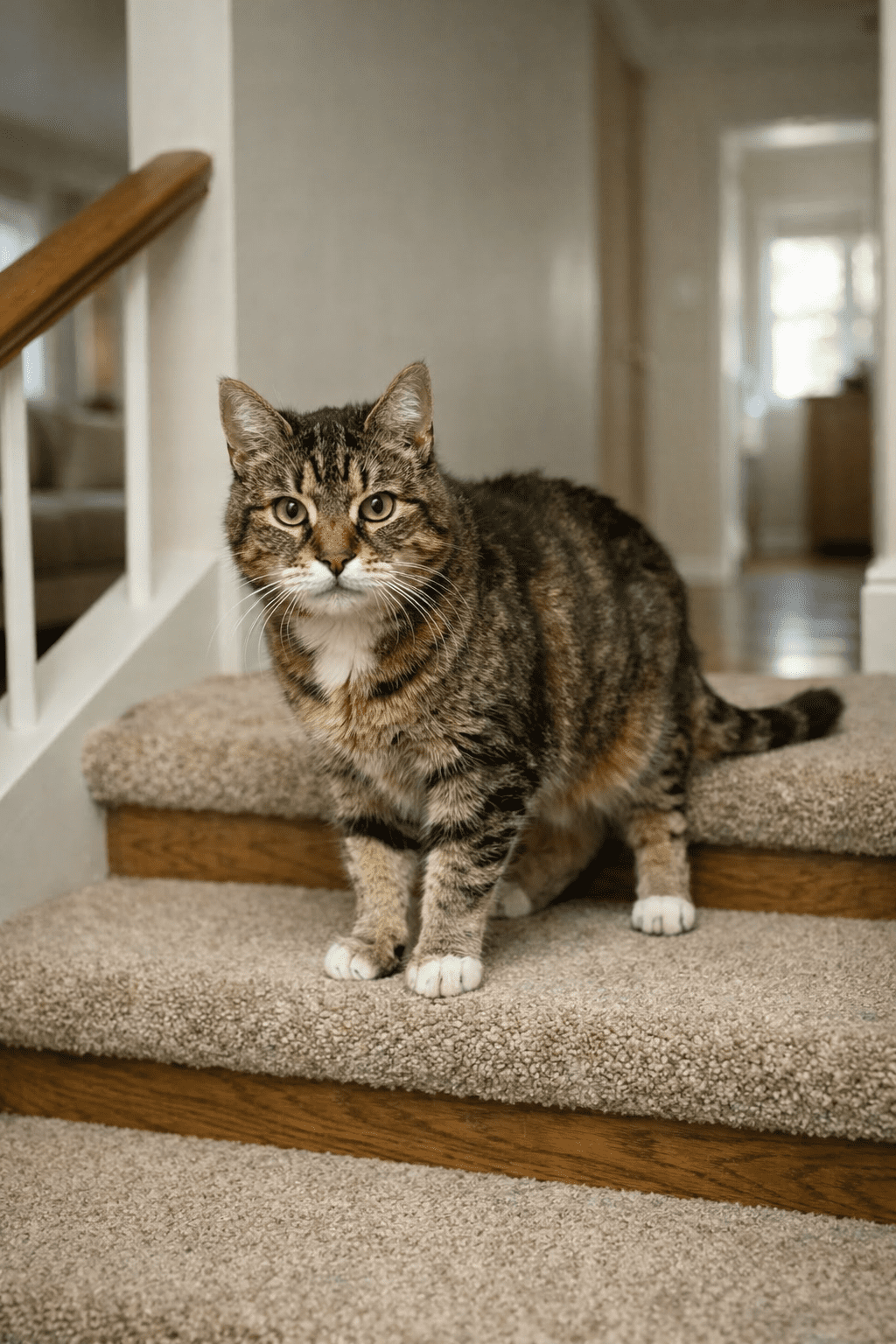
If your senior cat stops halfway up the stairs and looks back at you… or waits at the bottom and cries instead of climbing… It’s heartbreaking—and common.
For many aging cats, stairs are one of the first everyday challenges to become uncomfortable or scary. Joint stiffness, arthritis, muscle loss, vision changes, or simple loss of confidence can turn a once-easy climb into a stressful task.
The good news? Senior cat stairs help doesn’t have to be complicated or expensive. Small, thoughtful changes can make your home safer—and help your cat stay independent longer.
From Real Homes With Senior Cats
Many caregivers first notice stair problems gradually—hesitation, slower movement, or waiting to be carried instead of climbing. These are the same patterns we see repeatedly in aging cats as joints stiffen and confidence changes. Simple home adjustments often make a bigger difference than people expect.
Signs Your Senior Cat Is Struggling With Stairs
You might notice:
- Hesitation or long pauses before climbing
- Taking stairs very slowly or one step at a time
- Avoiding stairs completely
- Crying at the top or bottom instead of using them
- Slipping, missing steps, or losing balance
- No longer visiting favorite upstairs/downstairs spots
If stair trouble appeared suddenly, or your cat is limping or vocalizing in pain, a vet visit is important. But for gradual changes, environmental support often makes a huge difference.
In many cases, difficulty climbing or descending stairs is an early sign of arthritis in senior cats, even if your cat isn’t limping or crying out in pain. Veterinary guidance commonly emphasizes environmental changes—such as improving traction and reducing stair strain—as an early, low-risk way to support aging cats with mobility challenges.
Veterinary university resources consistently note that modifying a cat’s home environment is one of the most effective first steps for supporting senior mobility.
Step 1: Reduce How Often Your Cat Needs Stairs
Before buying ramps or pet stairs, start by removing unnecessary stair trips.
Put Essentials on Every Floor
This alone can dramatically reduce stress for older cats:
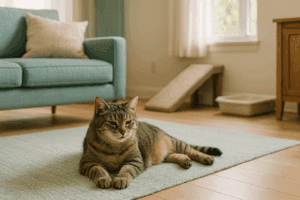
- One litter box per level (especially important at night)
- Fresh water on each floor
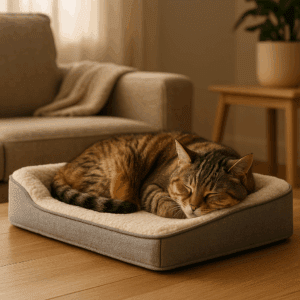
- A soft resting spot or bed on each level
Many litter box accidents in senior cats aren’t “behavior issues”—they’re mobility issues. Many owners see immediate improvement simply by adding a low-entry litter box on each level of the home, so their cat doesn’t have to choose between pain and an accident.
Step 2: Make Existing Stairs Safer
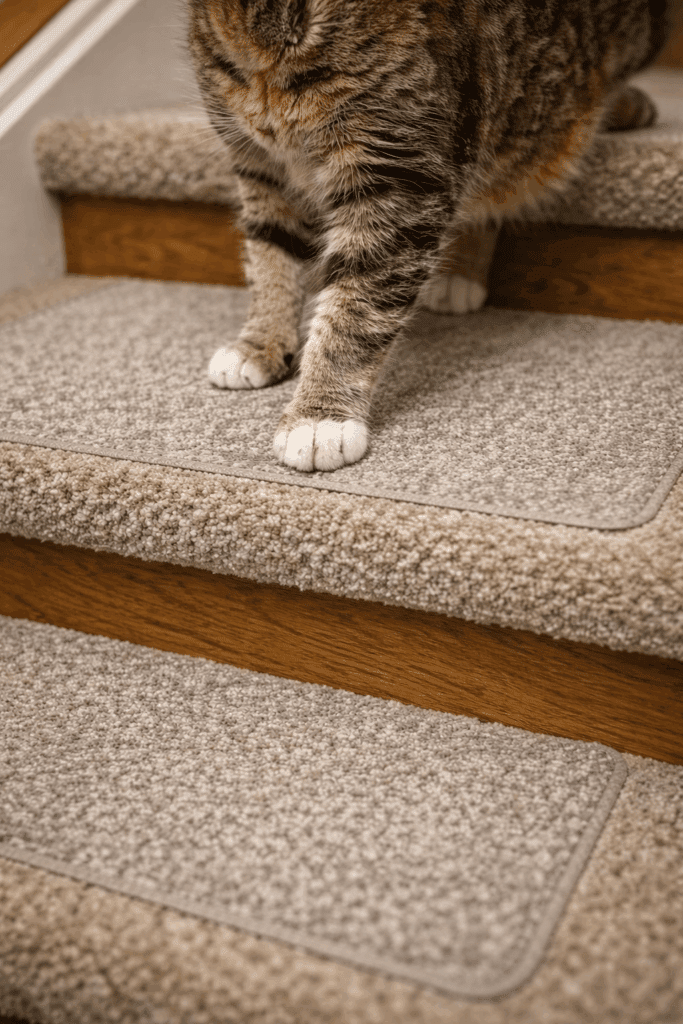
Often, the problem isn’t strength—it’s traction and confidence.
Add Non-Slip Surfaces
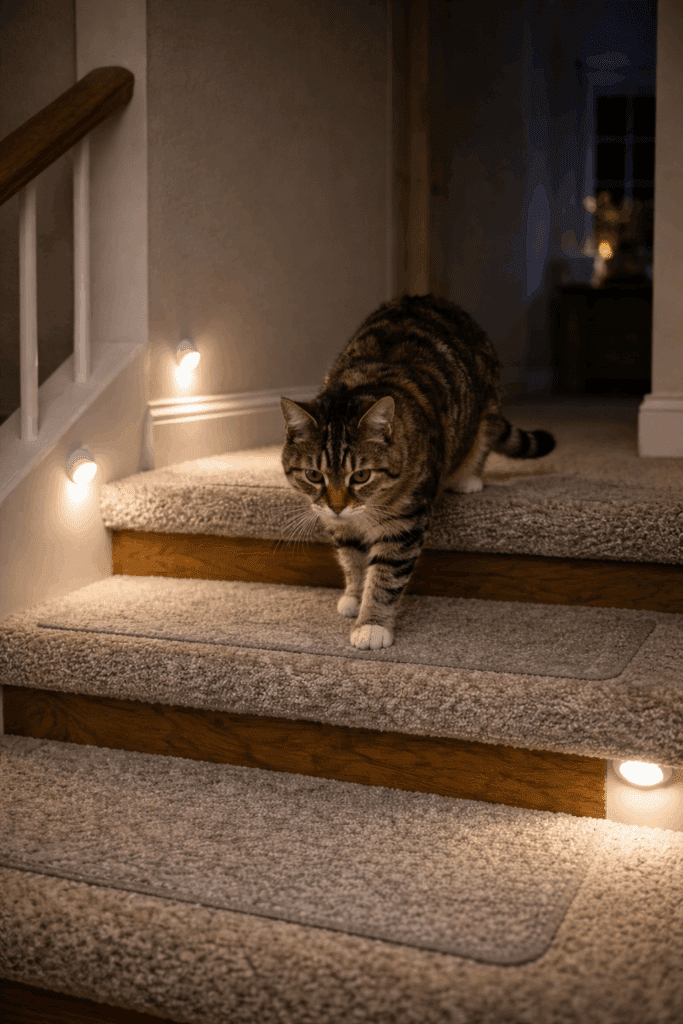
Senior cats struggle on slick stairs.
Good options include:
- Carpet stair treads
- Non-slip adhesive strips
- Rubber or yoga-mat style runners (cut to fit)
Look for materials that won’t slide under paw pressure.
Improve Lighting
Older cats may not see depth as clearly.
Add:
- Motion-sensor night lights
- Soft lamps near stair landings
- Consistent lighting so shadows don’t shift suddenly
Block Unsafe Shortcuts
If your cat tries to jump from halfway up or skip steps, temporarily block those routes until safer access is in place.
Step 3: Use Ramps or Pet Stairs Where It Matters Most
This is where senior cat stairs help really shines—giving your cat safe access to the places they love.
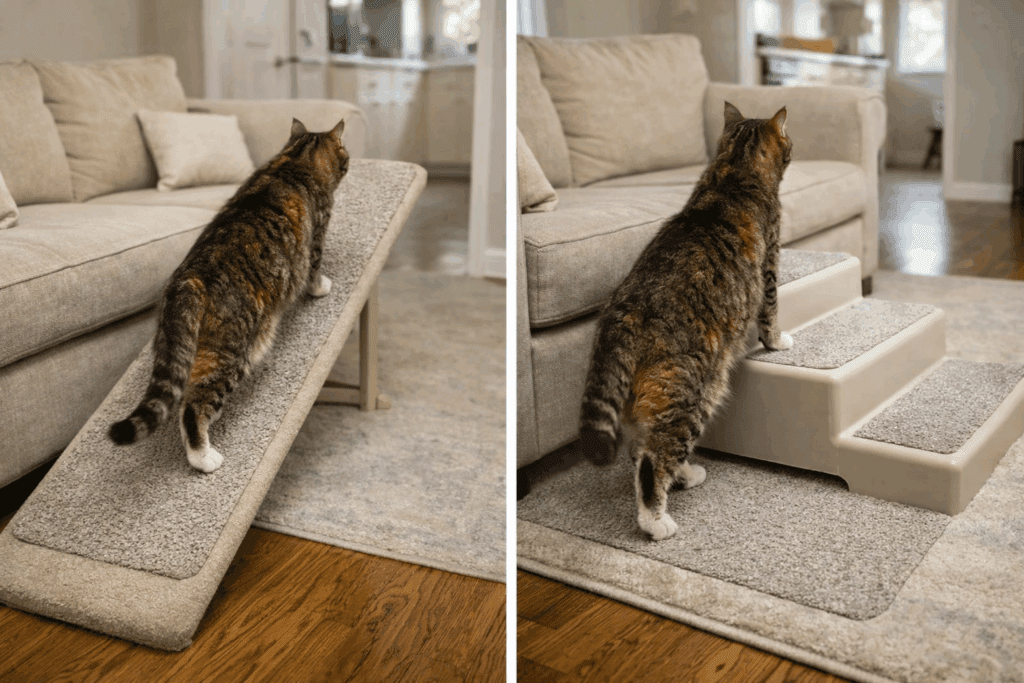
Best Places for Ramps or Pet Stairs
- Beds (especially nighttime access)
- Couches and chairs
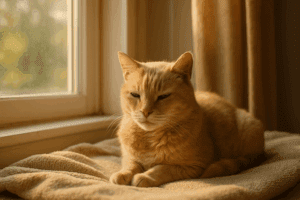
- Window perches
- Favorite sunny spots
- Any high-value resting area
You don’t need to ramp the whole house—just the spots that matter most to your cat.
Ramp vs Pet Stairs for Senior Cats
For cats with arthritis or balance concerns, ramps for senior cats often feel safer and less intimidating than traditional pet stairs.
Use this simple guide:
Pet Stairs Work Best If:
- Your cat still climbs fairly confidently
- Steps are low and wide
- Surface is non-slip
- The stairs are very stable
Ramps Are Better If:
- Your cat has arthritis or joint pain
- Going down stairs is harder than up
- Your cat hesitates or freezes on steps
- Balance is a concern
For many arthritic cats, a gentle ramp is easier and less intimidating than steps.
What to Look for in Senior-Friendly Cat Stairs
Avoid buying based on looks alone.
Senior Cat Stairs Checklist
- Low step height
- Deep, wide steps
- Carpeted or textured surface
- Solid, non-wobbly base
- Correct height for the furniture being used
If a product flexes, slides, or tips when pressed by hand—it’s not senior-safe.
Step 4: Help Your Cat Learn the New Route
Even perfect stairs won’t work if your cat doesn’t trust them.
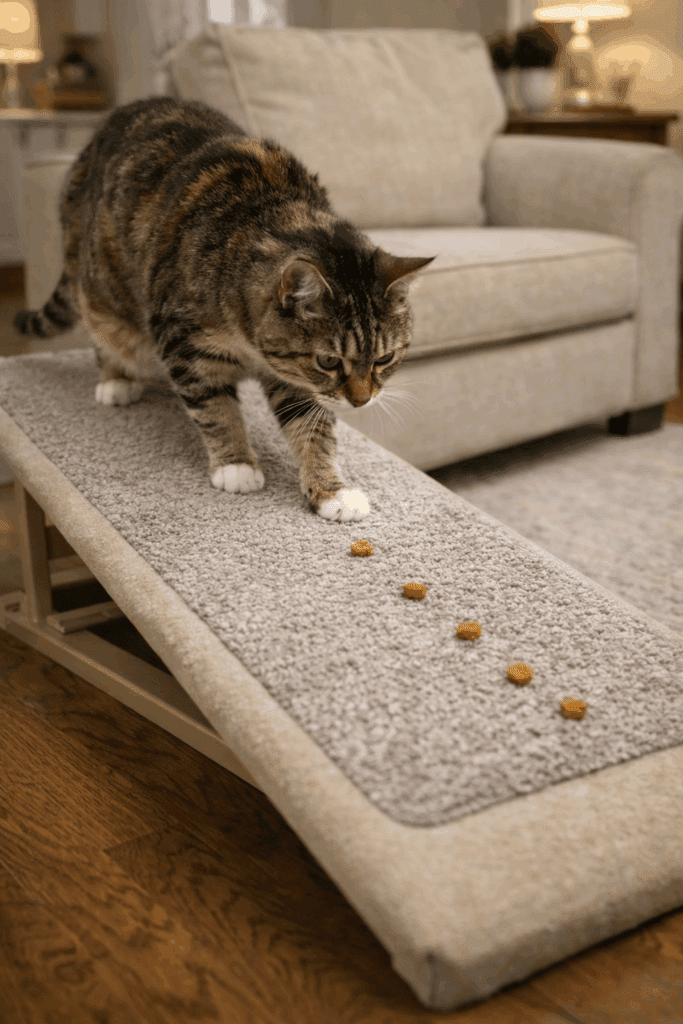
How to Encourage Use (Without Stress)
- Place stairs or ramps directly where your cat already walks
- Use tiny treats on each step or along the ramp
- Praise and reward any attempt
- Rub a familiar blanket or bedding over the surface
- Start with a lower incline and increase gradually
Some cats adapt in minutes. Others take days. That’s normal.
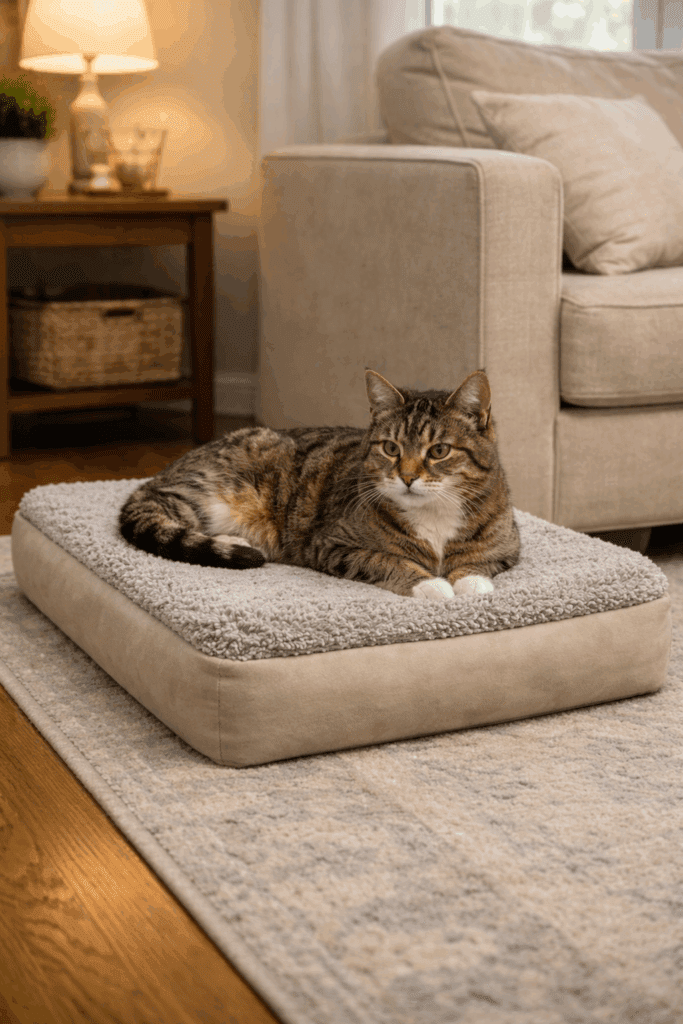
If your cat loves sleeping on the bed or couch, placing orthopedic cat beds on each floor can reduce unnecessary stair trips while easing joint pressure.
Step 5: Support Mobility Beyond Stair Help
If your senior cat is struggling with stairs, there’s usually an underlying reason.
Common Causes
- Arthritis or joint inflammation
- Muscle loss with age
- Long nails reducing traction
- Weight gain
- Vision changes
- Cognitive decline in some seniors
Stair hesitation is often linked to underlying joint discomfort or broader mobility changes seen in older cats. Some caregivers also explore joint supplements for senior cats, though these should always be discussed with a veterinarian and used as support—not a replacement for environmental changes.
Helpful additions:
- Regular nail trims
- Low-entry litter boxes
- Lean body weight maintenance
- Gentle daily play to preserve muscle
- Vet-approved pain management if needed
Senior Cat Stairs Help: Common Questions
Why can my senior cat go up stairs but not down?
Descending requires more joint control and confidence. Front leg pain, shoulder arthritis, or vision issues often show up here first.
Should I carry my senior cat up and down stairs?
Occasionally is fine—but relying on carrying can reduce independence and increase anxiety. Environmental support is better long-term.
My senior cat won’t use pet stairs. What should I do?
Check:
- Step height (too tall?)
- Surface grip (too slippery?)
- Placement (is it blocking their natural path?)
Lower the incline, add treats, and give time.
Creating a Senior-Friendly Home Is an Act of Love
Helping a senior cat with stairs isn’t about “spoiling” them—it’s about preserving dignity, comfort, and safety as their body changes.
A few simple adjustments can mean:
- Fewer falls
- Less pain
- More independence
- More time spent where they love to be—near you
That’s what real senior cat stairs help looks like.
About SeniorCatsCare.com
SeniorCatsCare.com provides practical, evidence-informed guidance for caregivers of aging cats. Our content focuses on comfort, safety, and quality of life, helping cat owners make thoughtful decisions as their cats grow older.