Cats are experts at hiding discomfort—and in senior cats, pain is often quiet, gradual, and easy to mistake for “just getting older.” The good news: there are reliable patterns you can watch for at home, especially changes in mobility, grooming, litter box habits, and social behavior. Veterinary guidance consistently highlights these as the most common “tells” when cats are hurting.
This guide will show you the subtle signs your senior cat is in pain, plus a free pain level checker you can use weekly to track changes and know when it’s time to call your veterinarian.
Important safety note: Never give your cat human pain relievers (like acetaminophen/Tylenol or ibuprofen/Advil). These can be extremely dangerous or even fatal to cats.
Signs Your Senior Cat Is in Pain (Often Missed)
1) Mobility changes (the #1 senior cat pain clue)
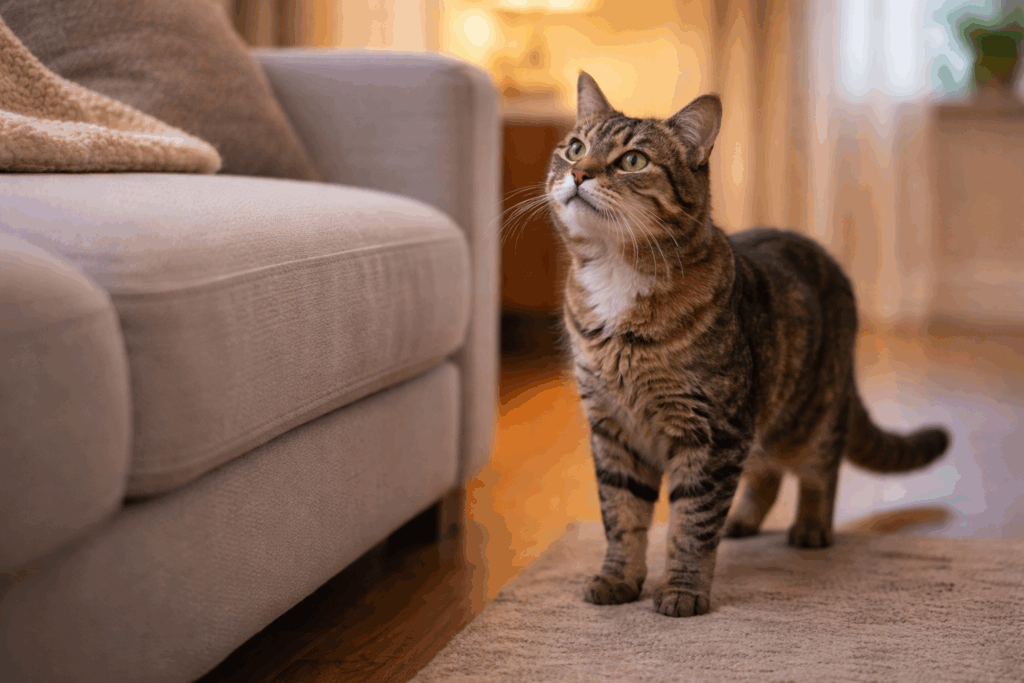
Many painful older cats don’t limp. Instead, you’ll see:
- Hesitation before jumping (or no jumping at all)
- Choosing lower surfaces
- Moving more slowly after rest
- “Creeping down” from heights instead of hopping off
These kinds of behavior changes are commonly cited as pain indicators in aging cats. (Vca)
Feline welfare guidelines from International Cat Care note that reduced activity, changes in grooming habits, and avoidance of jumping are among the most common pain-related behaviors observed in aging cats.
Subtle behavior changes are often early warning signs of illness, which is why it’s important to understand the health issues to watch for in older cats.
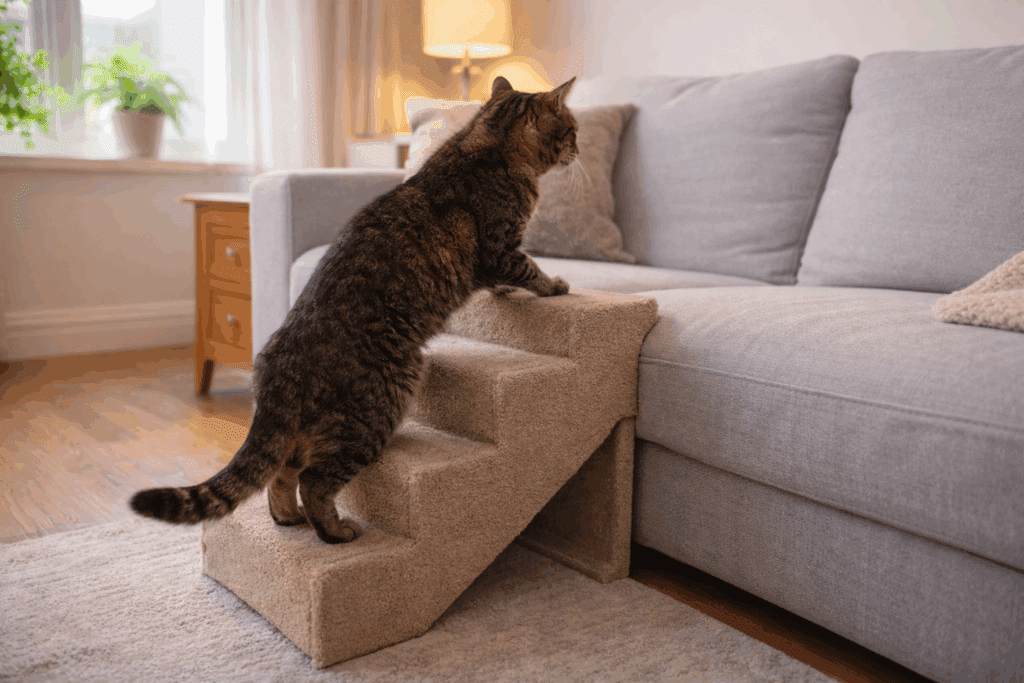
If jumping and stairs are the biggest changes you’re seeing, read our breakdown of cat arthritis pain signs and early mobility clues in Signs of Arthritis in Senior Cats.
Why this matters: Osteoarthritis (degenerative joint disease) is extremely common in cats as they age—radiographic evidence is frequently found in older cats, including very high rates in senior/geriatric groups. According to the American Association of Feline Practitioners (AAFP), chronic pain in cats is frequently under-recognized due to subtle behavioral changes…
2) Grooming changes (less grooming or “target grooming”)
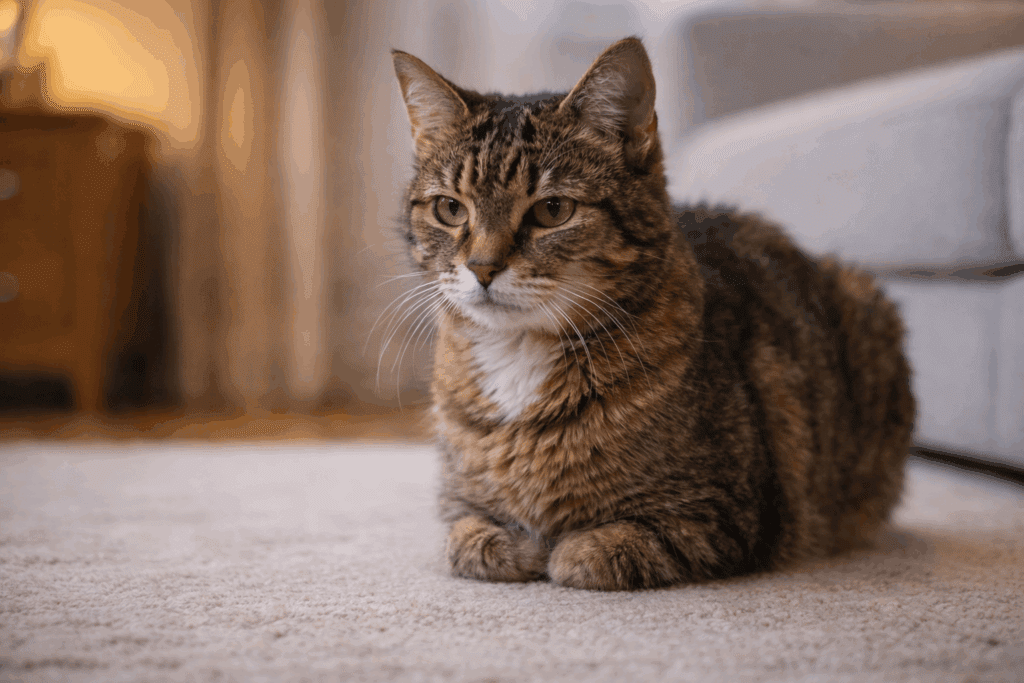
Pain can cause:
- Less grooming: coat gets dull/greasy, mats, dandruff, overgrown nails
- Overgrooming one spot: a patch of thinning hair or irritated skin
Decreased self-care and grooming changes are often flagged in pain discussions for older cats.
3) Litter box behavior changes
This is one of the most overlooked pain signs.
Watch for:
- Accidents outside the litter box
- Avoiding a high-sided box
- Difficulty squatting or getting comfortable
- Urinating over the edge because squatting hurts
- Litter box changes can be a pain signal
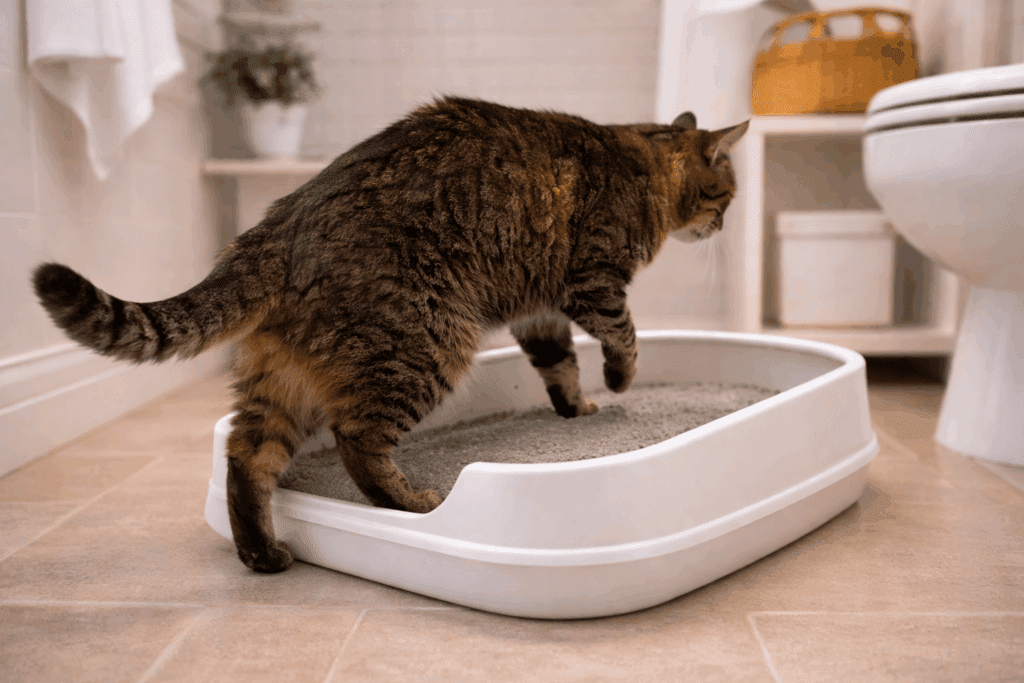
If your senior cat is hesitant to enter the box, urinates near the box, or appears uncomfortable squatting, pain (especially arthritis) may be involved. A low-entry litter box for senior cats can reduce strain immediately—here are our top picks in Best Litter Box for Senior Cats.
4) Personality changes (hiding, irritability, “don’t touch me”)
Pain commonly shows up as:
- Hiding more, less social
- Uncharacteristic aggression (swatting, growling)
- Sensitivity when touched—especially around the back/hips
These are specifically mentioned as pain-related behavior changes in aging cats.
5) Appetite and eating changes
Pain isn’t only “movement pain.” Dental pain, nausea, and internal discomfort can look like:
- Eating less (or eating, then walking away)
- Chewing slower or dropping kibble
- Preferring soft food
- Pawing at the mouth
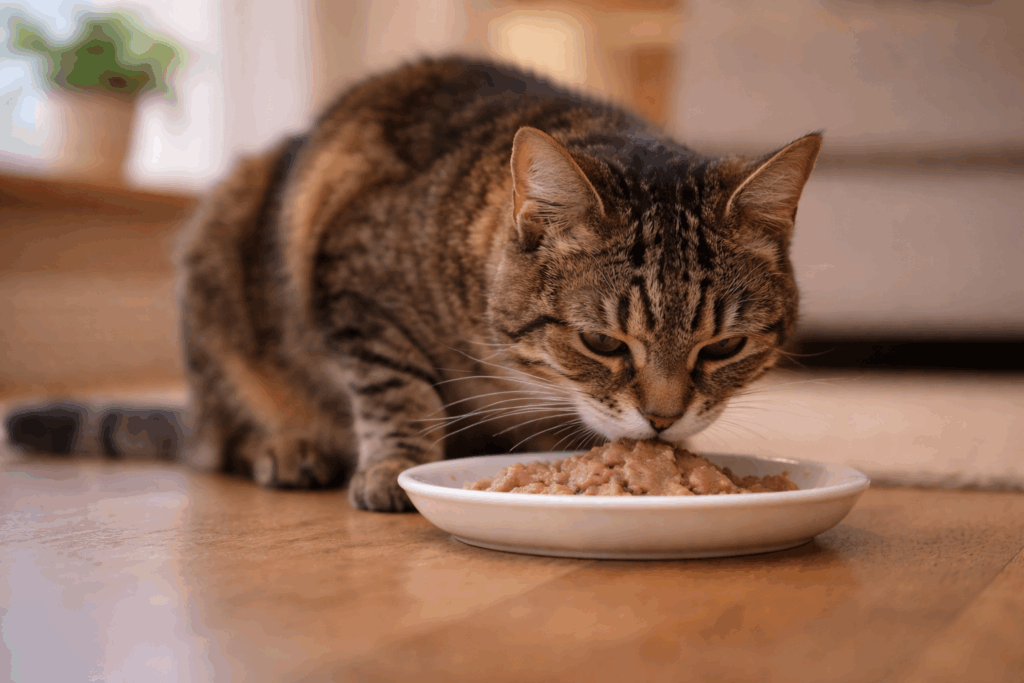
Slow chewing, dropping kibble, or avoiding dry food can be classic dental pain signs in senior cats—see our Senior Cat Dental Care complete guide for what to look for next.
6) Facial expression changes (helpful—but not the whole story)
The Feline Grimace Scale (FGS) is a validated tool that uses facial cues (ears, orbital tightening/squinting, muzzle tension, whiskers, head position) to assess acute pain in cats. (PubMed)
Important limitation: FGS is designed for acute pain, not as a standalone tool for chronic issues that many seniors experience. It’s best used as an extra clue, alongside behavior changes.
Quick red flags: call a vet today
Regardless of score, contact a veterinarian urgently if you see:
- Straining to urinate, frequent box trips with little output, or crying in the box
- Repeated vomiting, severe lethargy, collapse
- Sudden inability to walk/jump or severe limping
- Open-mouth breathing or extreme distress
- Severe abdominal pain (hunched, tense belly, won’t settle)
Free Pain Level Checker (Senior Cat Pain Assessment Tool)
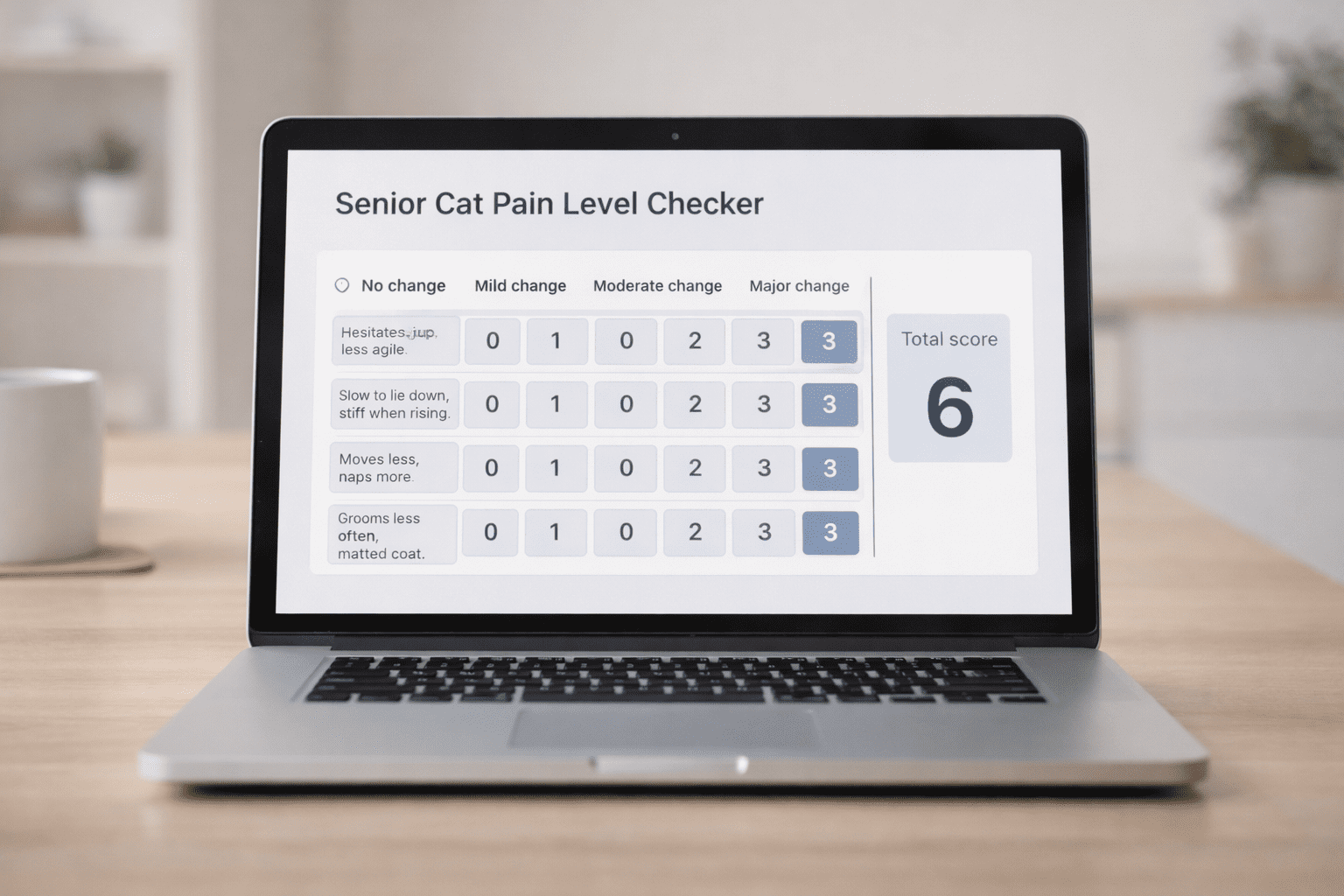
Use this quick tool to score the most meaningful pain signs in older cats. Do it once weekly, same day/time, to spot trends.
How to use it
For each question, score:
- 0 = normal
- 1 = mild change
- 2 = clear change
- 3 = severe change
Then review the guidance below.
Free Senior Cat Pain Level Checker
Score common pain signs in older cats in about 2 minutes. Track changes week to week and use the guidance below to decide when to call your veterinarian.
Guidance: Answer the questions below. Your recommendation updates automatically.
Score each area (0 = normal, 3 = severe change)
What Your Score Means (When to Call the Vet)
Your tool score is designed to mirror what veterinarians see most often: behavior change is the language of pain in cats.
Use these general thresholds:
- 0–5: Likely baseline → track weekly
- 6–11: Mild concern → schedule a non-urgent vet visit
- 12–19: Moderate concern → call your vet within 24–48 hours
- 20+: High concern → call your vet today
If you’re unsure, a simple rule helps: a steady trend upward over 2–3 weeks is more important than a single score.
Pain Profiles in Senior Cats (Common Patterns)
Arthritis pain signs (most common senior pattern)
Typical owner descriptions include:
- “He stopped jumping on the bed.”
- “She hesitates before jumping.”
- “He’s still eating… just slower and quieter.”
This matters because osteoarthritis is widely reported as common in older cats, and many cats show behavioral changes rather than obvious limping. (Today’s Veterinary Practice)
Helpful home supports (non-medical):
- Lower-entry litter box
- Ramps/steps to favorite spots
- Soft bedding in warm, easy-access areas
Dental pain signs
- Chewing slowly, dropping kibble
- Prefers soft food
- Pulls away when face is touched
- Bad breath + appetite changes
Urinary discomfort (can be urgent)
- Repeated litter box trips
- Straining or crying in the box
- Accidents, licking genitals more
If you see straining or little/no urine output, treat it as urgent.
GI pain or nausea
- Hunched posture
- Hiding + appetite drop
- Vomiting, constipation, or diarrhea patterns
What NOT to do if you suspect your cat is in pain
- Do not give human pain meds. Acetaminophen is extremely dangerous for cats; ibuprofen and other NSAIDs can cause serious harm even in small doses. (U.S. Food and Drug Administration)
- Don’t force handling if your cat is reactive—pain can make gentle cats defensive.
- Don’t assume “slowing down” is normal aging. Pain is common and treatable, but it needs veterinary guidance.
FAQ: Signs a Cat Is in Pain
Can a cat be in pain but still purr?
Yes. Purring can occur when cats are comfortable, stressed, or unwell—so don’t use purring as your “all clear.” Watch the full pattern (mobility, grooming, appetite, litter box).
What is the most subtle sign of pain in senior cats?
For many cats, it’s a change in jumping (hesitation, choosing lower surfaces) and litter box difficulty before you see limping.
Does the Feline Grimace Scale work for senior cats?
It’s validated for acute pain and can be helpful for noticing facial changes, but it’s not meant to replace behavioral tracking for chronic senior issues.
When should I take my senior cat to the vet for pain?
- Any urgent red flag (straining to urinate, repeated vomiting, sudden inability to jump/walk)
- Or a rising weekly score trend
- Or behavior change lasting more than a few days, especially if appetite or litter box habits shift
The behavioral indicators used in this pain checker are consistent with guidance from veterinary organizations, including the International Cat Care and the American Association of Feline Practitioners, which emphasize early recognition of subtle pain signs in senior cats.
Written by: Gary Tindale
Gary Tindale is the editor and lead content creator behind SeniorCatsCare.com, a resource dedicated exclusively to the health, comfort, and quality of life of senior cats. His work focuses on helping cat owners recognize subtle age-related changes—including mobility issues, dental discomfort, appetite shifts, behavior changes, and chronic pain—that are often overlooked or mistaken for “normal aging.”
Gary develops content using evidence-based veterinary principles, established feline pain-assessment frameworks, and practical caregiving experience. His goal is to translate complex veterinary concepts into clear, actionable guidance that helps owners monitor changes at home and communicate more effectively with their veterinarian.
SeniorCatsCare.com does not provide medical diagnosis or treatment. All content is educational and designed to support informed decision-making in partnership with licensed veterinary professionals.
About This Guide – Medical Review Disclaimer
Experience:
This guide was written for caregivers of aging cats, drawing on real-world patterns owners commonly notice first—changes in jumping, grooming, litter box use, appetite, and behavior. Senior cats rarely show dramatic signs of pain, so this article focuses on the subtle, everyday changes that experienced owners and veterinarians consistently report.
Expertise:
Content was developed using established veterinary pain-assessment principles, including behavior-based pain recognition and validated tools such as the Feline Grimace Scale (used appropriately as a supporting indicator, not a standalone diagnostic). The pain level checker emphasizes functional changes—the same categories veterinarians rely on during senior wellness exams.
Authoritativeness:
SeniorCatsCare.com is dedicated exclusively to senior cat health, comfort, nutrition, and quality of life. Related in-depth guides referenced in this article include:
- Signs of arthritis in senior cats
- Senior cat dental care
- Senior-friendly litter box solutions
These resources are designed to work together as a comprehensive senior-cat care library, not isolated articles.
Trust & Transparency:
This article and pain checker are educational tools, not a diagnostic substitute. They are intended to help owners:
- recognize potential pain earlier,
- track changes consistently over time, and
- communicate more clearly with their veterinarian.
No medications or treatments are recommended without veterinary oversight. Human pain medications are never safe for cats. If your cat shows sudden or severe symptoms (such as straining to urinate, repeated vomiting, collapse, or sudden inability to walk), contact a veterinarian or emergency clinic immediately.
Last reviewed: 12/27/25
Editorial policy: Content is reviewed periodically to reflect current veterinary guidance and senior-cat care best practices.
Trust & Transparency: Focused exclusively on senior cat care • Content reviewed and updated periodically • Educational content only — not a substitute for veterinary care