By Gary Tindale
Last Updated: 12-6-25
Cats age differently than humans — especially once they reach their mature and senior years. Understanding your cat’s “true age” in human years can help you spot aging changes earlier, adjust nutrition and mobility support, and make more informed decisions about their care.
Use the Cat Age Calculator below to convert your cat’s age into human years, then explore the guide to see what each life stage means for long-term health and comfort.
🧮 Cat Age Calculator — Convert Cat Years to Human Years
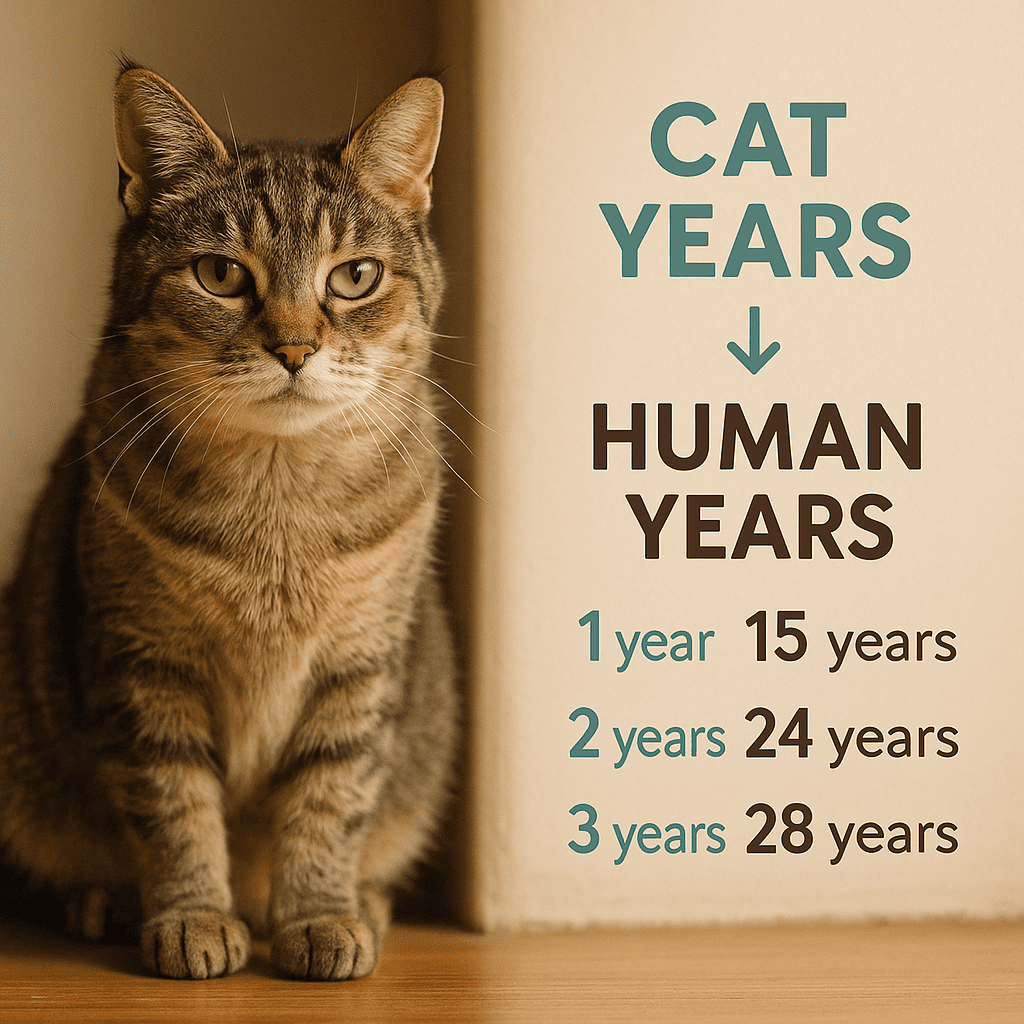
Cats age differently from humans, and the changes accelerate significantly after age seven. This cat age calculator provides a simple estimate of your cat’s age in human years using the widely accepted veterinary model: the first year equals roughly 15 human years, the second year equals 24, and each additional year adds about 4 human years. This offers a practical way to understand your senior cat’s stage of life — from middle-aged to truly geriatric.
Cat Age in Human Years Calculator
How old is your cat in human years? Aging works differently for cats—especially senior and super-senior cats. Use this quick calculator to estimate your cat’s human-age equivalent and better understand what health, mobility, and nutrition needs typically appear at their life stage.
How This Cat Age Calculator Works
This calculator follows a common veterinary model used by many feline health experts:
- 1 cat year = ~15 human years (rapid development)
- 2 cat years = ~24 human years
- Each additional year = ~4 human years
This method is not a perfect biological measurement — but it gives a reliable, widely-used approximation that helps owners better understand their senior cat’s life stage.
Keep in mind that aging varies significantly based on:
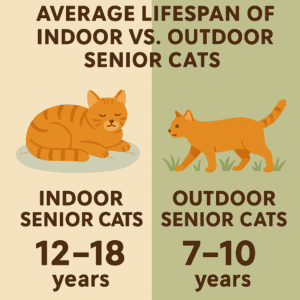
- Indoor vs. outdoor lifestyle
- Breed differences
- Genetics
- Dental and kidney health
- Nutrition and body weight
- Chronic conditions (e.g., arthritis, hyperthyroidism)
📈 Cat Years to Human Years Chart
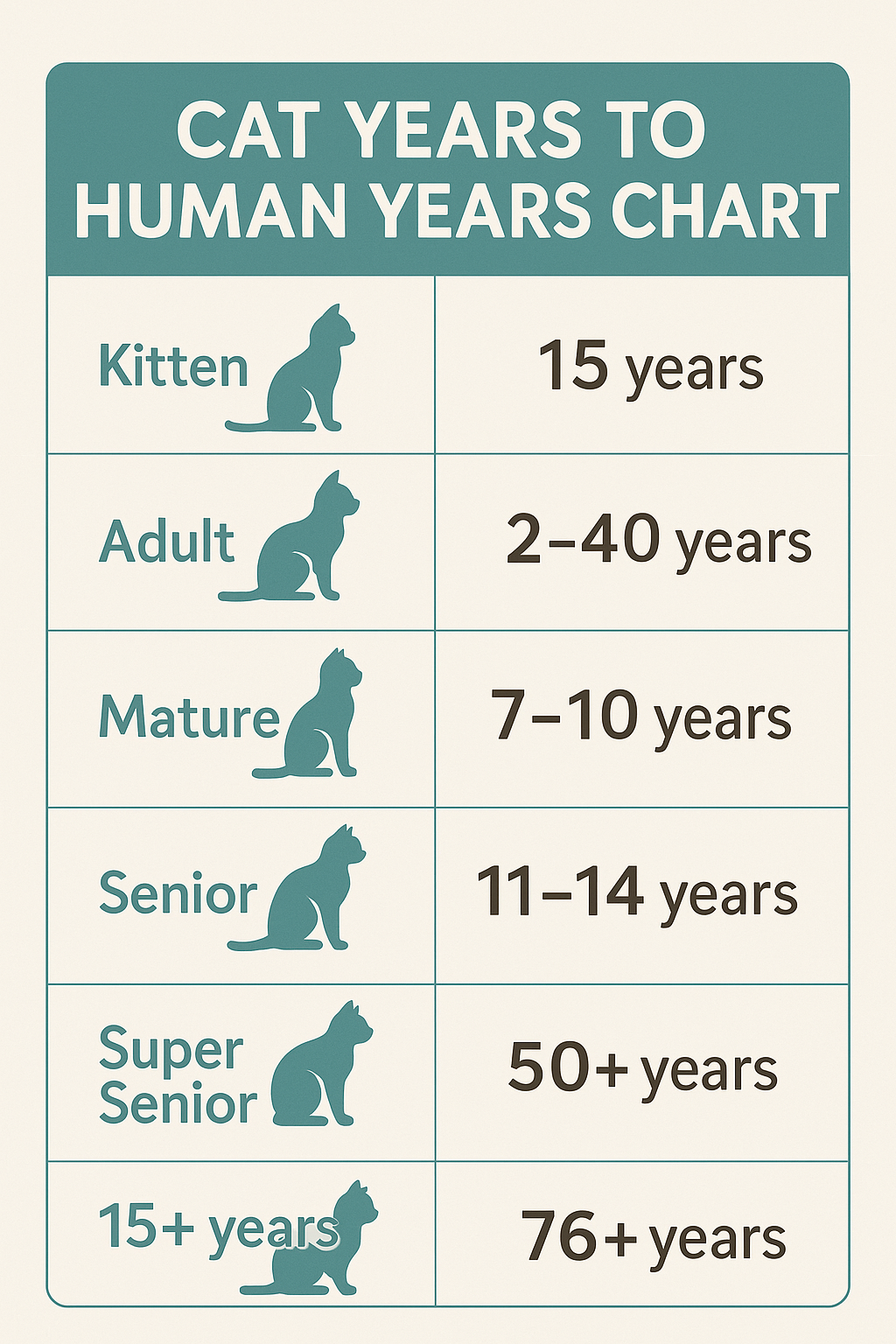
Use this quick reference chart to see how your cat’s age compares to human aging:
| Cat’s Age (Years) | Human Years Equivalent | Life Stage |
|---|---|---|
| 1 | 15 | Junior → Adult |
| 2 | 24 | Young Adult |
| 3 | 28 | Adult |
| 5 | 36 | Adult |
| 7 | 44 | Mature (middle-aged) |
| 10 | 56 | Mature |
| 12 | 64 | Senior |
| 14 | 72 | Senior |
| 15 | 76 | Super Senior |
| 18 | 88 | Super Senior |
| 20 | 96 | Super Senior |
SeniorCatsCare.com focuses especially on the needs of cats ages seven and older, a period where many subtle health and mobility changes begin.
🐱 Why Knowing Your Cat’s Human-Age Equivalent Matters
Aging is gradual, and cats are experts at masking discomfort. Seeing your cat’s age in human terms helps you:
- Understand whether your cat is in adulthood, midlife, or transitioning into the senior years
- Recognize when dietary needs should shift toward senior-focused nutrition
- Identify early mobility changes that may benefit from joint support
- Adjust grooming, enrichment, and comfort needs as they grow older
- Plan age-appropriate veterinary exams
For example, once your cat reaches the mature stage (around age seven), early changes in weight, muscle tone, and movement may appear. Our guide on supporting aging cats — including our Senior Cat Care Checklist — can help you navigate these transitions with confidence.
Real-Life Experience
One of my own senior cats, Willow, became noticeably quieter and slept more around age 11 — which corresponds to about 60 human years. That age milestone helped me adjust her care by increasing vet checkups to every six months and switching to a joint-friendly senior diet. Understanding your cat’s “human age” makes it easier to support them through each stage of aging.
🧬 The Five Feline Life Stages (and What They Mean for Care)
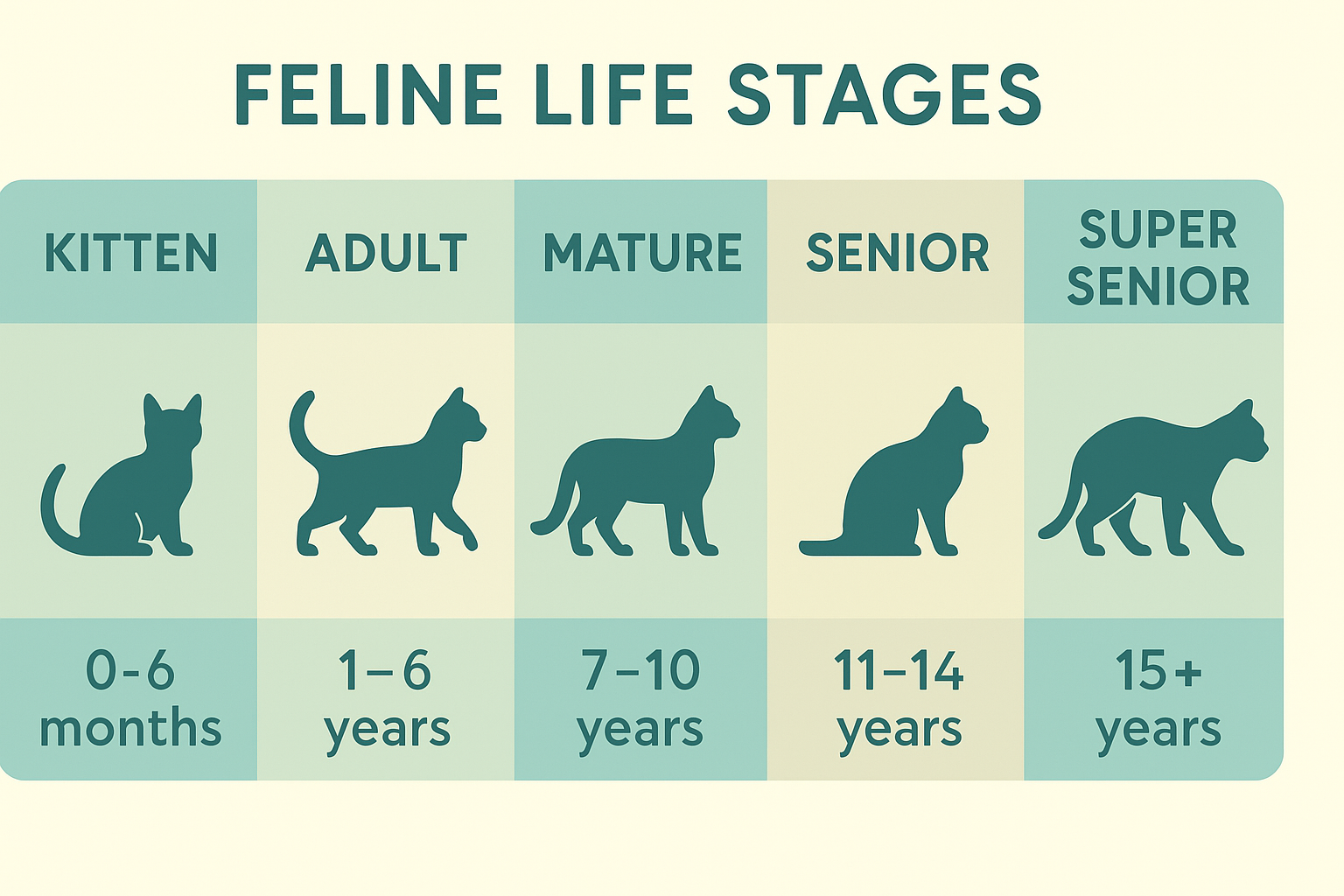
Kitten / Junior (0–1 years)
Equivalent to: up to ~15 human years
Kittens and juniors grow quickly and undergo major physical and behavioral development. This stage is all about growth, play, and laying the foundation for lifelong health.
Adult (1–6 years)
Equivalent to: ~15–40 human years
Adult cats are typically healthy and active, but this is the best time to prevent future issues. Watching for small changes in weight, energy, or behavior can give early insight into aging patterns. Our article on Early Signs of Aging in Cats explains what to look for as your cat approaches midlife.
Mature (7–10 years)
Equivalent to: ~44–56 human years
Mature cats may begin showing subtle aging signs such as stiffness, reduced jumping, or changes in appetite. Many owners explore added support at this stage, including hydration strategies and gentle joint assistance. If you’re curious whether supplements can help, see our research-backed guide:
➡️ Supplements for Senior Cats — Do They Really Work?
Senior (11–14 years)
Equivalent to: ~60–72 human years
Senior cats often need changes in nutrition, access, and comfort. Lower-sided litter boxes, softer bedding, and more frequent veterinary checkups can make daily life easier. Our recommendations for senior-friendly litter boxes and mobility-support products can help you adjust your home environment with minimal stress.
Super Senior (15+ years)
Equivalent to: 76+ human years
Super-senior cats benefit from warmth, soft orthopedic bedding, pain-awareness monitoring, and gentle routines. If you’re caring for a cat in this stage, our Super Senior Cat Care Guide provides practical ways to support mobility, comfort, and emotional well-being during the later years.
🔍 What If You Don’t Know Your Cat’s Exact Age?
Many cats come from rescues or outdoor backgrounds, and their birthdate isn’t always known. You can estimate age based on:
- Dental wear and tartar buildup
- Coat condition and texture changes
- Eye clarity or cloudiness
- Muscle tone and posture
- Activity level and mobility
A veterinarian can give the most accurate estimate, but the calculator combined with these cues provides a solid approximation.
🛠️ What to Do After You Learn Your Cat’s Human-Age Equivalent
Once you’ve calculated their age, here’s how to tailor care based on their life stage:
If your cat is Mature (7–10 years)
- Watch for early joint changes
- Maintain a stable weight
- Introduce gentle enrichment
- Consider supportive supplements. Explore: Senior Cat Care Checklist and Senior Cat Supplements Guide
If your cat is Senior (11–14 years)
- Switch to senior-formulated food
- Provide easy-access litter boxes
- Ensure a warm, draft-free resting area. Explore: Best Litter Boxes for Senior Cats
If your cat is 15+ (Super Senior)
- Schedule frequent vet evaluations
- Add orthopedic bedding for pressure relief
- Monitor mobility and pain signals carefully. Explore: Comfort Beds for Older Cats and Super Senior Cat Care Guide

What Your Cat’s “Human Age” Means for Their Care
Once a cat reaches the equivalent of 50–60 human years (around ages 10–12), veterinary experts recommend the following:
- Twice-yearly wellness exams
- Dental evaluations
- Kidney and thyroid bloodwork
- Joint and mobility monitoring
- Adjustments to diet or supplements if recommended by your vet
Your cat’s age in human years isn’t just interesting — it’s a useful tool for planning proactive senior care.
❓ Cat Age Calculator FAQ
Is this calculator exact?
It’s an estimate, but it follows the same veterinary model used by many trusted pet-care organizations. Individual cats may age faster or slower depending on genetics, weight, and lifestyle.
Can kittens use the calculator?
Yes. Enter ages like 0.5 or 0.8, and the calculator will adjust accordingly.
Do some cat breeds age longer or slower?
Yes. Breeds like Siamese and Maine Coons often have longer lifespans and may stay active into later years.
When is a cat considered a senior?
Most veterinarians consider 11 years to be the beginning of the senior stage.
🐾 Understanding Your Cat’s Age in Human Years
Understanding your cat’s age in human years is more than a fun comparison — it’s a practical tool for making better decisions about nutrition, mobility, comfort, and veterinary care. Whether your cat is stepping into maturity or well into their golden years, you’ll find resources throughout SeniorCatsCare.com designed to support every stage of aging.
Use the calculator, explore the care guides linked throughout this article, and help your cat live a longer, more comfortable, and happier life.
Sources & Veterinary References
- American Veterinary Medical Association (AVMA) – Feline Life Stage Guidelines
- Cornell Feline Health Center – Senior Cat Health & Aging
- American Animal Hospital Association (AAHA) – Senior Care Guidelines
About This Tool
This calculator is designed to give cat owners a clear, research-based estimate of their cat’s age in human years. The formulas used here follow common veterinary aging guidelines and are adapted from trusted feline-health organizations.
Our Approach to Accuracy
While aging can vary between individual cats, each component of this tool is reviewed against current veterinary consensus to provide the most reliable estimate possible. We update our tools as new research becomes available.
Why Trust SeniorCatsCare.com
SeniorCatsCare focuses exclusively on the health and well-being of aging cats. Our tools and guides are built to help you make informed decisions about nutrition, mobility, comfort, and preventive care—especially for mature, senior, and super-senior cats.
Author: Gary Tindale— lifelong cat owner with 20+ years of experience caring for senior and medically fragile cats. Over two decades, Gary has supported cats through dental disease, kidney issues, arthritis, and age-related cognitive changes. This calculator and guide combine real-world experience with established veterinary aging guidelines.
Why this tool matters: Understanding how your senior cat’s age compares to “human years” helps you better anticipate health needs, behavior changes, and required vet checkups as they grow older.
Disclaimer: This calculator provides an approximate age comparison and is for informational purposes only. Always consult a licensed veterinarian for health assessments or age-related concerns.