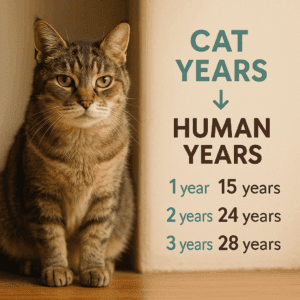

When is a Cat a Senior?
If you’ve ever wondered, “When is a cat a senior?”, you’re not alone. Cats live long, fulfilling lives, and many pet parents are surprised to learn that the senior years often begin earlier than expected. Understanding when your cat officially becomes “senior” helps you adjust their care, diet, and lifestyle so they can stay happy and comfortable well into old age.
In this guide, we’ll explore senior cat age ranges, common signs of aging in cats, and practical senior cat care tips to make your feline’s golden years the best they can be.
Use our Cat Age Calculator to see your cat’s age in human years.
When Is a Cat a Senior?

Most veterinarians consider cats seniors at around 10–11 years of age, though this can vary depending on breed, genetics, and overall health.
Here’s a general breakdown:
- Mature cats: 7–10 years
- Senior cats: 11–14 years
- Geriatric cats: 15+ years
Think of it like human aging. A 10-year-old cat is roughly equivalent to a 56-year-old person, while a 15-year-old cat may be closer to 76 in human years.
📊 Tip: Using a senior cat age chart can help you visualize your cat’s life stage.
For a deeper comparison, you might also like our guide on indoor vs outdoor senior cat age charts, which shows how aging differs across species.
Why the Senior Stage Matters
Recognizing that your cat has entered the senior stage is important because their needs change significantly:
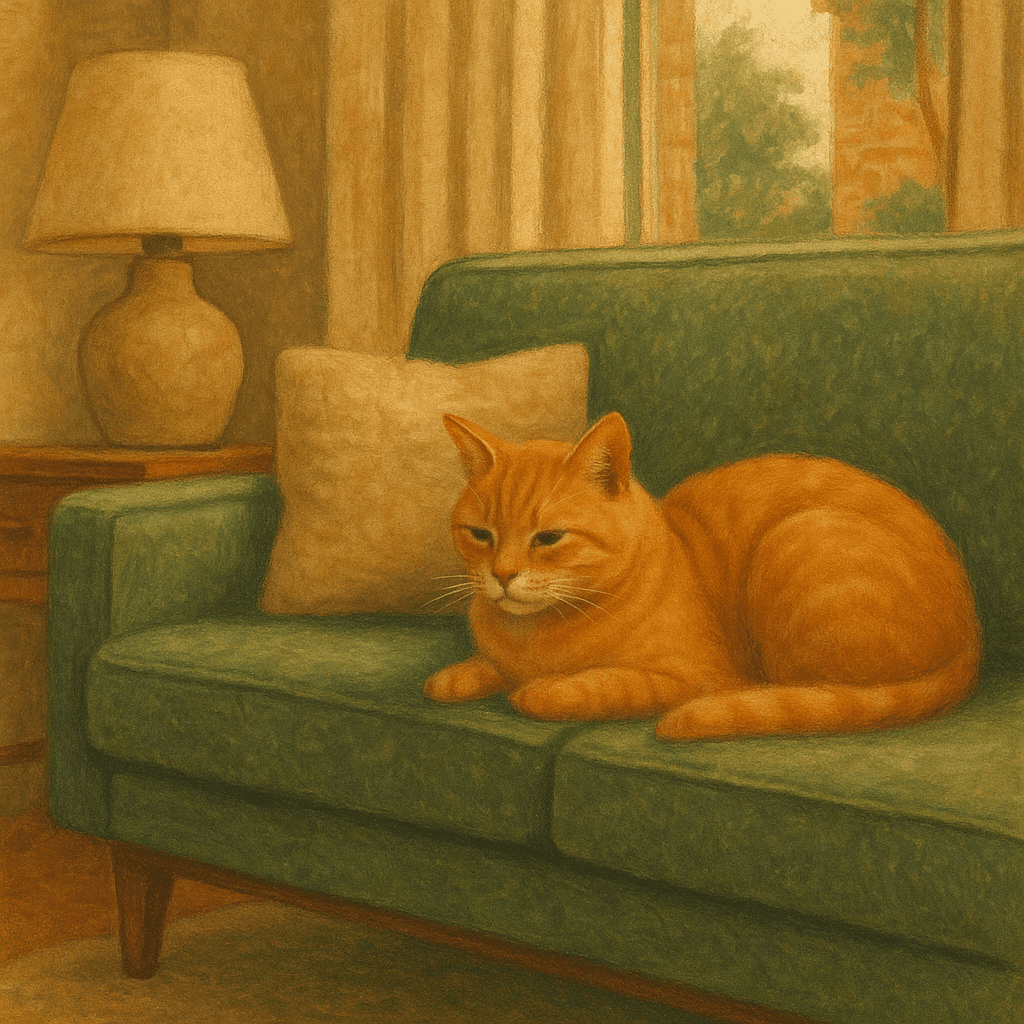
- Metabolism slows down → risk of weight gain or obesity.
- Joint health declines → arthritis and mobility issues may appear.
- Organ function changes → kidneys, thyroid, and heart require closer monitoring.
- Behavior shifts → senior cats may sleep more, play less, or show changes in grooming habits.
By catching these changes early, you can work with your vet to prevent or manage health issues.
🐾 Learn more in our post on senior cat arthritis. As cats enter their senior years, supportive sleep surfaces become essential. See our guide to the best cat beds for senior cats to help your older kitty rest more comfortably.
Signs of Aging in Cats
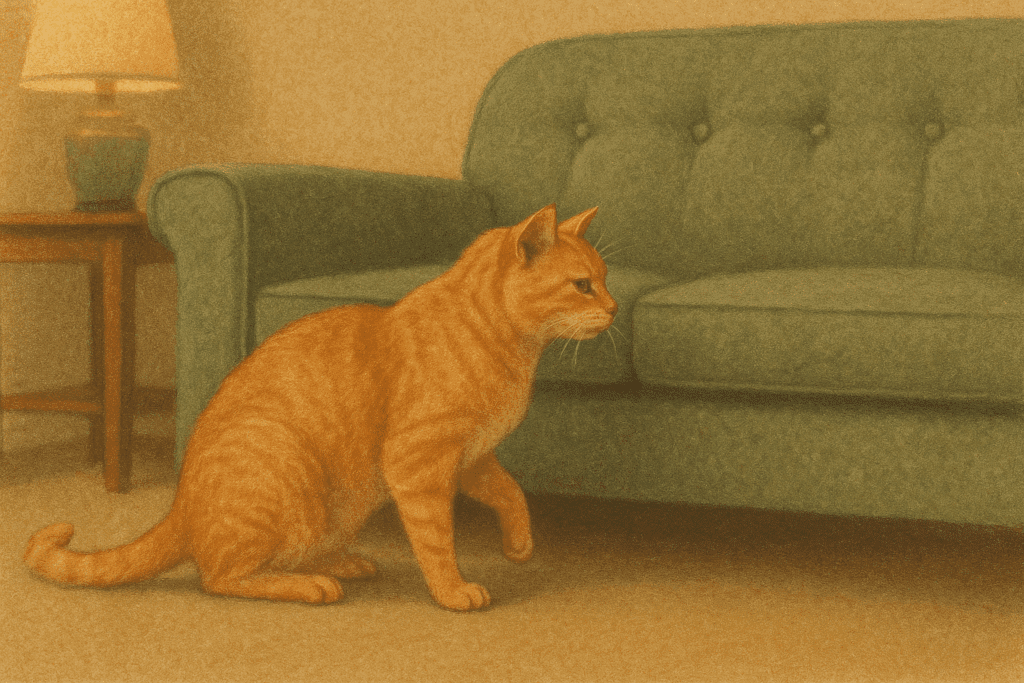
Every cat ages differently, but here are common signs your cat may be entering their senior years:
- Sleeping more than usual
- Stiffness, difficulty jumping, or slower movements
- Weight gain or unexplained weight loss
- Changes in appetite or thirst
- Less frequent grooming or a dull coat
- Litter box accidents or increased urination
- Changes in mood—more vocal, clingy, or withdrawn
For more detailed veterinary insights, the American Association of Feline Practitioners provides official life stage guidelines for cats.
Senior Cat Health: What to Watch For
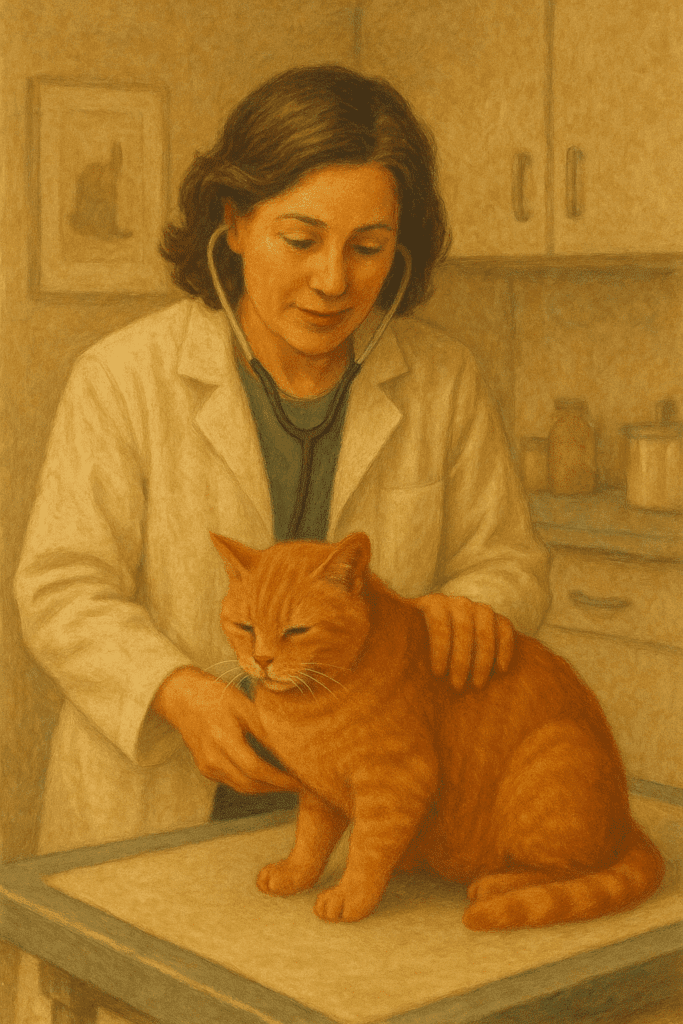
Senior cats are more prone to certain conditions. Knowing the risks helps you stay one step ahead:
- Kidney disease – common in older cats
- Arthritis – may limit mobility
- Dental disease – can cause pain and eating problems
- Hyperthyroidism – leads to weight loss and restlessness
- Diabetes – often linked to weight gain
Regular bloodwork, dental exams, and wellness visits are essential. The Cornell Feline Health Center is an excellent resource for learning more about age-related cat conditions. Use our Health Checklist to keep track.
Senior Cat Care Tips
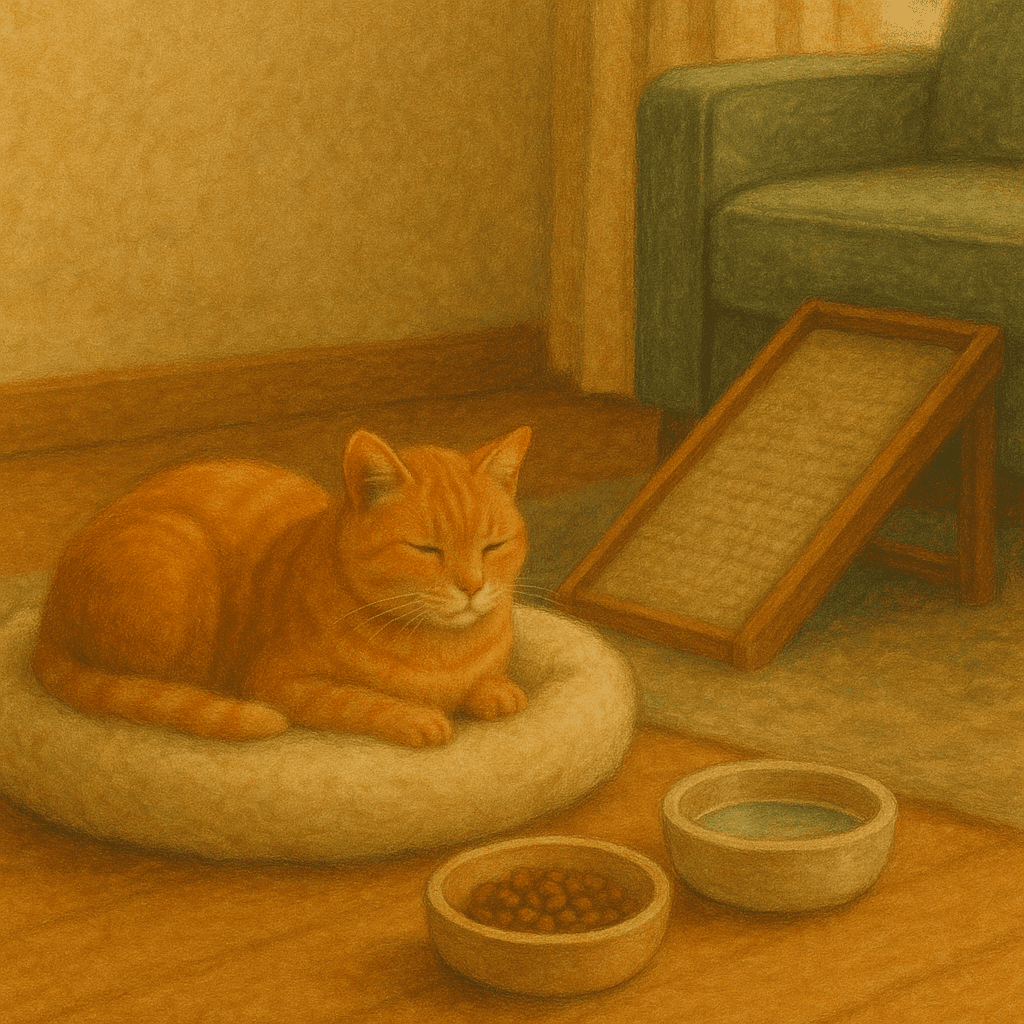
Once your cat is considered senior, small adjustments can make a big difference:
- Nutrition: Choose a senior cat food formulated for joint, heart, and kidney health.
- Comfort: Provide warm, soft bedding and easy-to-reach resting spots.
- Mobility support: Use ramps, low litter boxes, and non-slip mats for arthritic cats.
- Enrichment: Keep play gentle but consistent to maintain muscle and mental health.
- Routine vet care: Schedule wellness visits every 6 months if possible.
Visit our Best Supplements for Senior Cats Guide for detailed information on supplementation.
FAQs About Senior Cats
What age is considered senior for indoor cats?
Indoor cats typically live longer than outdoor cats. Most are considered senior around 11 years old, but many live happily into their late teens.
Do senior cats still play?
Yes! Senior cats may not play as energetically, but they still benefit from gentle play sessions to stay active and engaged.
Should I change my senior cat’s food?
In most cases, yes. Senior formulas are designed to support joint health, digestion, and organ function. Always consult your vet before switching.
How long do senior cats live?
With good care, many cats live well into their late teens or even early 20s.
How can I make my senior cat more comfortable?
Provide soft bedding, easy access to food/water, ramps for climbing, and regular vet checkups to ensure comfort.
Recognize the Signs of Aging
So, when is a cat a senior? Typically, around 10–11 years old—but every cat is unique. Recognizing the signs of aging and adjusting your care routine helps your feline friend stay happy, healthy, and comfortable in their golden years.
If your cat is entering this stage, think of it as a new chapter filled with extra cuddles, softer blankets, and a deeper bond between you and your beloved companion.