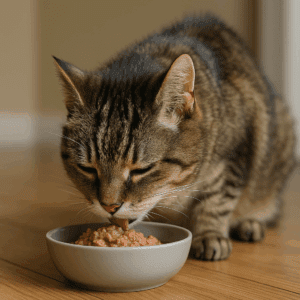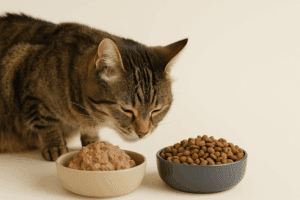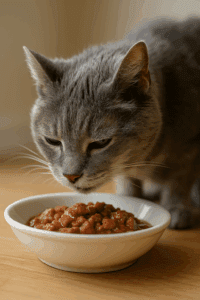
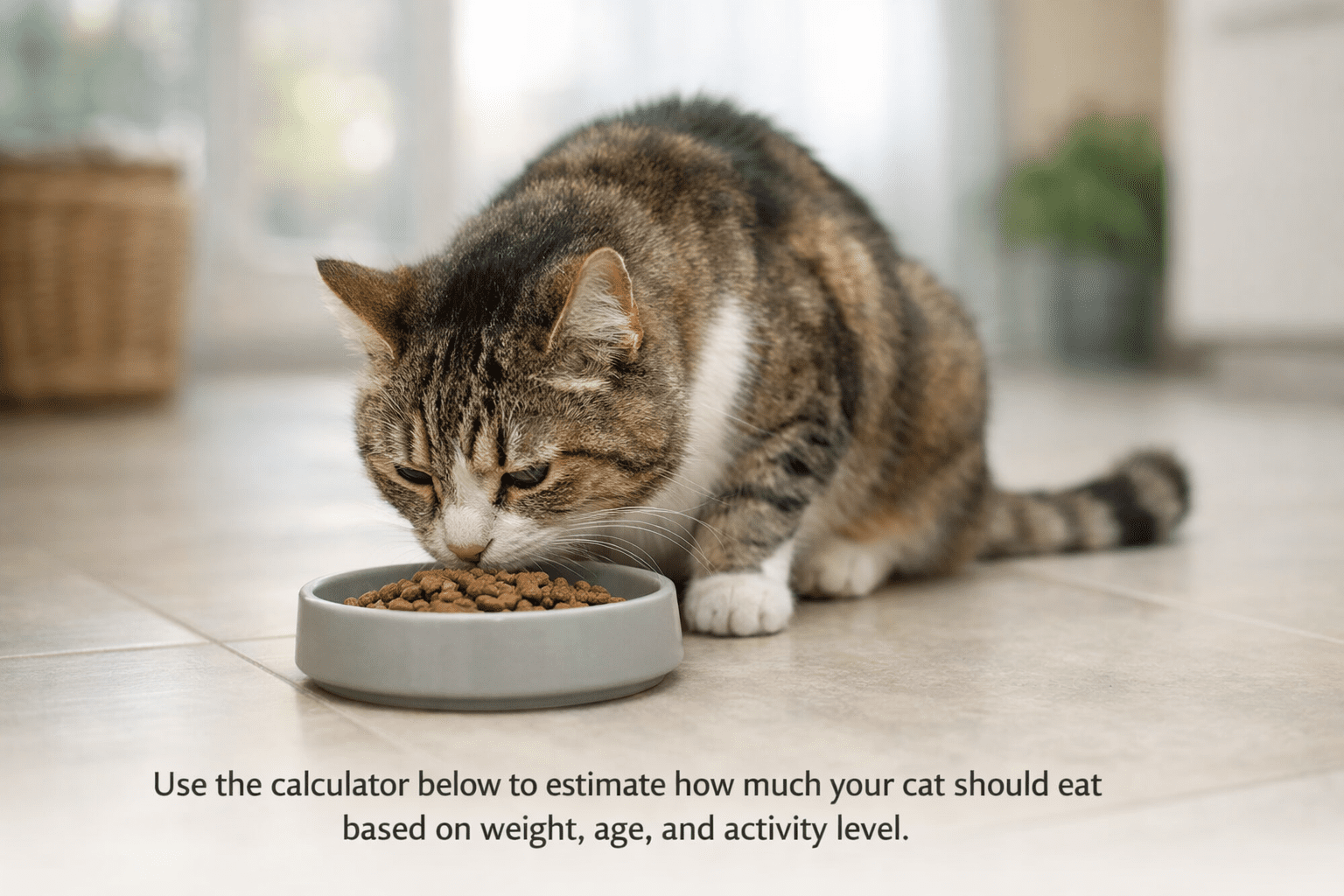
Most adult cats need about 20–30 calories per pound of their ideal body weight per day, depending on age, activity level, and whether they’re spayed or neutered. Senior and indoor cats usually need fewer calories, while kittens and very active cats need more. The calculator below turns those estimates into real feeding amounts.
Use the Cat Weight & Food Calculator
👉 Enter your cat’s details below to get a personalized estimate.
Cat Weight & Food Calculator
Estimate daily calories and convert them into a practical feeding amount.
Your estimate
Estimates only. For medical conditions or sudden weight change, consult your veterinarian.
Important Notes
This calculator provides estimates for healthy cats and is not a substitute for veterinary diagnosis. Sudden weight loss, persistent hunger, vomiting, or appetite changes should always be discussed with a veterinarian.
For best results, adjust portions slowly (5–10% at a time) and reassess body condition every 2–3 weeks.
Why This Calculator Exists
Many cat owners arrive here after noticing slow weight gain, food bowl confusion, or conflicting feeding advice. This calculator was built from real-world feeding adjustments used with adult and senior cats—measuring portions carefully, tracking weight over time, and making small, realistic changes rather than extreme restrictions. The goal isn’t perfection. It’s consistency you can actually maintain.
Why “How Much Should My Cat Eat?” Is Harder Than It Sounds
Most cat feeding problems aren’t caused by bad food — they’re caused by portion drift.
Common issues include:
- Scooping food “by eye.”
- Free-feeding dry kibble
- Never adjusting portions as cats age
- Feeding for current weight, not ideal weight
- Forgetting to count treats
Because cats are small, even 20–30 extra calories per day can slowly lead to weight gain over time.
That’s why this calculator focuses on calories first, then converts them into food amounts.
For broader guidance on feeding older cats, see our senior cat nutrition guide.
What the Calculator Uses (Transparent Logic)
This tool is intentionally conservative and practical. It does not guess wildly or push aggressive weight changes.
1. Ideal Weight (Not Just Scale Weight)
If your cat is overweight, feeding based on current weight keeps the problem going.
If underweight, it can slow recovery.
When in doubt, start with current weight and adjust slowly.
2. Life Stage
- Kittens: higher calorie needs for growth
- Adults: baseline energy needs
- Seniors: often slightly lower needs, but muscle preservation matters
Feeding needs change as cats age, especially for indoor and senior cats. That’s why this calculator prioritizes steady weight trends over short-term results.
3. Activity Level
- Low: indoor, mostly resting
- Moderate: normal play
- High: very active or outdoor cats
Most indoor cats fall into the low category.
4. Spayed / Neutered Status
Neutered cats typically burn fewer calories. The calculator accounts for this automatically.
5. Feeding Goal
- Maintain weight (default)
- Gentle weight loss
- Gentle weight gain
No extreme deficits. No crash feeding plans.
How Many Calories Does My Cat Need?
As a general reference:
| Cat Type | Approx. Calories per lb (ideal weight) |
|---|---|
| Indoor / inactive | ~20 kcal |
| Average adult | ~22–25 kcal |
| Active | ~25–30 kcal |
| Senior (most cats) | ~20–24 kcal |
Example:
A 10-lb senior indoor cat × ~22 kcal = ~220 calories per day
The calculator adjusts this number based on your selections.
How the Calculator Estimates Calories
This tool uses widely accepted feline calorie ranges (calories per pound of ideal body weight) and applies conservative adjustments for life stage, activity level, and spay/neuter status. It avoids aggressive calorie deficits and favors gradual changes that can be monitored safely at home.
Turning Calories Into Food (The Most Confusing Part)
Calories are what matter — but cats eat food, not numbers.
That’s why the calculator lets you convert calories into real portions.
Dry Food (Kibble)
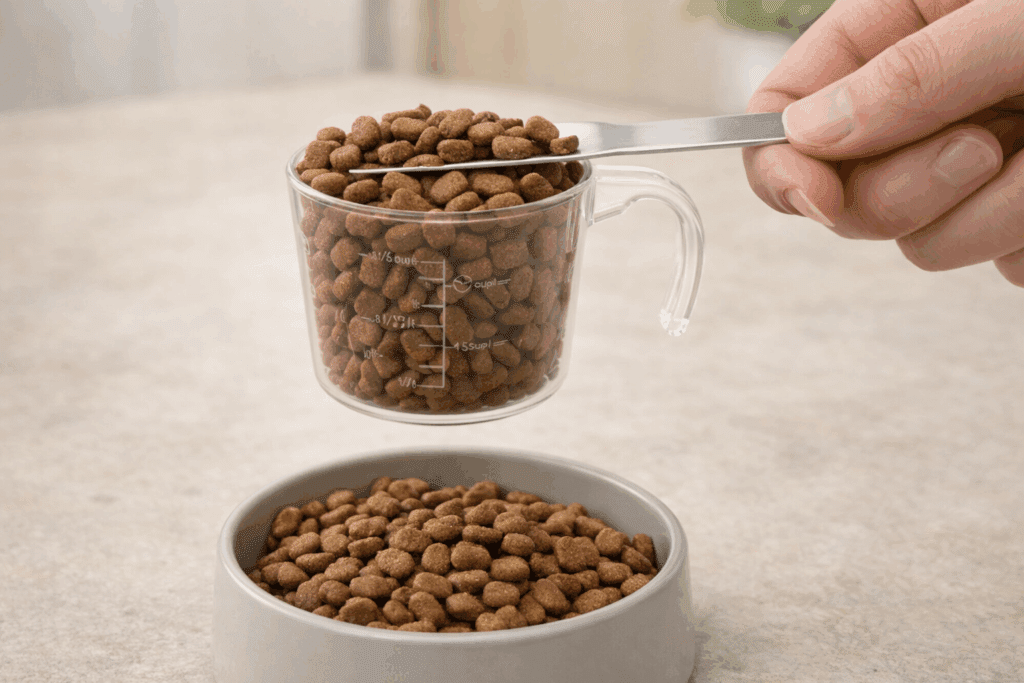
- Typical dry food: 350–450 calories per cup
- Many cats only need ⅓–½ cup per day
Dry food is easy to overfeed, especially with free-feeding.
Wet Food (Canned)
- Typical 3-oz can: 70–110 calories
- Many adult cats eat 2–3 small cans per day
Wet food can help with:
- Portion control
- Hydration
- Weight management
- Senior cats with dental issues
Mixed Feeding (Dry + Wet)

If you feed both, the calculator splits calories by percentage, not guesswork.
Example:
- 50% calories from wet
- 50% calories from dry
This avoids accidentally feeding full portions of both.
Still deciding between food types? This comparison of wet vs dry cat food explains how calories and portions differ.
Don’t Forget Treat Calories
Treats count.
The calculator lets you subtract daily treat calories so you don’t unknowingly overfeed.
Even a few treats can account for 10–20% of a cat’s daily needs.
How to Tell If You’re Feeding Too Much or Too Little
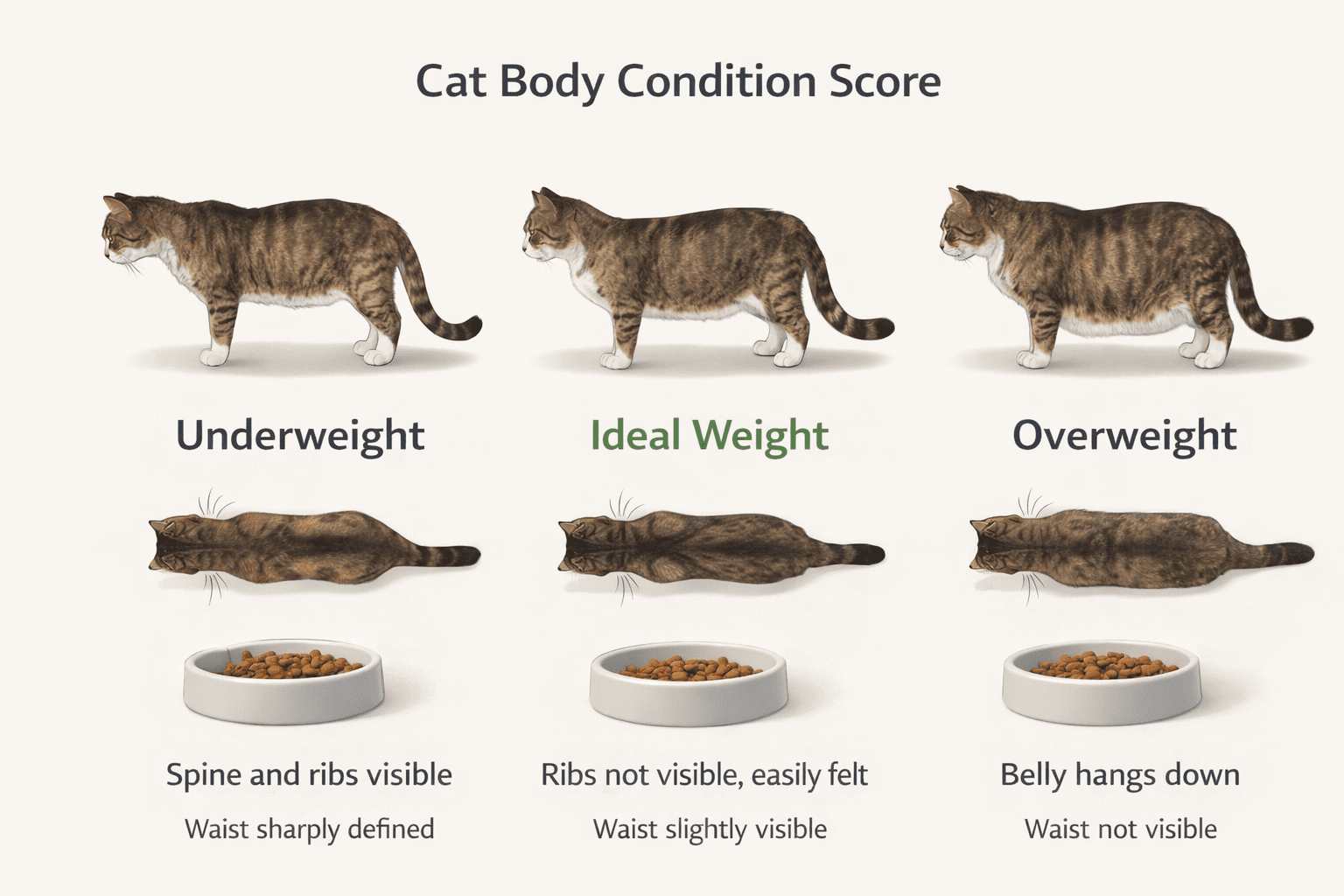
Signs of Overfeeding
- No visible waist
- Belly hangs or swings
- Reduced activity
- Difficulty grooming
Signs of Underfeeding
- Prominent spine or ribs
- Muscle loss in hips
- Constant hunger
- Dull coat
Use body condition, not the bowl, as your guide.
How Often Should I Adjust Portions?
- Recheck weight every 2–3 weeks
- Adjust by 5–10% at a time
- Avoid daily changes
Sudden weight loss, appetite changes, or vomiting should always be discussed with a veterinarian.
Common Cat Feeding Mistakes
- Free-feeding dry food
- Measuring portions visually
- Never changing portions as cats age
- Ignoring treats calories
- Switching foods without adjusting amounts
This calculator exists to remove guesswork from those decisions.
Let Your Cat’s Body Condition Be the Guide
There’s no universal answer to “How much should my cat eat?”
But there is a reliable process:
- Start with the ideal weight
- Adjust for age, activity, and neuter status
- Count calories first
- Convert to food portions
- Reassess gradually
Use the calculator above as a starting point — then let your cat’s body condition guide small adjustments over time.
About the Author
This article was written by the SeniorCatsCare editorial team, specializing in nutrition, comfort, and long-term well-being for aging cats. Our focus is practical, experience-driven guidance that helps cat owners make calm, informed decisions.