As cats reach their senior years, the environment they once moved through with confidence can gradually become harder to navigate. Joint stiffness, reduced vision, slower reflexes, and cognitive changes affect how older cats experience their surroundings. With thoughtful, practical senior cat home adjustments, you can transform your living space into a comfortable, accessible, and confidence-building sanctuary for your aging feline.
These strategic home updates don’t have to be complicated. Small modifications—better traction on floors, low-entry litter boxes, stable perches, and predictable room layouts—often make the biggest difference. This guide walks you through the key adjustments that help create a truly senior cat-friendly home with modern feline wellness and accessibility in mind.
Table of Contents
Why Senior Cats Benefit From Home Adjustments
Aging cats often deal with mobility issues, arthritis, weaker muscles, and reduced balance, making jumps and stairs more difficult. Many also cope with diminished vision, hearing changes, or early cognitive decline, which can lead to confusion or hesitation in unfamiliar or cluttered spaces. Resources like the Cornell Feline Health Center’s guidance on caring for older cats reinforce how environment directly impacts wellness.
Your home plays a major role in how safe and secure a senior cat feels. Environmental updates—like simplifying pathways, offering easy access to essentials, and maintaining consistent layouts—help compensate for these changes.
Core Principles of a Senior Cat-Friendly Home
Before diving into room-by-room adjustments, it helps to understand the guiding principles behind an effective senior cat home setup.
Reduce physical effort
Make it possible for your cat to eat, rest, and use the litter box without difficult jumps or steep climbs.
Improve accessibility
Place essential resources—food, water, and litter—on each level of your home, minimizing long walks or stairs.
Maintain predictability
Older cats rely heavily on familiar routes. Avoid frequent furniture rearranging and keep their main zones stable.
Increase comfort
Soft beds, warm locations, draft-free resting spots, and stable surfaces help older cats relax comfortably.
Enhance safety
Remove tripping hazards, secure wobbly furniture, improve lighting, and gently block risky heights.
Room-by-Room Senior Cat Home Adjustments
Entryways, Hallways & Main Pathways
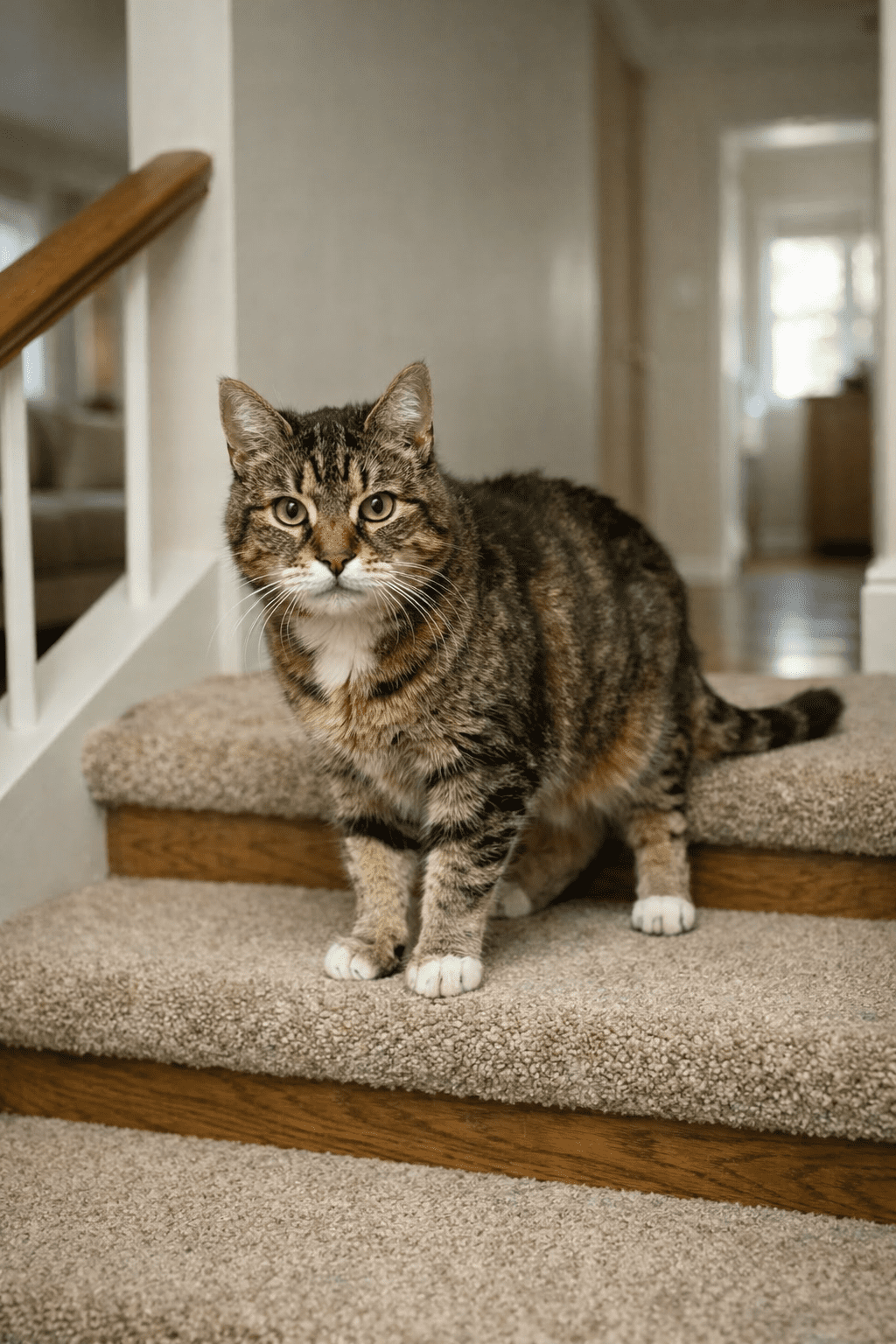
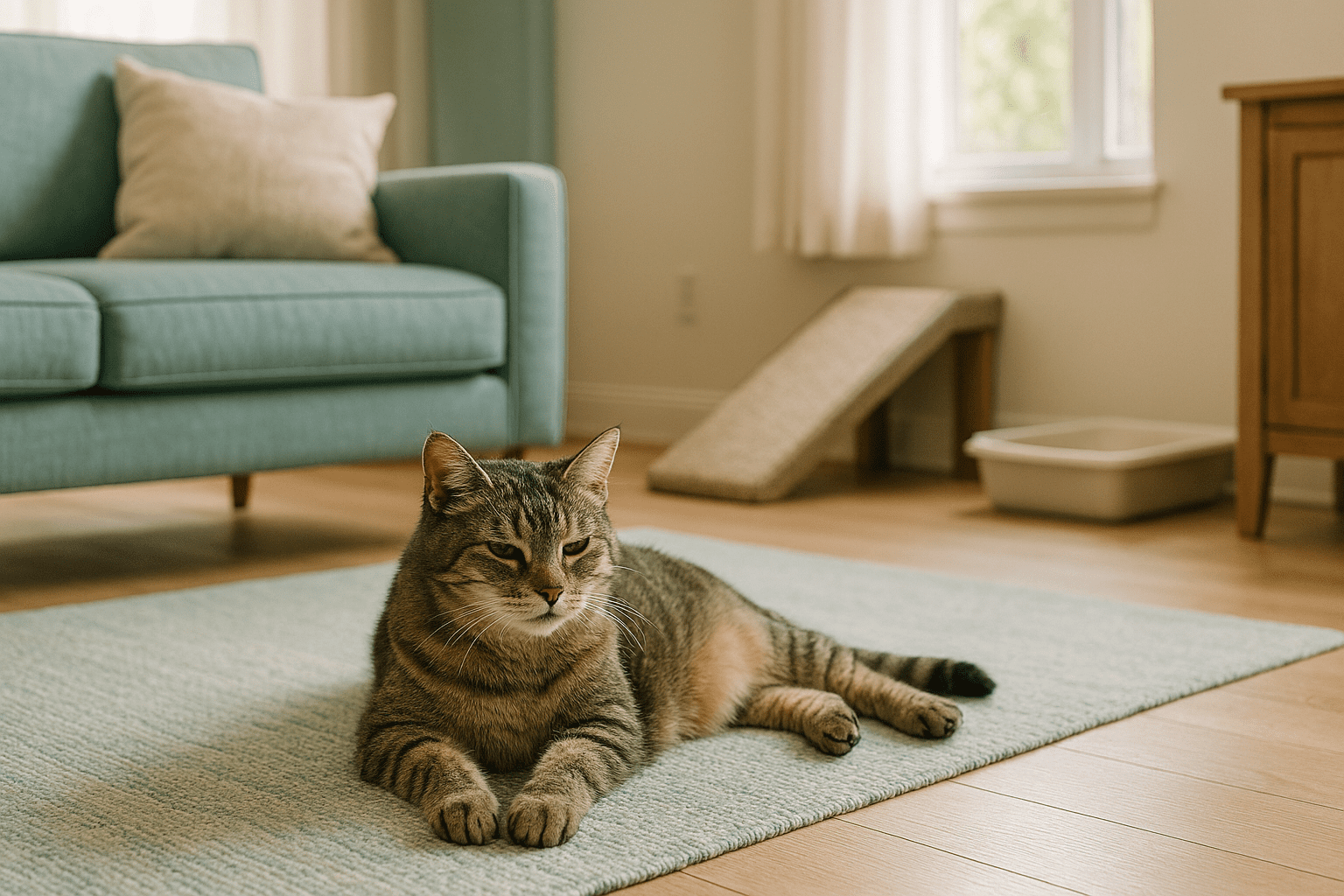
Senior cats need smooth, predictable routes through the home. Adding traction to slippery floors—like long runners or textured mats—helps older cats with arthritis move more confidently. Soft nightlights placed along hallways guide cats with reduced night vision and prevent disorientation. Reducing clutter, taping down cords, and keeping walkways open all contribute to a safer, more accessible home.
Litter Box Areas: Easy In, Easy Out
Litter box setup is one of the most important senior cat home adjustments you can make. Older cats often avoid boxes that require climbing or crawling through high sides, especially if they have arthritis.
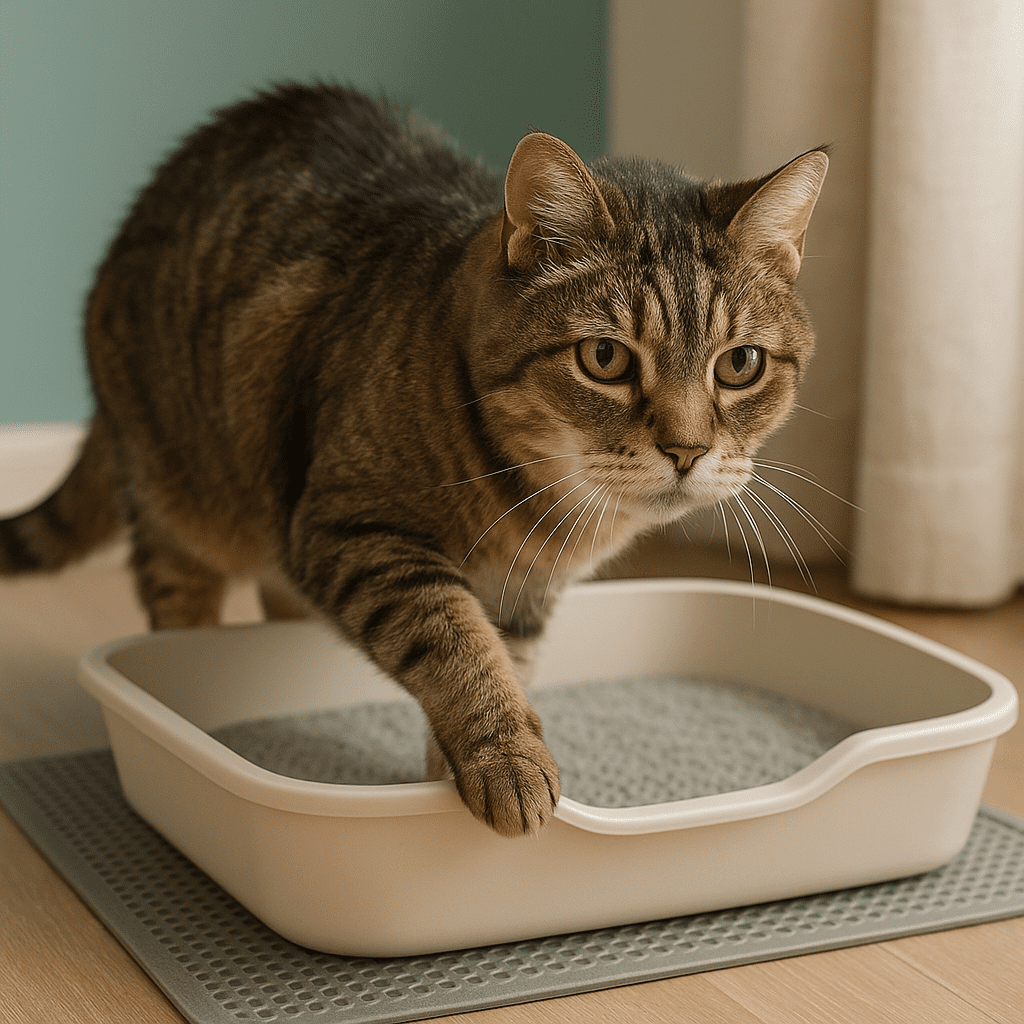
Use low-entry or front-entry liter boxes that allow a natural step-in motion. Keep at least one box on each level so your cat doesn’t have to face stairs urgently.
If your cat is having accidents or hesitating near the box, place boxes on a non-slip mat and add a gentle nightlight for extra visibility.
Food & Water Zones: Supportive and Accessible
A senior cat-friendly home includes feeding stations that are comfortable and easy to use. Lightly elevated bowls reduce neck strain and encourage better posture. If your cat used to jump onto counters to avoid other pets, offer a small ramp or stable platform instead of a full-height jump.
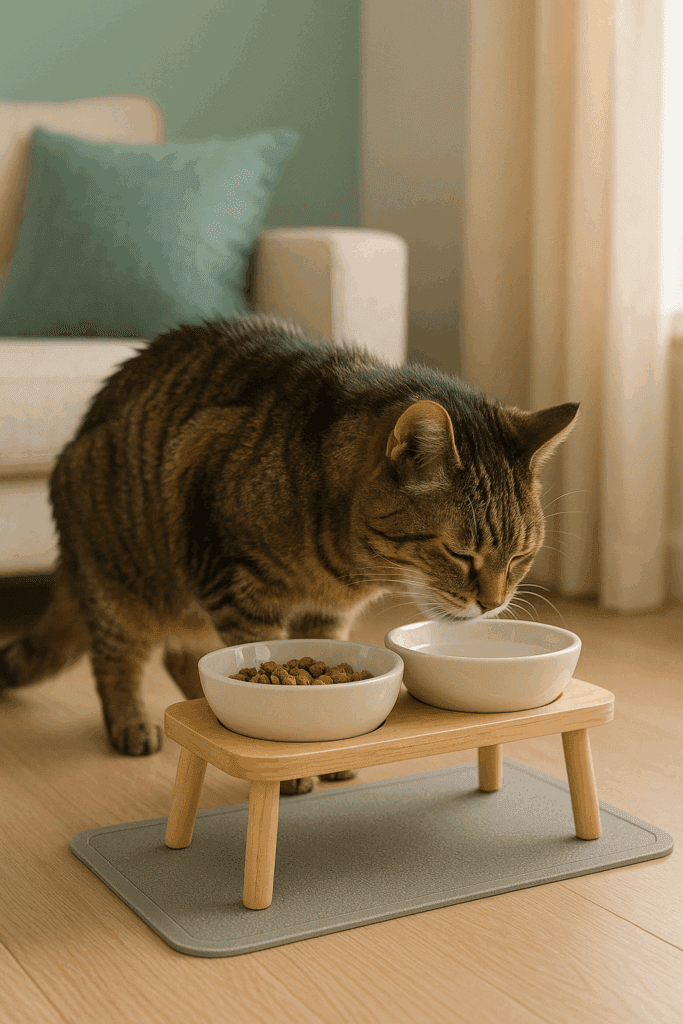
Provide multiple hydration stations throughout the home. Hydration is especially important for older cats with kidney or thyroid concerns.
For more support, see the senior cat nutrition guide to ensure you’re meeting the special dietary needs of aging cats.
Resting & Sleeping Spots: Warm, Soft, and Safe
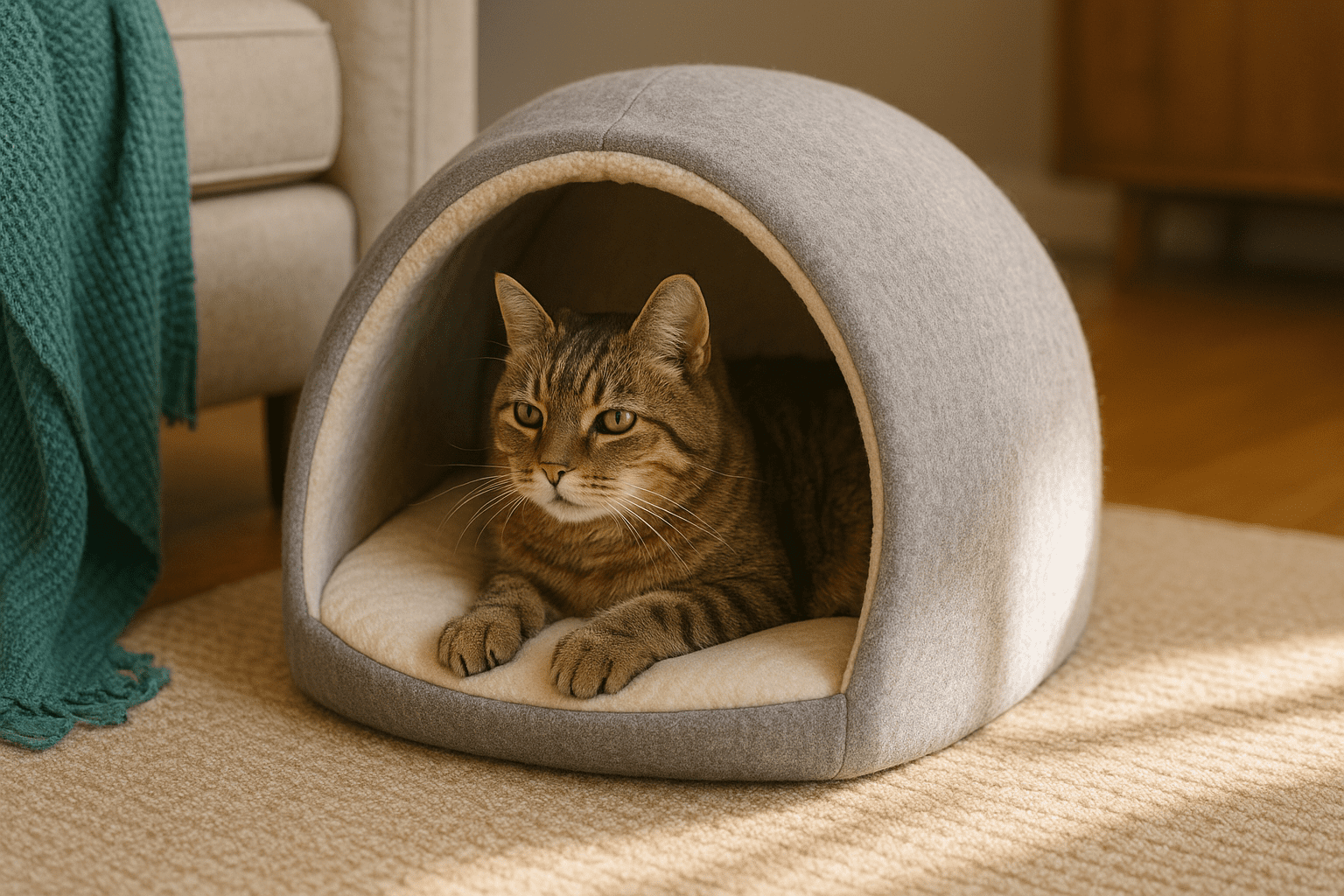
Orthopedic or memory-foam cat beds cushion sensitive joints and reduce pressure points. Choose beds with low sides so your cat can easily step in. Place them in warm, draft-free corners or sunny windows.
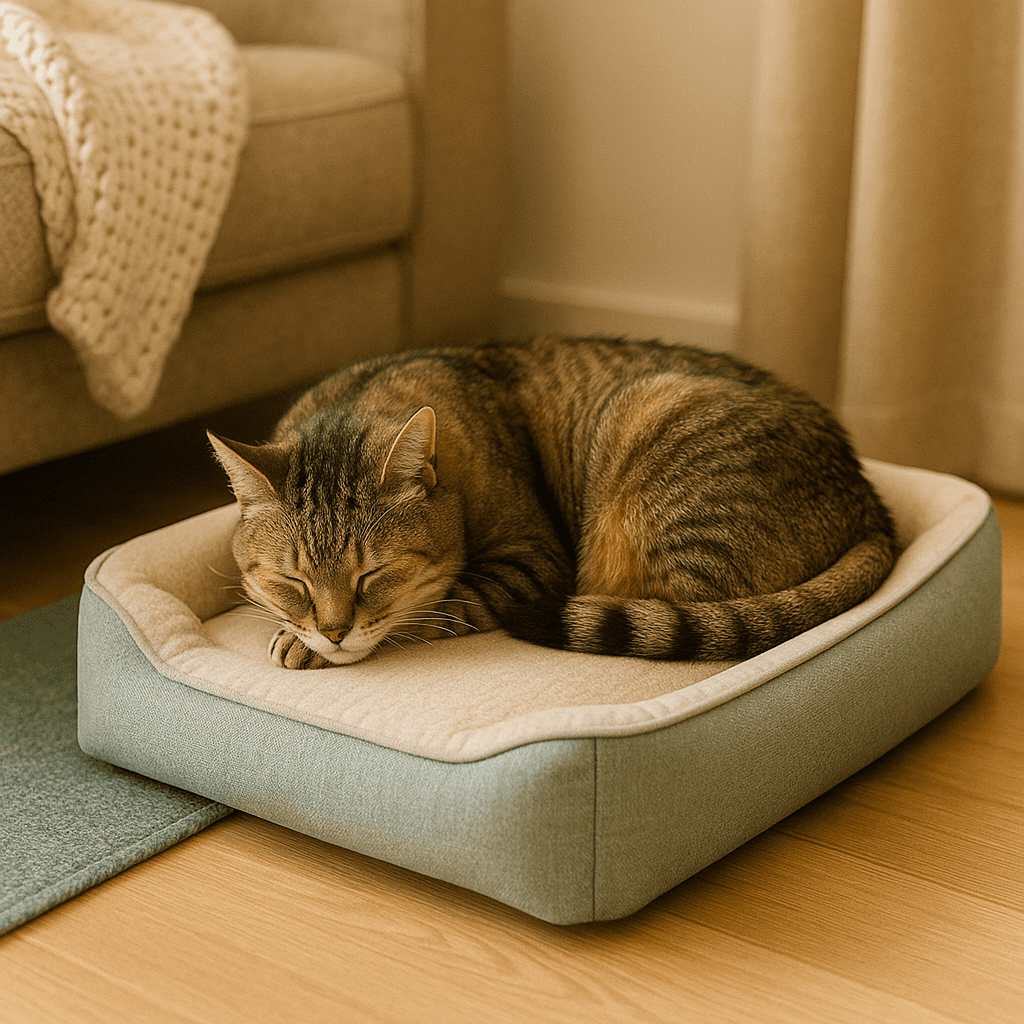
Older cats often appreciate a quiet retreat room where they can rest without noise or interruptions. One of the easiest upgrades is a supportive, low-entry bed. Check out our picks for the best senior cat beds that improve mobility and comfort.
Vertical Space, Perches & Ramps
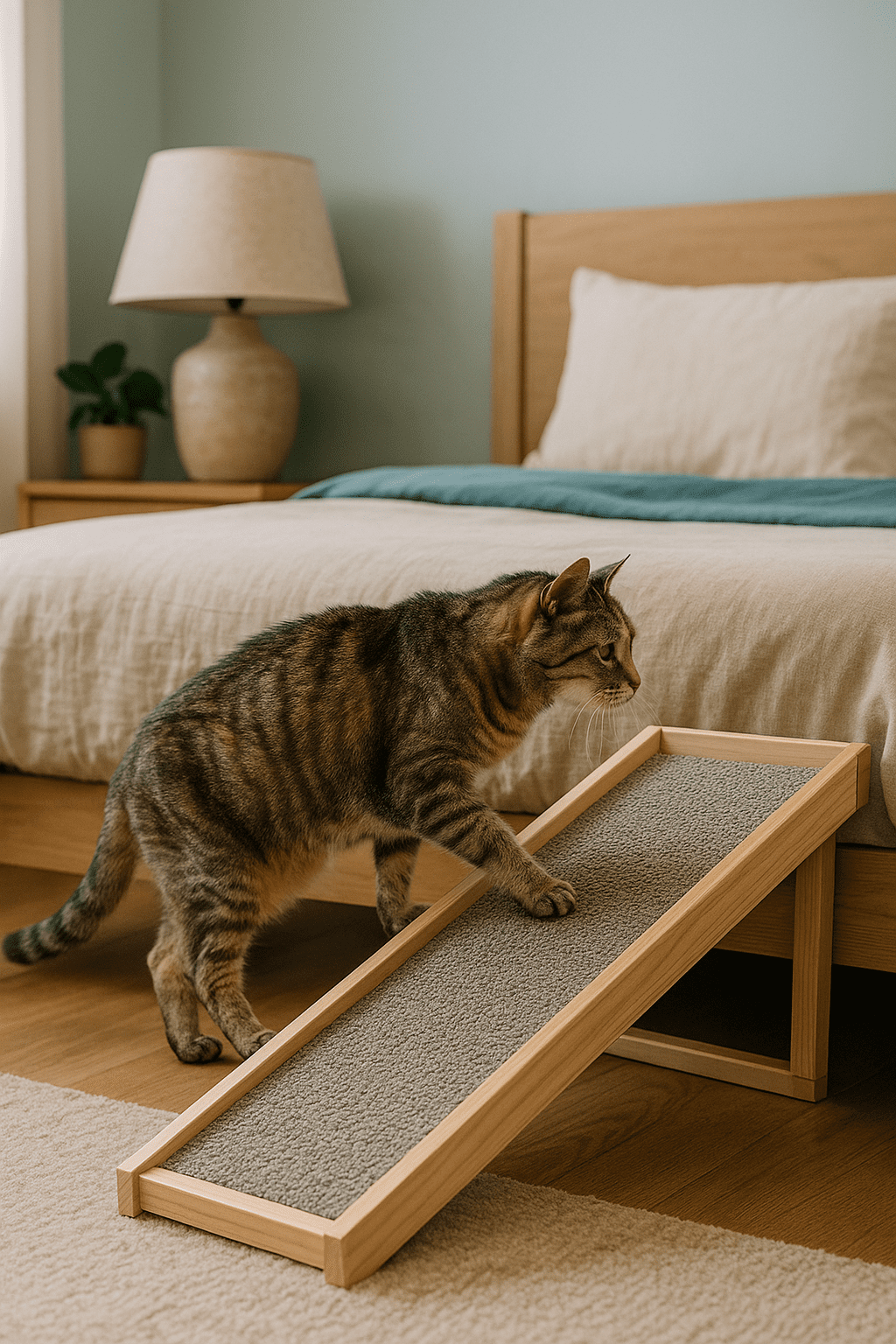
Senior cats still love elevated viewpoints, but they need safer ways to reach them. Pet stairs, gentle ramps, or stepped furniture arrangements allow them to enjoy window perches and shelf-height resting spots.
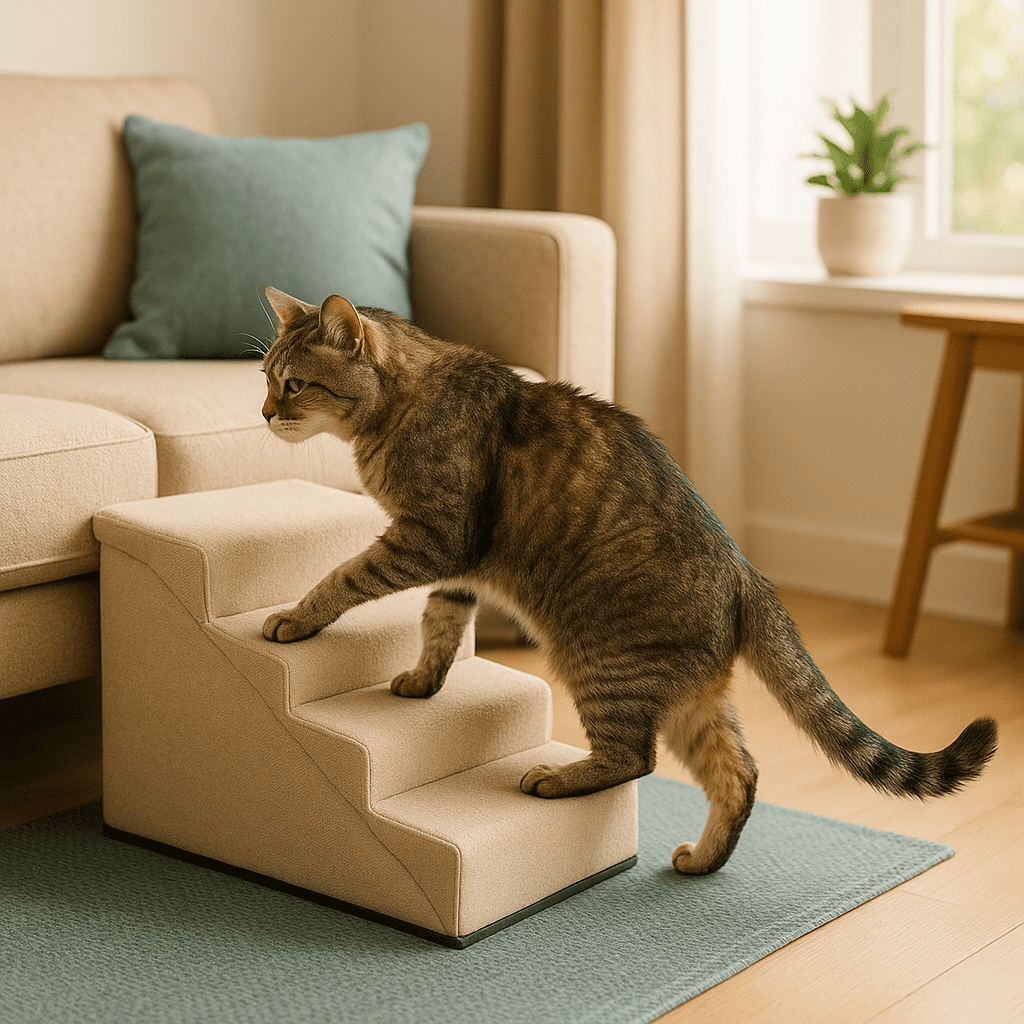
If your cat struggles with stiffness, visit how to help an older cat with arthritis to identify early signs and home-based comfort strategies.
Choose cat trees with wide platforms and low step distances, and block off risky, high perches.
Safe Enrichment & Gentle Play
Mental stimulation helps slow cognitive decline and keeps older cats emotionally balanced. Window perches, scent-based games, simple puzzle feeders, and slow wand play are ideal.
The AAFP’s “Cat Friendly Homes” resource offers great insight into enrichment and environmental wellness.
Short, predictable play sessions support muscle tone without overexertion.
Quiet Retreats & Calming Zones
Senior cats often become more sensitive to noise. Creating a dedicated retreat—complete with a cozy bed, water, and a low-entry litter box—gives your cat a safe, stress-free place to rest.
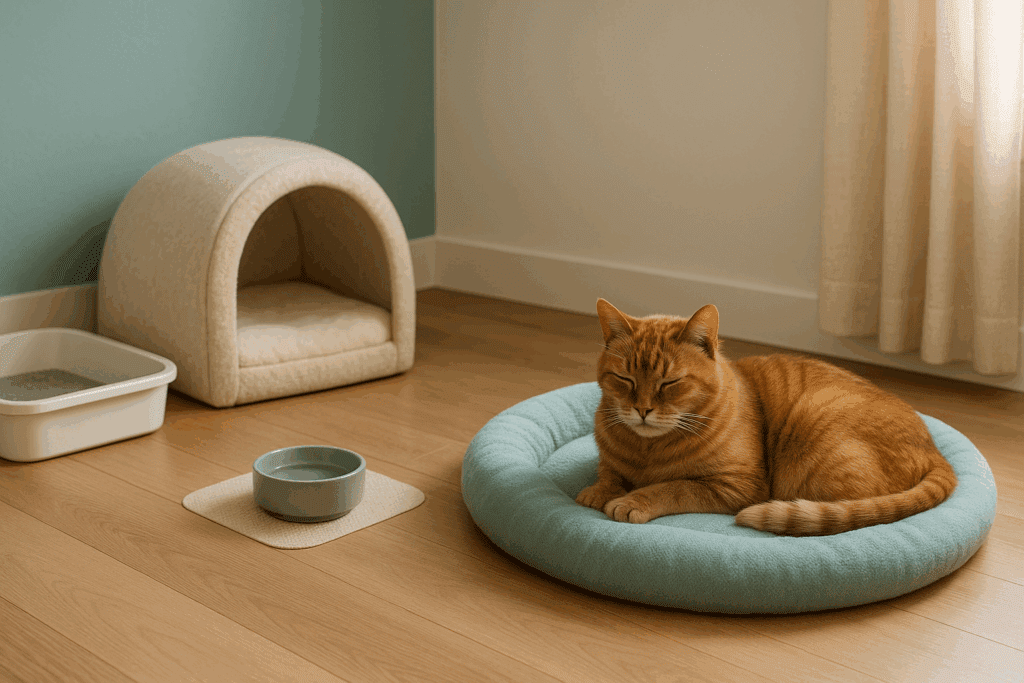
If your cat is vocalizing more, pacing at night, or acting confused, explore our senior cats health checklist to understand what might be going on.
Pheromone diffusers may also help calm anxious or disoriented seniors.
Supporting Common Senior Cat Conditions Through Home Adjustments
Mobility & Arthritis
Mobility-friendly home adjustments include:
- Ramps to beds and couches
- Soft carpet runners
- Raised food/water bowls
- Litter boxes near sleeping areas
Further Reading: Arthritis Symptoms in Senior Cats and Arthritis Supplements for Senior Cats.
Vision Changes
Avoid rearranging furniture so visually impaired cats can navigate confidently. Use nightlights along hallways and near litter stations.
The AAHA Senior Care Guidelines reinforce the importance of routine and safe lighting.
Hearing Loss
Approach from the front, use subtle vibrations to announce your presence, and maintain consistent routines to reduce startle responses.
Cognitive Decline
Older cats experiencing confusion benefit from predictable floorplans and stable, familiar environments.
Refer to: How to Support a Cat with Feline Dementia
Daily Routines That Enhance a Senior Cat-Friendly Home
Daily habits—like gentle brushing, light play, hydration checks, and monitoring appetite—help reinforce the benefits of home adjustments.
For grooming help visit our Senior Cat Care Guide.
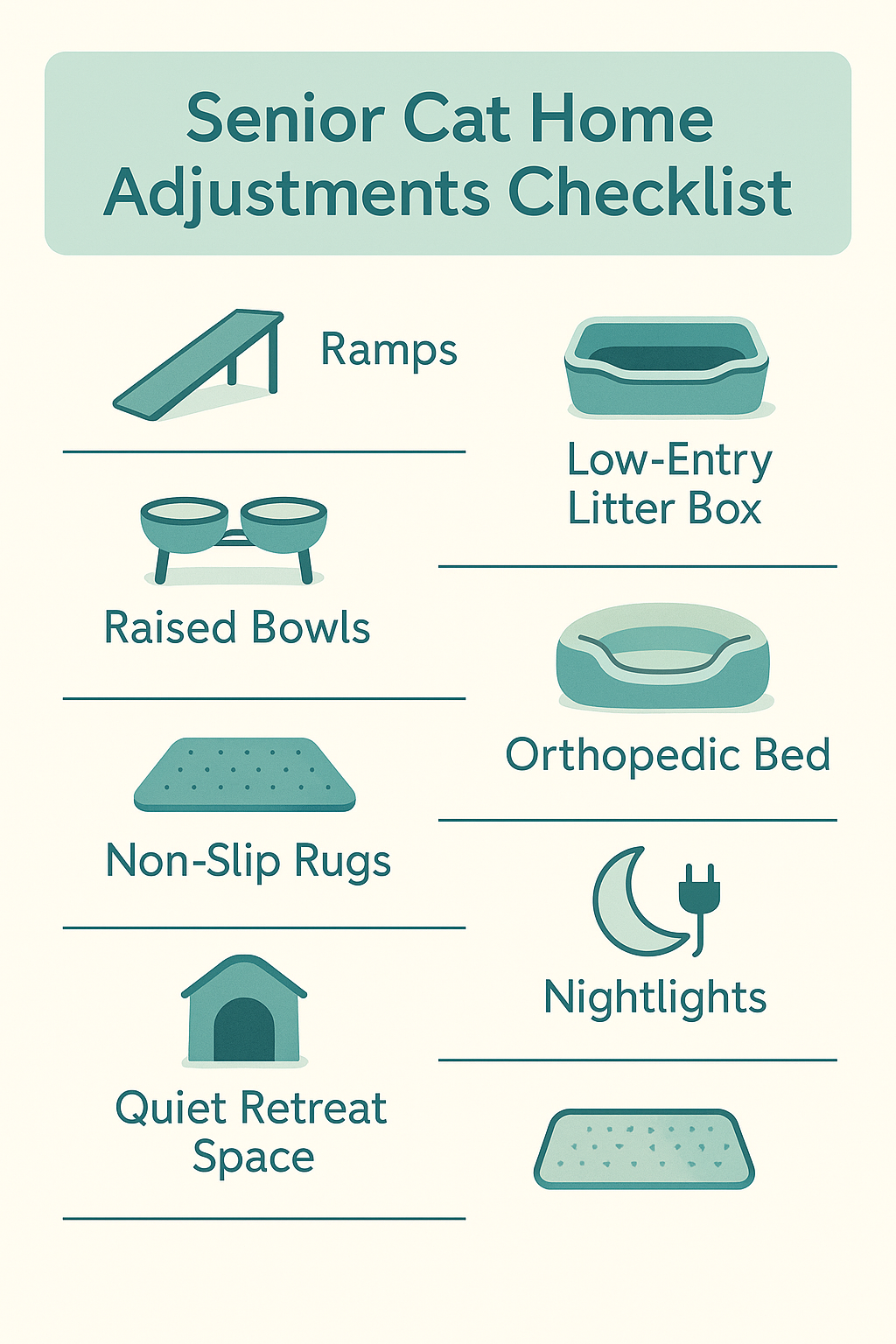
Senior Cat Home Adjustments Checklist
Mobility & Access
- Non-slip runners
- Ramps or steps to beds/sofas
- Stable, senior-safe cat trees
Litter Box Setup
- Low-entry litter box
- One on every floor
- Nightlight nearby
Food & Water
- Raised bowls
- Multiple water stations
- Predictable placement
Rest & Comfort
- Orthopedic beds
- Warm sleeping areas
- Quiet retreat room
Enrichment & Calm
- Window views
- Gentle play
- Cozy hiding spaces
FAQ: Senior Cat Home Adjustments
How do I make my home more senior cat-friendly?
You can make your home senior cat-friendly by reducing physical strain, improving accessibility, and keeping essential items within easy reach. Add non-slip rugs, use low-entry litter boxes, provide ramps or pet stairs to favorite resting spots, place food and water on the main floor, and maintain predictable room layouts so your cat can navigate confidently.
What are the most important senior cat home adjustments?
The most impactful adjustments include adding non-slip surfaces, lowering litter box entry height, raising food and water bowls, offering orthopedic beds, improving lighting for nighttime navigation, and providing easy access to window perches or elevated areas through ramps. These changes support mobility, comfort, and safety.
Do senior cats need special litter boxes?
Yes. Many older cats struggle with high sides or top-entry litter boxes due to arthritis or reduced mobility. Choose a low-entry or front-entry litter box, place it on a non-slip mat, and keep at least one on each level of your home to make bathroom trips easier.
How can I help a senior cat with arthritis at home?
Offer supportive surfaces and reduce the need for jumping. Ramps, pet stairs, thick rugs, raised bowls, warm resting beds, and easily accessible litter boxes help minimize joint strain. Soft, orthopedic bedding is also beneficial for cushioning sore limbs.
What changes help senior cats with poor vision?
Keep your home’s layout consistent and avoid rearranging furniture. Add nightlights in hallways and near litter boxes, use textured rugs to help with orientation, and block access to high-risk areas like steep stairs. Predictability is key for visually impaired senior cats.
Do senior cats need more hydration?
Many older cats—especially those with kidney disease or thyroid issues—need increased hydration. Place water bowls throughout the home, use a pet fountain to encourage drinking, and ensure bowls are easy to reach without jumping or climbing.
How can I reduce stress for my senior cat?
Provide a quiet retreat room with a cozy bed, clean litter box, fresh water, and a hiding area. Keep routines consistent, minimize loud noises, and consider pheromone diffusers to help reduce anxiety. Predictability and safe resting spots greatly reduce stress in older cats.
Should senior cats still have access to vertical spaces?
Yes—vertical space is enriching, but access must be safe. Provide ramps, steps, or low platforms to help them reach their favorite perches. Avoid high, unstable climbing structures, and ensure elevated areas have plenty of cushioning.
How often should a senior cat’s environment be reassessed?
Reevaluate your home setup every few months or whenever you notice changes in mobility, litter box habits, jumping ability, or behavior. Senior cats’ needs can shift quickly, and small adjustments can prevent accidents and discomfort.
What signs indicate my senior cat needs more home adjustments?
Look for difficulty jumping, hesitation with stairs, accidents near the litter box, slipping on floors, decreased grooming, nighttime wandering, or confusion. These behaviors often mean your cat needs additional environmental support.
*SeniorCatsCare.com provides experience-based, research-supported guidance for caring for aging cats. Our content follows strict editorial standards, cites reputable veterinary sources, and is updated regularly. This information is educational and not a substitute for professional veterinary care. Some posts may contain affiliate links at no extra cost to you.