As cats enter their senior years, their nutritional needs evolve — and protein becomes more important than ever. While many pet parents assume older cats need less protein, the truth is that a high-protein diet can be crucial for maintaining lean muscle, mobility, and overall health.
In this guide, we’ll break down what “high-protein” really means for senior cats, how to choose the right food, and what to watch for if your cat has health issues such as kidney disease.
Why Protein Matters in Senior Cats
Cats are obligate carnivores, meaning they rely on protein as the primary energy source. As cats age, muscle tissue naturally declines — a process called sarcopenia. Without enough quality protein, your senior cat may lose muscle mass even if their weight looks normal.
According to the AAHA/AAFP Feline Life Stage Guidelines, senior cats need high-quality, highly digestible protein to maintain strength and organ function. Restricting protein without medical reason can actually worsen muscle loss and lower immune health.
What “High-Protein” Means
Not all “high-protein” diets are equal. The quality and digestibility of protein matter more than the percentage on the label.
| Type | Protein % (Dry Matter Basis) | Digestibility | Example Source |
|---|---|---|---|
| Standard Adult Cat Food | 28–30% | Moderate | Chicken by-product meal |
| Senior Maintenance Diet | 32–38% | High | Chicken, salmon, turkey |
| Therapeutic High-Protein Diet | 40–45% | Very High | Muscle meat, organ meat |
🔹 Look for:
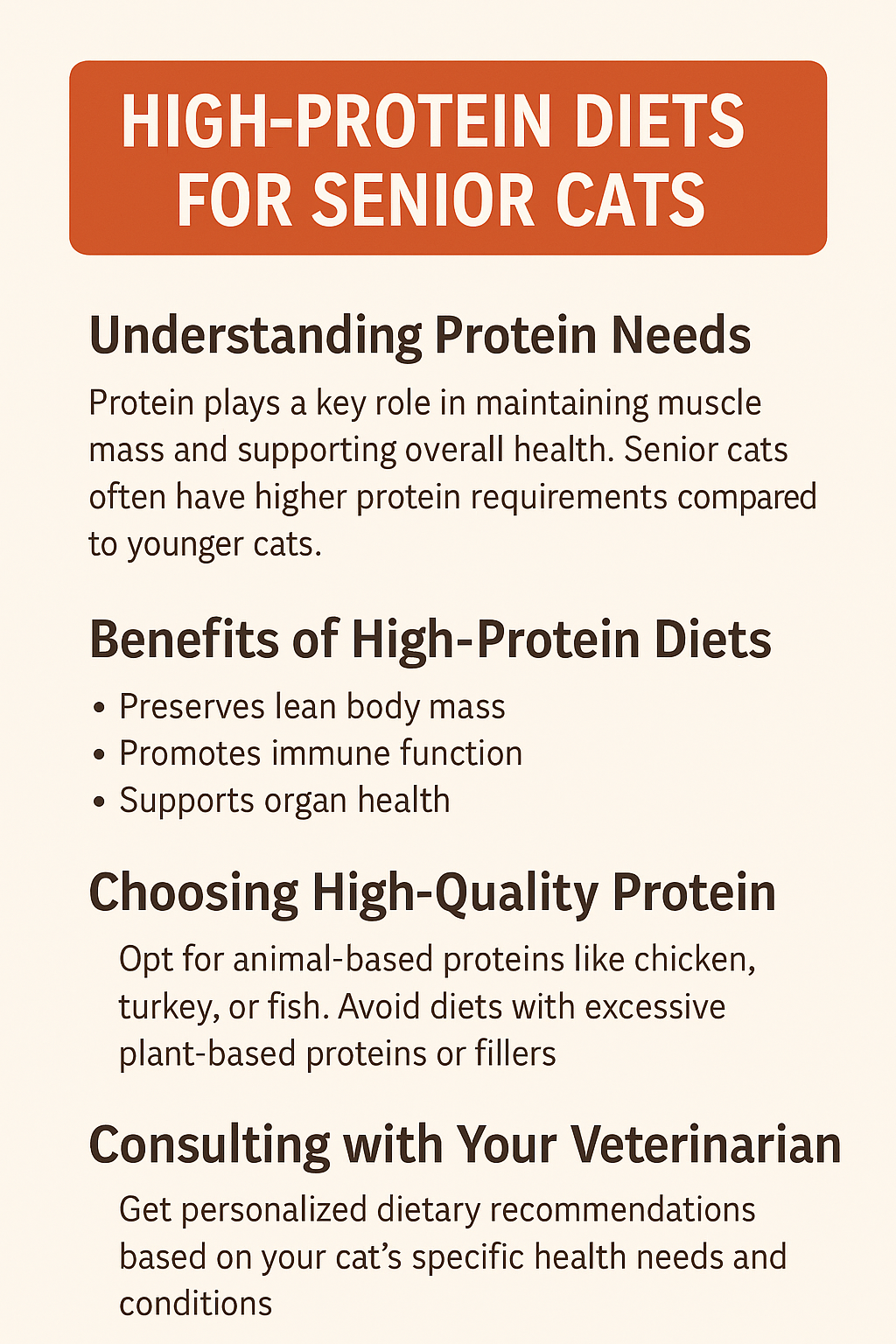
- Animal-based proteins listed first (e.g., chicken, salmon, turkey).
- Guaranteed analysis showing ≥ 32% crude protein (dry matter).
- Labels mentioning “high digestibility” or “formulated for muscle maintenance.”
📖 Reference: BSM Partners on Macronutrient Considerations for Senior Cats
Benefits of High-Protein Senior Cat Diets
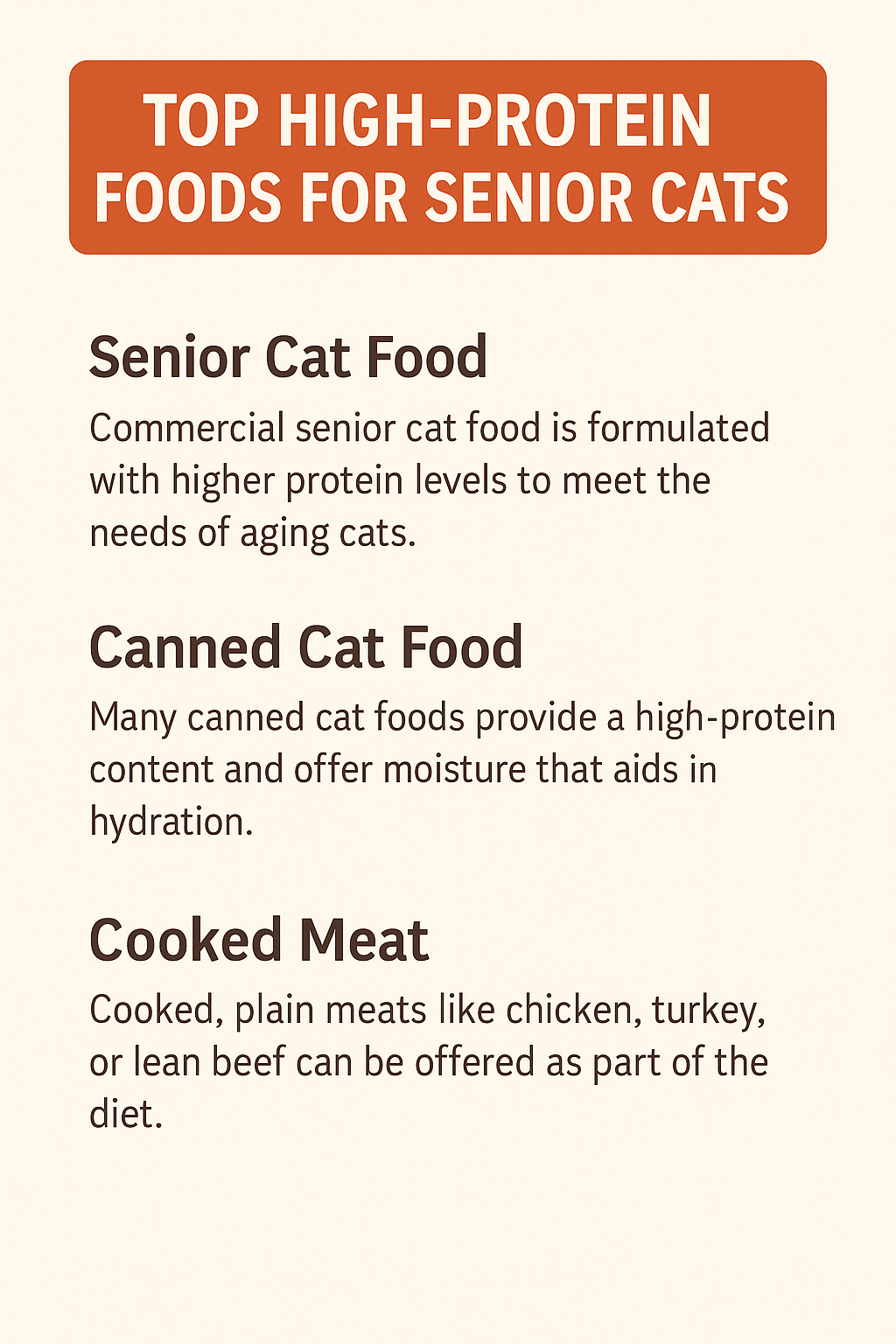
🐾 Maintains Lean Muscle Mass
Protein preserves muscle, keeping your cat strong and mobile. Studies show that cats fed higher-protein diets retain muscle mass longer and stay active into their later years.
🧠 Supports Metabolic and Immune Health
Amino acids from protein help repair tissue, maintain organ function, and support a strong immune system.
❤️ Improves Energy and Vitality
A higher-protein diet can improve energy levels, coat quality, and appetite — especially in cats who are picky eaters.
📖 Reference: Purina Institute – Feeding Senior Cats
When to Be Cautious
While most healthy senior cats thrive on higher-protein foods, a few exceptions exist:
- Chronic Kidney Disease (CKD): Cats with advanced CKD may need moderate protein and low phosphorus diets.
- Digestive Sensitivity: Older cats may have reduced digestive efficiency — look for highly digestible sources.
- Phosphorus Content: Some high-protein diets have excess phosphorus, which may stress aging kidneys.
✅ Pro Tip: Always confirm with your veterinarian before switching your senior cat’s diet, especially if bloodwork shows kidney changes.
📖 Reference: Royal Canin Academy – Nutrition of Aging Cats
Practical Feeding Tips for a High-Protein Senior Cat Diet
- Check Muscle Condition: Look for muscle loss around shoulders or hips.
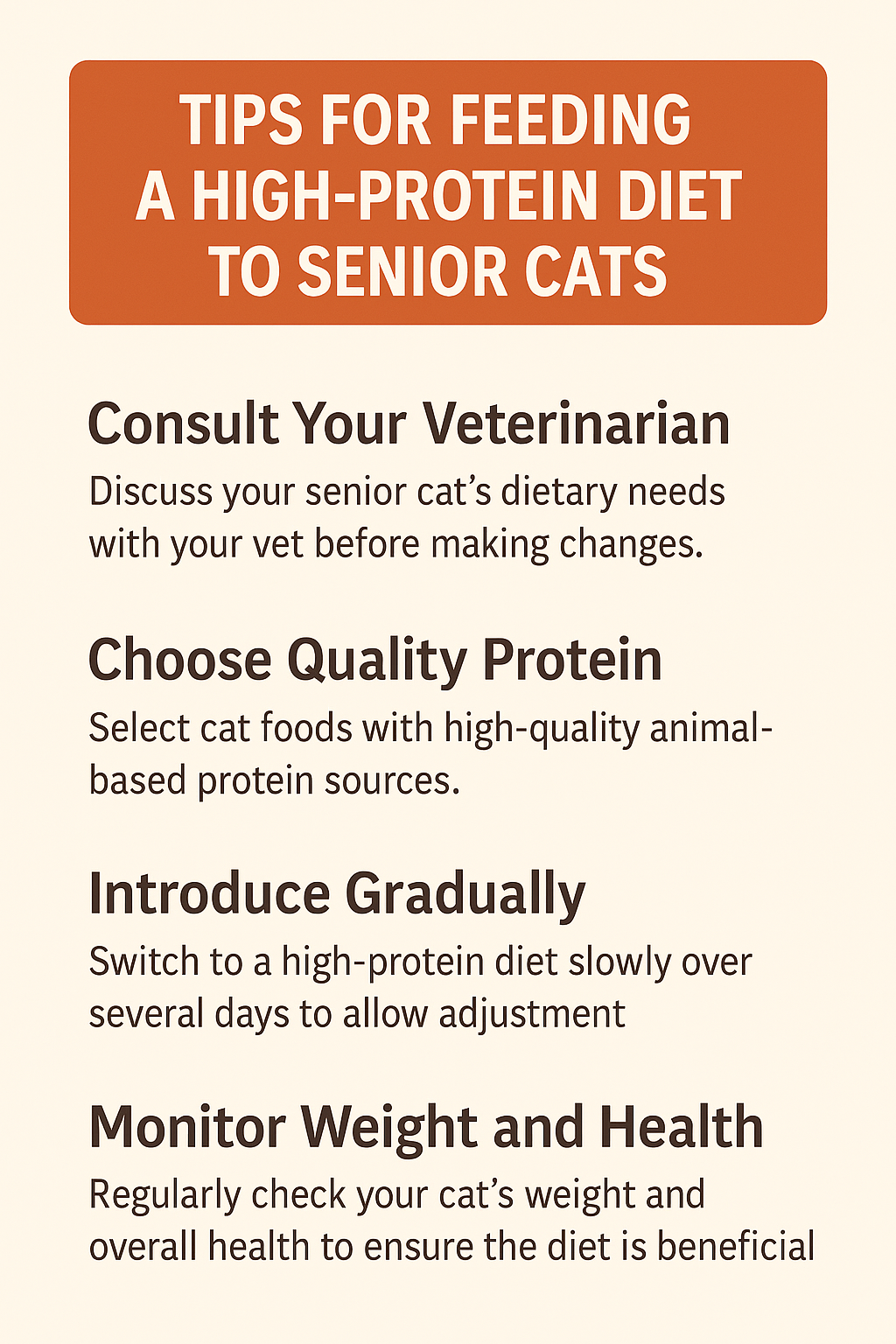
- Use Combo Feeding: Mix dry (for crunch) and wet food (for hydration and flavor).
- Feed Smaller, More Frequent Meals: Helps seniors with reduced appetite.
- Transition Slowly: Change over 7–10 days to prevent stomach upset.
- Monitor Hydration: Pair higher protein with adequate water — consider wet food or a water fountain.
- Recheck Bloodwork Annually: Adjust diet based on age and kidney values.
🧾 Read more articles on Senior Cat Nutrition:
FAQ: Common Questions About High-Protein Diets
How much protein should a senior cat eat?
Most healthy senior cats benefit from diets with 32–45% protein (dry matter basis), depending on health status and activity level.
Is high-protein food safe for cats with kidney disease?
Not always. Cats with CKD may need moderated protein and reduced phosphorus — consult your veterinarian first.
Should I feed wet or dry high-protein food?
A mix is ideal. Wet food adds hydration, while dry food supports dental health.
What are signs my cat isn’t getting enough protein?
Muscle loss, dull coat, lethargy, or decreased appetite.
Can I make homemade high-protein food for my senior cat?
Only under veterinary guidance. Homemade diets can lack taurine, calcium, or vitamin E.