As cats get older, staying hydrated becomes more important—but also more challenging. Many senior cats don’t drink as much water as they should, either because of reduced thirst, mobility issues, or changes in health. Since hydration is closely tied to kidney function, digestion, and overall comfort, helping your older cat drink more water is one of the most effective ways to support their wellbeing.
Below are practical, gentle hydration strategies that work well for aging cats, written in a natural, non-technical tone that fits SeniorCatsCare.com.
Why Hydration Matters More for Senior Cats
Older cats tend to lose some of their ability to regulate thirst, and their kidneys aren’t as efficient at concentrating urine. As a result, even mild dehydration can lead to:
- constipation
- urinary tract irritation
- reduced appetite
- lethargy
- faster progression of kidney disease
According to the Cornell Feline Health Center, senior cats are more vulnerable to dehydration because their kidneys gradually lose the ability to conserve water, making proper hydration even more essential.
Maintaining good hydration for senior cats helps keep urine diluted, supports kidney function, and improves day-to-day comfort.
1. Make Water Easy to Reach
Senior cats often avoid drinking simply because it’s inconvenient. Mobility issues, arthritis, or general fatigue can discourage them from walking far for water.
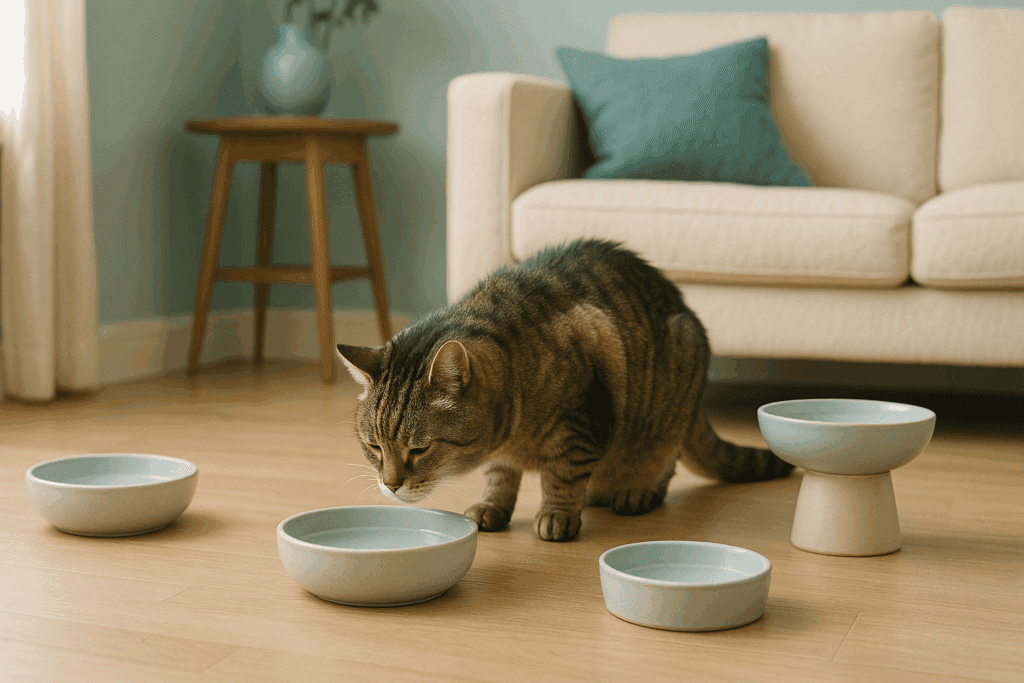
Try placing bowls:
- near your cat’s favorite resting spots
- in quiet corners
- on each level of the home
- away from litter boxes and food
Wide, shallow ceramic bowls help reduce whisker fatigue and tend to be the most comfortable for senior cats. If your cat has joint stiffness, using a slightly elevated bowl can make drinking more comfortable.
This simple setup supports natural senior cat drinking habits without forcing anything.
2. Try a Cat Water Fountain
Many older cats prefer moving water to still water. A cat water fountain can encourage drinking by offering gentle motion and a fresh, appealing flow.
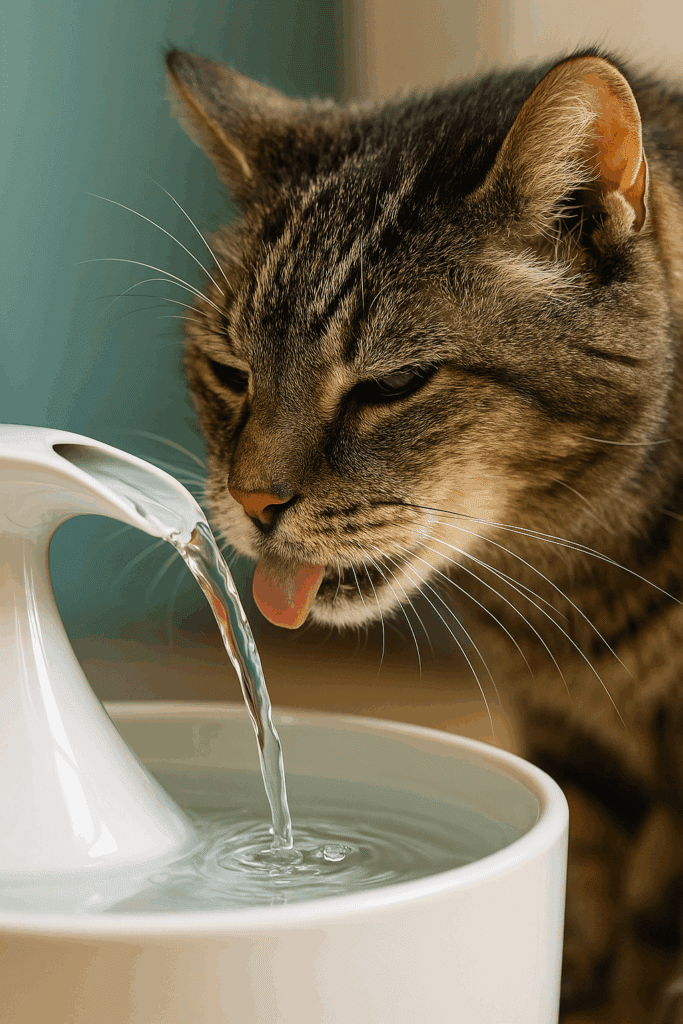
Benefits include:
- subtle sound cues that attract cats
- fresher-tasting, filtered water
- easier visibility for cats with reduced eyesight
Ceramic or stainless steel fountains are easier to keep clean and are often more appealing to senior cats. A fountain is one of the most effective hydration hacks for senior cats.
3. Add Moisture to Meals
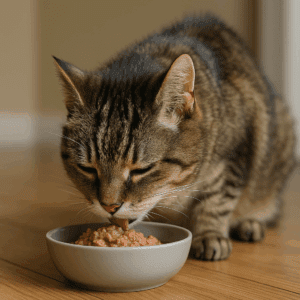
If your senior cat doesn’t drink often, increasing hydration through food is the most reliable solution. Wet food contains far more moisture than dry kibble and is easier for older cats to eat.
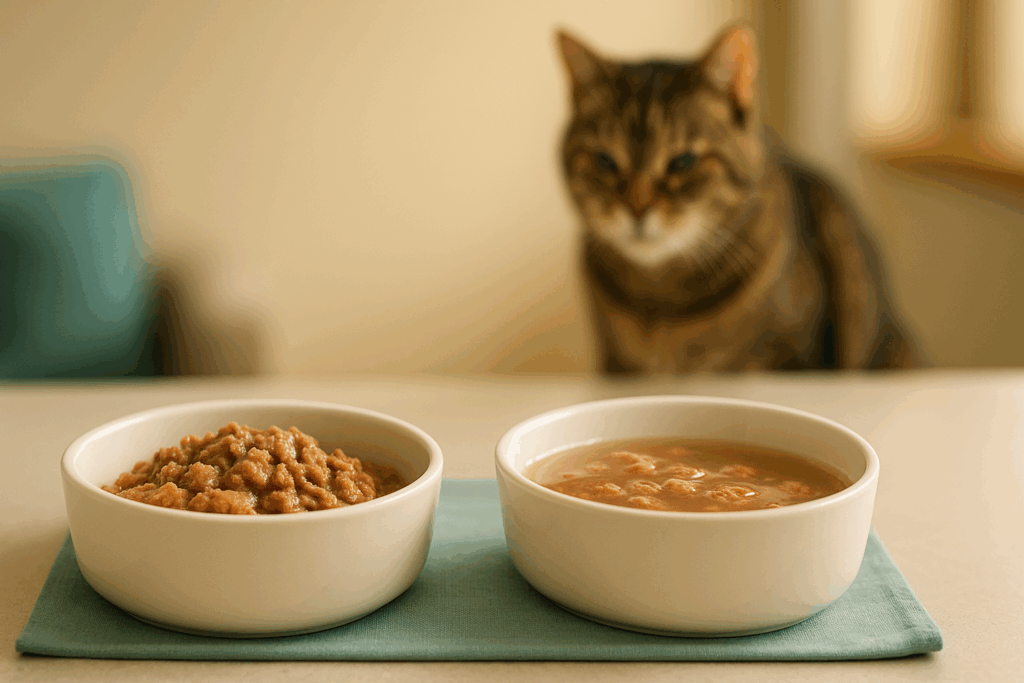
To boost hydration even more:
- add a tablespoon or two of warm water to canned food
- stir to make a soft “hydration soup”
- offer several small meals throughout the day
- use low-sodium broth for flavor (no onion or garlic)
If you’re adjusting your cat’s diet to support hydration, our senior cat nutrition guide can help you choose foods that are easier to digest and naturally higher in moisture.
This approach increases total daily moisture intake while remaining gentle on aging digestive systems.
4. Use Gentle Flavor Boosters
If your older cat refuses to drink water, mild flavor enhancers can help.
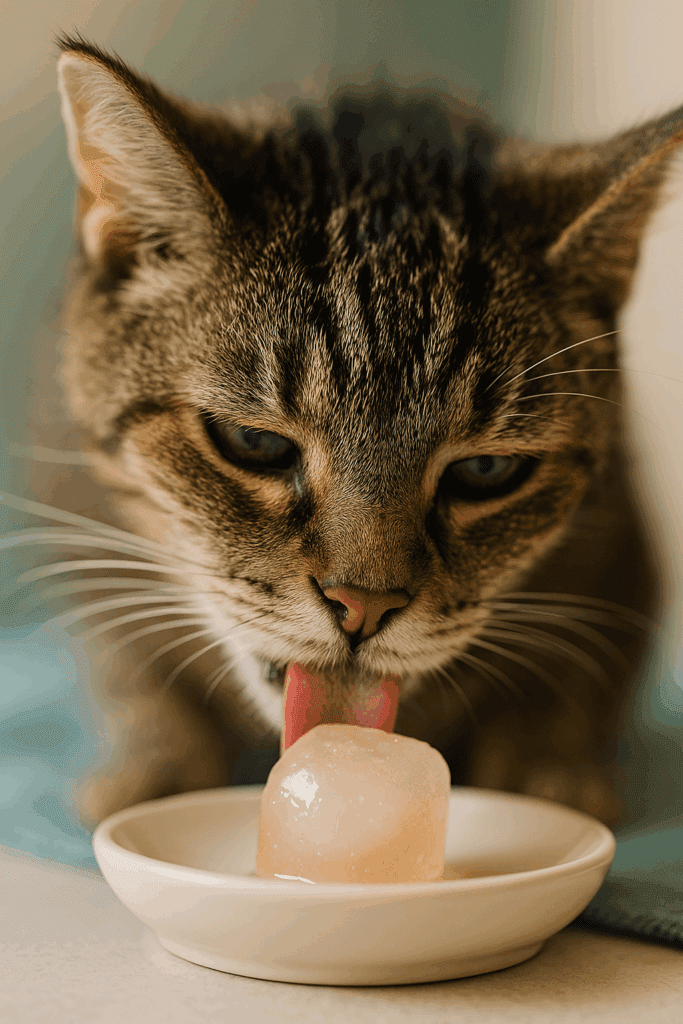
Options include:
- tuna water from canned tuna (packed in water)
- cat-safe bone broth
- broth ice cubes
- water flavor enhancers made specifically for cats
A subtle flavor cue can turn water into something your senior cat looks forward to every day.
5. Recognize Early Signs of Dehydration
Senior cats can become dehydrated quickly, especially if they have kidney disease, diabetes, or hyperthyroidism. Being aware of early signs helps you respond before dehydration becomes severe.
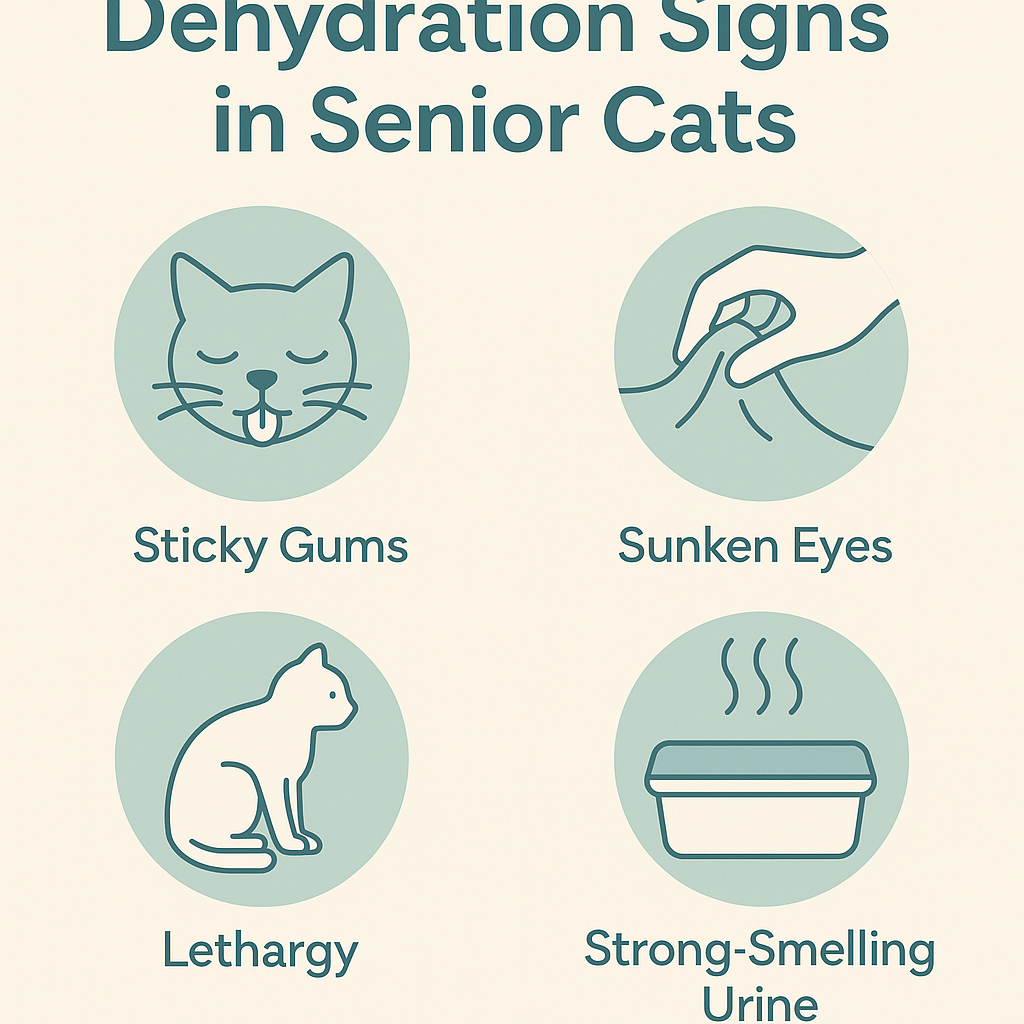
Watch for:
- sticky or tacky gums
- sunken eyes
- dry nose
- lethargy
- decreased appetite
- crumbly or dry stools
- strong-smelling urine
If dehydration is happening frequently, it may be worth reviewing the early signs of kidney disease in older cats, since kidney function plays a major role in hydration.
6. Adjust Hydration Strategies for Medical Conditions
Cats with chronic kidney disease or urinary issues typically need extra hydration support. Increasing moisture through food is essential, but additional help may be needed.
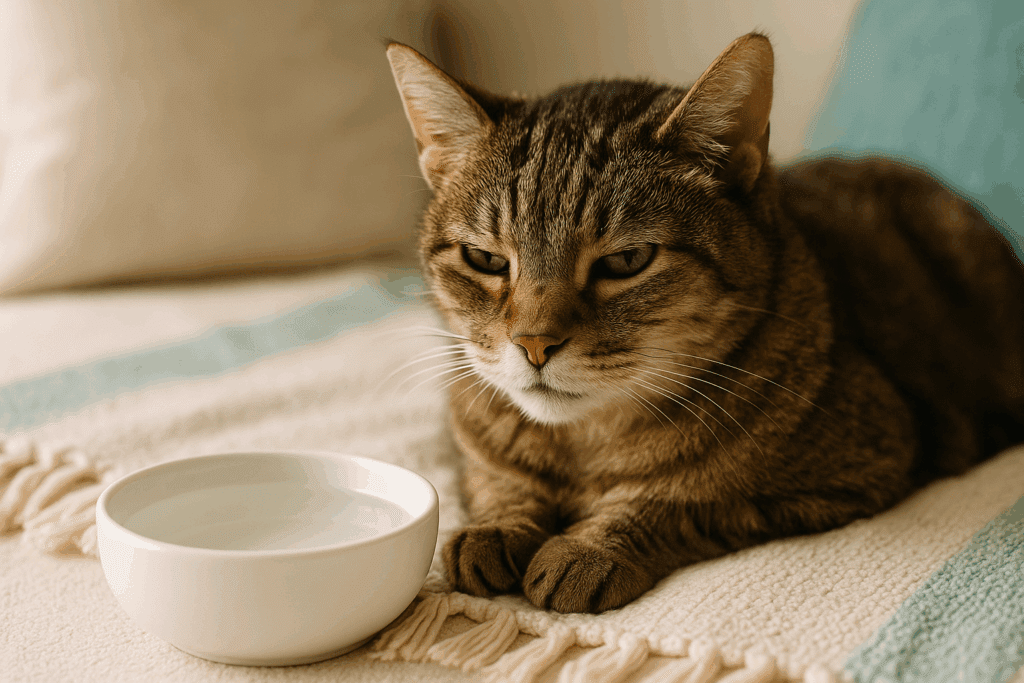
Your veterinarian may recommend:
- transitioning to a high-moisture diet
- using broth-based hydration snacks
- adding water to every meal
- offering multiple drinking options around the home
Following American Association of Feline Practitioners guidelines can help you tailor hydration support to your cat’s specific condition and lifestyle.
In more advanced cases, vets may also teach you how to give subcutaneous fluids at home. This can significantly improve hydration levels and comfort for senior cats with kidney disease.
7. Create a Calm, Stress-Free Drinking Space
Some cats avoid drinking because their bowls are placed in busy or noisy areas. A calm environment makes a bigger difference than most owners realize.
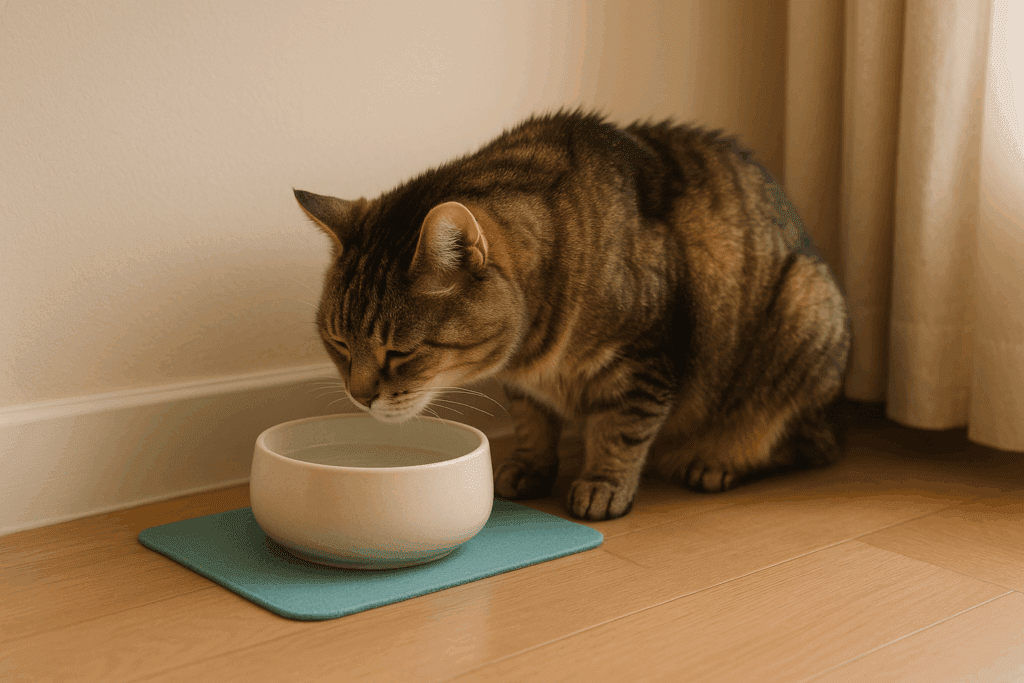
Choose a spot that is:
- quiet
- free from loud appliances
- out of high-traffic zones
- softly lit and comfortable
Adding a small teal or cream mat under the bowl can make the space feel warm and inviting. A peaceful drinking area is one of the simplest hydration tips for elderly cats and works surprisingly well.
FAQ: Hydration Questions Cat Parents Ask Most
How much water should a senior cat drink each day?
A general guideline is about 4 ounces of water per 5 pounds of body weight, but this varies depending on how much wet food your cat eats.
What’s the easiest way to hydrate a senior cat who won’t drink?
Adding warm water to wet food is the most reliable method, especially for older cats with a low thirst drive.
Do senior cats drink more with fountains?
Many do. Flowing water often encourages older cats to drink more consistently than still water.
Are dehydration signs different in senior cats?
Not different—just more significant. Senior cats become dehydrated faster, so early symptoms should never be ignored.
Can dehydration be related to kidney disease?
Yes. Cats with chronic kidney disease often fluctuate between drinking too much and too little, making hydration support extremely important.
Helping senior cats stay hydrated
Helping senior cats stay hydrated doesn’t require dramatic changes. Small improvements—like adding extra water bowls, offering wet food, using flavor boosters, or introducing a fountain—can significantly increase your cat’s daily water intake.
With a few thoughtful adjustments, you can support your senior cat’s kidney function, digestion, and overall wellbeing, helping them stay comfortable and hydrated in their golden years.