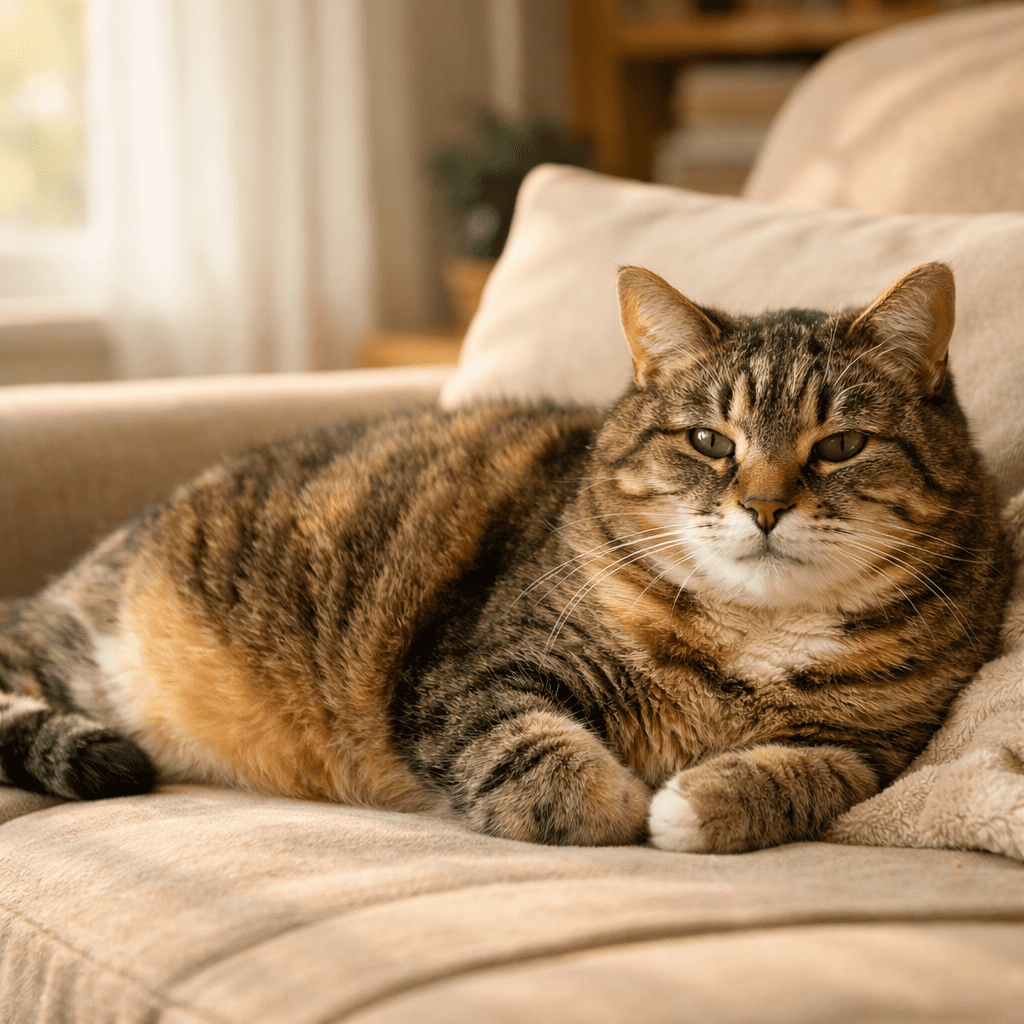
If your older cat seems to be slowly gaining weight—even though you haven’t changed much—you’re not imagining it. Senior cat weight gain is a common occurrence, often happening gradually and unnoticed. A cat that once stayed lean on the same routine may suddenly feel heavier when you lift them, move less during the day, or struggle a bit more to get comfortable.
The good news is that most senior cat weight gain is manageable. It doesn’t usually require extreme dieting or drastic changes. Instead, it calls for understanding why weight gain happens with age and making small, thoughtful adjustments that protect comfort, mobility, and long-term wellbeing.
This guide explains the most common senior cat weight gain causes, why extra weight affects older cats more than younger ones, and what you can safely do to help—without blame, fear, or rushed weight loss.
Why Do Senior Cats Gain Weight?
Many people assume weight gain means overfeeding or a lack of discipline. In reality, an older cat gaining weight is often the result of normal age-related changes—not owner neglect.
Here are the most common reasons senior cats gain weight.
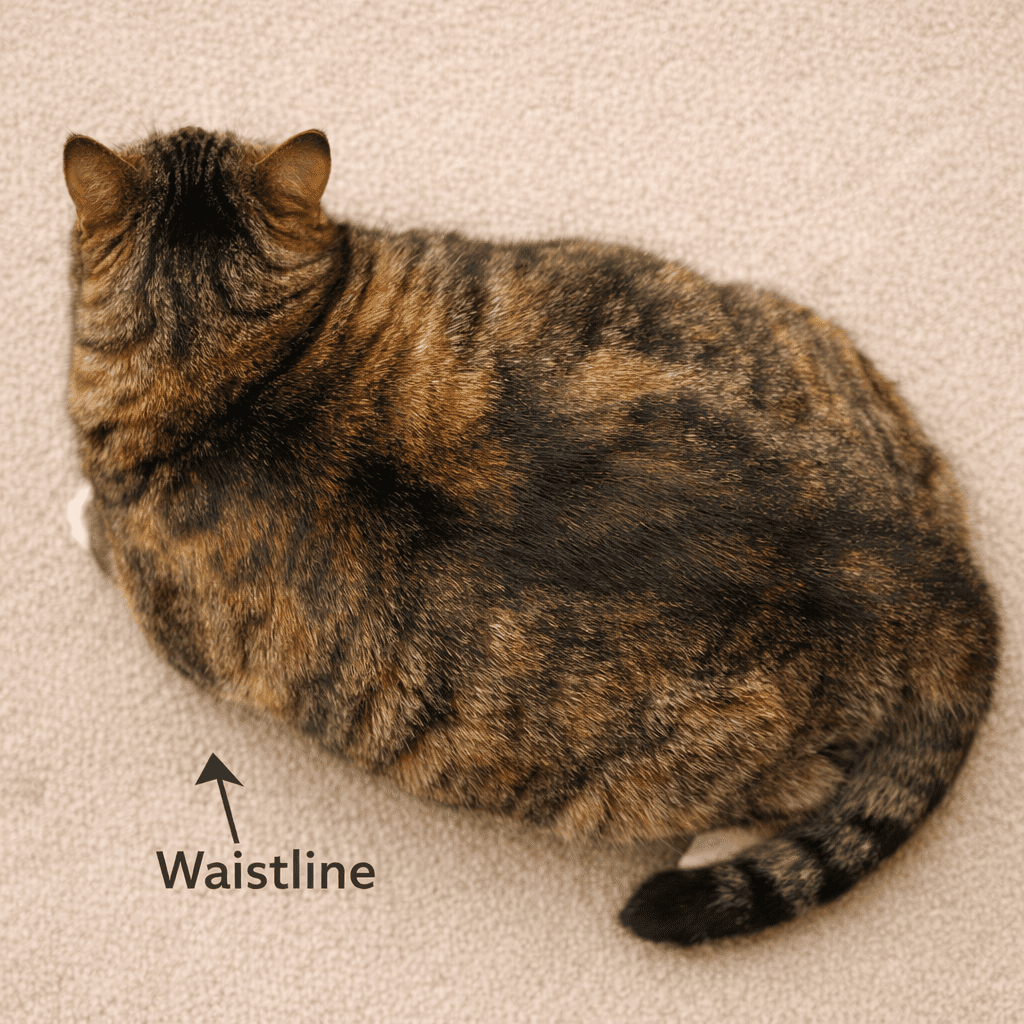
Slower Metabolism With Age
As cats age, their bodies simply burn fewer calories. This metabolic slowdown means:
- The same food portions now provide more energy than needed
- Excess calories are stored more easily as fat
- Weight gain happens slowly, even with no obvious change in diet
A senior cat may eat the same amount they always have and still gain weight because their body no longer processes calories as efficiently as it once did.
This is one of the most overlooked senior cat weight gain causes.
Reduced Activity and Natural Energy Decline
Most senior cats move less than they did in their younger years. You may notice:
- Fewer spontaneous play sessions
- Less jumping onto counters or furniture
- Longer periods of resting or sleeping
Even subtle reductions in daily movement can make a difference over time. When activity drops, but calorie intake stays the same, weight gain becomes likely.
This change is not laziness—it’s a normal part of aging.
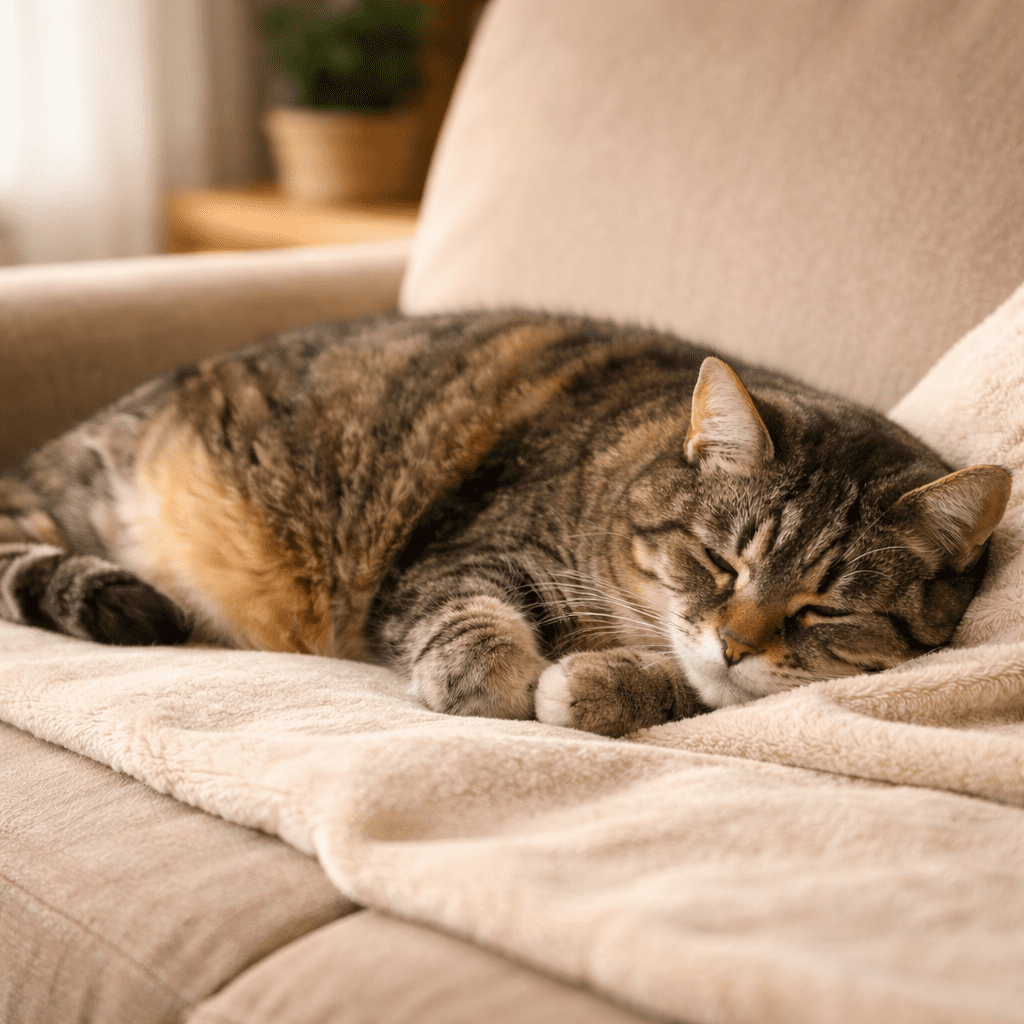
Loss of Muscle Mass (Sarcopenia)
Aging cats often lose muscle while gaining fat. This is important because:
- Muscle burns more calories than fat
- Loss of muscle lowers overall energy needs
- Body weight may increase even as strength declines
You may notice your cat looks “rounder” but feels softer, especially along the back or abdomen. This combination of muscle loss and fat gain can affect balance, jumping ability, and joint stability.
Portions That Haven’t Changed With Age
Many owners feed based on long-standing habits:
- The same scoop size
- The same number of meals
- The same calorie density
But as cats age, their calorie needs usually decrease, even if their appetite does not. Portions that were perfect at age five may be too much at age twelve.
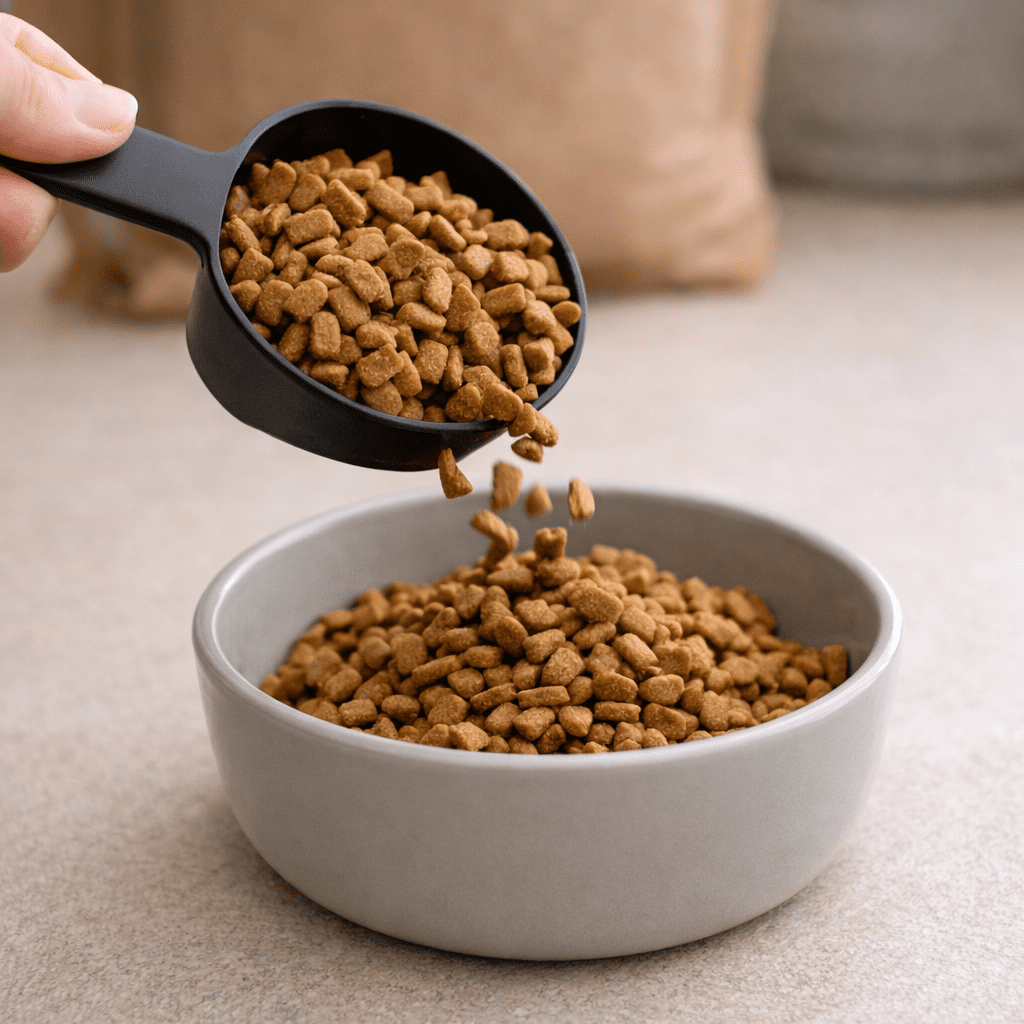
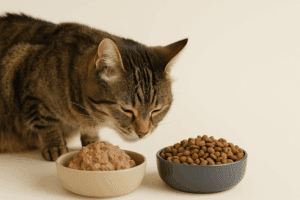
If you’re unsure whether portions are still appropriate, reviewing signs of overfeeding can help. A useful early reference is Cat Weight & Food Calculator: How Much Should My Cat Eat?, which walks through common visual and behavioral clues.
Treats, Extras, and “Just a Little More”
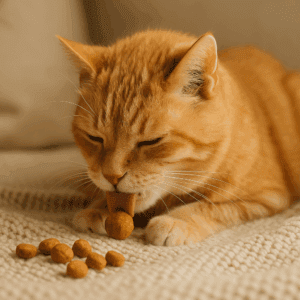
Treats are often a hidden contributor to senior cat weight management challenges. While each treat may seem insignificant, they add up—especially when activity is lower.
Common sources include:
- Commercial treats
- Table scraps
- Extra wet food for encouragement or comfort
- Multiple household members offering “just one.”
Senior cats don’t need many extra calories to tip into weight gain.
Calorie-Dense Senior or Indoor Foods
Some foods marketed for seniors or indoor cats are nutrient-rich and calorie-dense. While these formulas can be helpful, they may also:
- Deliver more calories than needed if portions aren’t adjusted
- Be less forgiving when activity declines
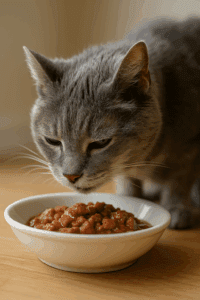
Food quality matters, but portion size still matters more.
Why Extra Weight Affects Senior Cats More
Weight gain affects cats at any age, but older cats feel the impact more quickly and more intensely.
Joint Stress and Mobility Changes
Extra weight puts additional pressure on aging joints. This can lead to:
- Hesitation when jumping or climbing
- Stiffness after resting
- Shorter play sessions
Even small amounts of excess weight can noticeably reduce comfort in senior cats.
Reduced Willingness to Move
As movement becomes less comfortable, cats often move even less—creating a cycle:
- Weight gain increases joint strain
- Joint strain reduces activity
- Reduced activity leads to further weight gain
Breaking this cycle gently is key.
Lower Energy and Engagement
Overweight senior cats may seem less interested in interaction, play, or exploration. This isn’t a personality change—it’s often physical discomfort or fatigue.
Safe, Gradual Solutions for Senior Cat Weight Management
Helping a senior cat manage weight is not about rapid loss. It’s about comfort, consistency, and small improvements over time.
Adjust Portions Carefully—Not Drastically
Avoid cutting food sharply. Sudden calorie reductions can:
- Increase stress
- Lead to muscle loss
- Cause food anxiety
Instead:
- Reduce portions slightly (often 5–10%)
- Maintain regular feeding times
- Monitor body condition over several weeks
Slow changes are safer and more sustainable.
Be Intentional With Treats
You don’t have to eliminate treats entirely. Focus on:
- Reducing frequency
- Using smaller pieces
- Counting treats as part of daily intake
Some owners reserve treats for grooming, medication, or gentle play sessions so they still serve a purpose.
Encourage Gentle, Age-Appropriate Movement
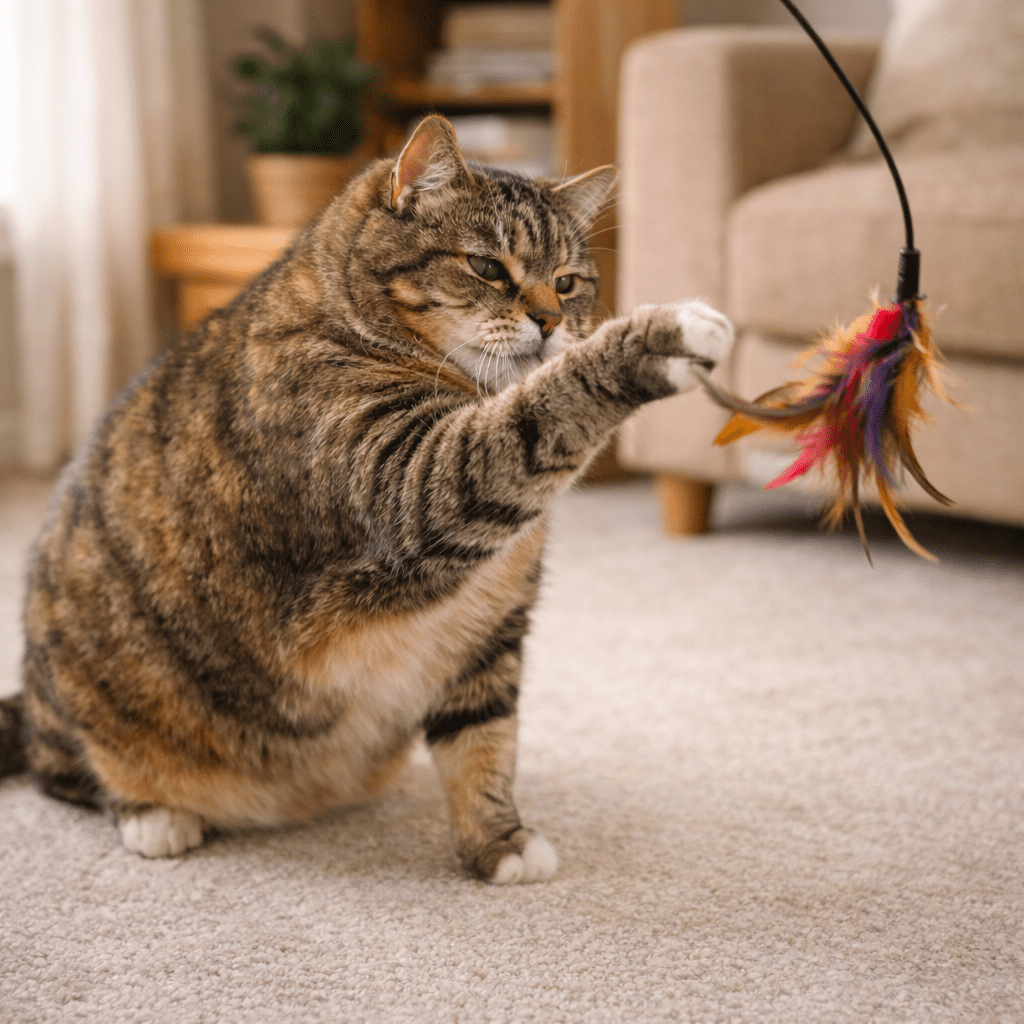
Senior cats don’t need intense exercise. Small movements matter:
- Short play sessions with wand toys
- Floor-level games that avoid jumping
- Encouraging movement before meals
Even a few minutes of daily activity can help maintain muscle and mobility.
Monitor Body Condition, Not Just the Scale
Weight alone doesn’t tell the full story. Pay attention to:
- Waist visibility when viewed from above
- Ability to feel ribs without pressing hard
- Fat accumulation around the abdomen
Changes in how your cat moves often matter more than the number on a scale.
Keep Routines Predictable
Senior cats thrive on consistency. Predictable routines help with:
- Appetite regulation
- Stress reduction
- Steady metabolism
Sudden changes—new foods, new schedules, or frequent adjustments—can make weight management harder.
When to Be Cautious and Seek Veterinary Input
While gradual weight gain is common, some situations deserve professional attention:
- Rapid or unexplained weight changes
- Weight gain paired with lethargy, vomiting, or appetite changes
- Noticeable muscle loss despite stable eating
A veterinarian can rule out medical causes and help guide safe adjustments.
This article is for educational purposes only and does not replace veterinary advice.
Patience Matters More Than Speed
One of the most important things to remember is this: senior cat weight gain didn’t happen overnight, and it won’t resolve overnight either.
Healthy progress often looks like:
- Weight stabilizing before it decreases
- Improved mobility before visible slimming
- Subtle changes noticed over months, not weeks
These are signs you’re doing things right.
A Reassuring Thought
If your older cat is gaining weight, you’re not alone—and you’re not doing anything “wrong.” Senior cat weight gain is a normal response to aging bodies, changing metabolism, and reduced activity.
With calm observation, small portion adjustments, thoughtful treat management, and gentle movement, most senior cats can reach a healthier balance without discomfort or stress.
Focus on comfort first. Stay consistent. And remember that small, steady changes make the biggest difference over time.