Why Senior Cat Arthritis Matters
Watching your senior cat slow down can be bittersweet. One day they’re effortlessly leaping onto the couch, and the next, you notice hesitation or stiffness in their movements. Arthritis in older cats is more common than many pet parents realize — studies suggest that over 60% of cats over the age of six show signs of arthritis (International Cat Care).
Because cats are experts at hiding pain, arthritis can go unnoticed until mobility becomes severely limited. Recognizing the early senior cat arthritis symptoms helps you get your feline friend the care they need to stay comfortable and active.
🐱 What Is Arthritis in Senior Cats?
Arthritis, also called osteoarthritis or degenerative joint disease, is a condition where the cushioning cartilage in the joints breaks down. Without this protective layer, bones rub together, causing:
- Pain
- Inflammation
- Reduced flexibility
In cats, arthritis often affects the hips, elbows, knees, and spine. While it’s not curable, early detection and proper management can significantly improve quality of life. For a deeper look at overall senior cat health conditions, our guide covers other age-related changes too.
Not sure if your cat is considered senior? Use our Cat Age Calculator.
🐾 Early Senior Cat Arthritis Symptoms to Watch For
Here are the most common signs of arthritis in senior cats — keep an eye out for subtle changes in your cat’s daily habits.
1. Difficulty Jumping or Climbing
If your cat used to jump onto the counter or couch with ease but now hesitates, struggles, or avoids it altogether, it may be a sign of arthritis. Even climbing onto a low bed or favorite chair can become challenging. For solutions, see our Ultimate Senior Cat Care Guide.
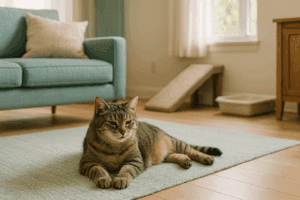
Many arthritic cats stop climbing because it hurts; adding a DIY cat ramp gives them a safer, low-impact way to reach beds, sofas, and window perches.
2. Stiffness, Especially After Rest
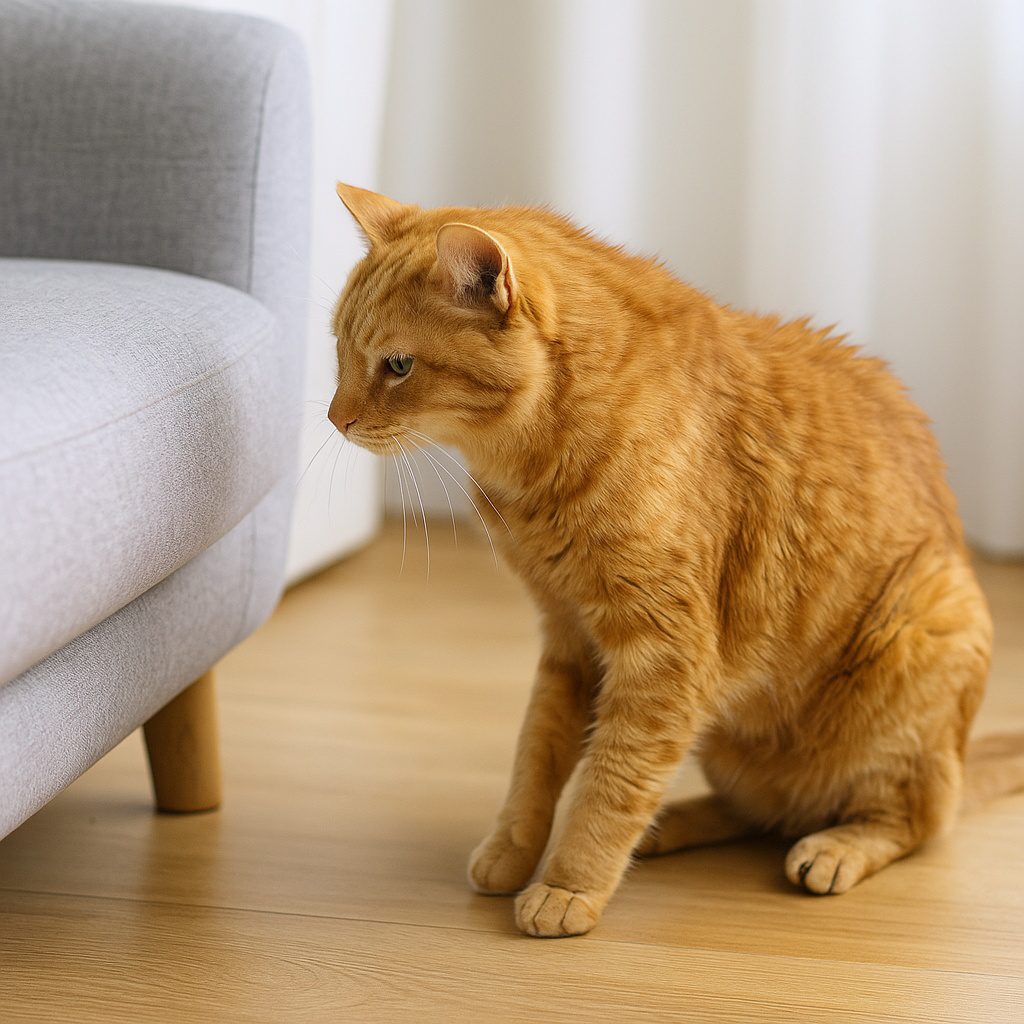
Cats with arthritis often appear stiff when they first get up after sleeping. They may “walk it off” as they move around, but that initial stiffness is an early warning sign. Many cats with arthritis first show symptoms through difficulty using stairs, hesitation, or avoiding upper levels of the home altogether.
3. Reduced Mobility
Arthritic cats may:
- Avoid stairs
- Struggle to get into the litter box
- Walk with a slower, more careful gait
4. Changes in Grooming Habits
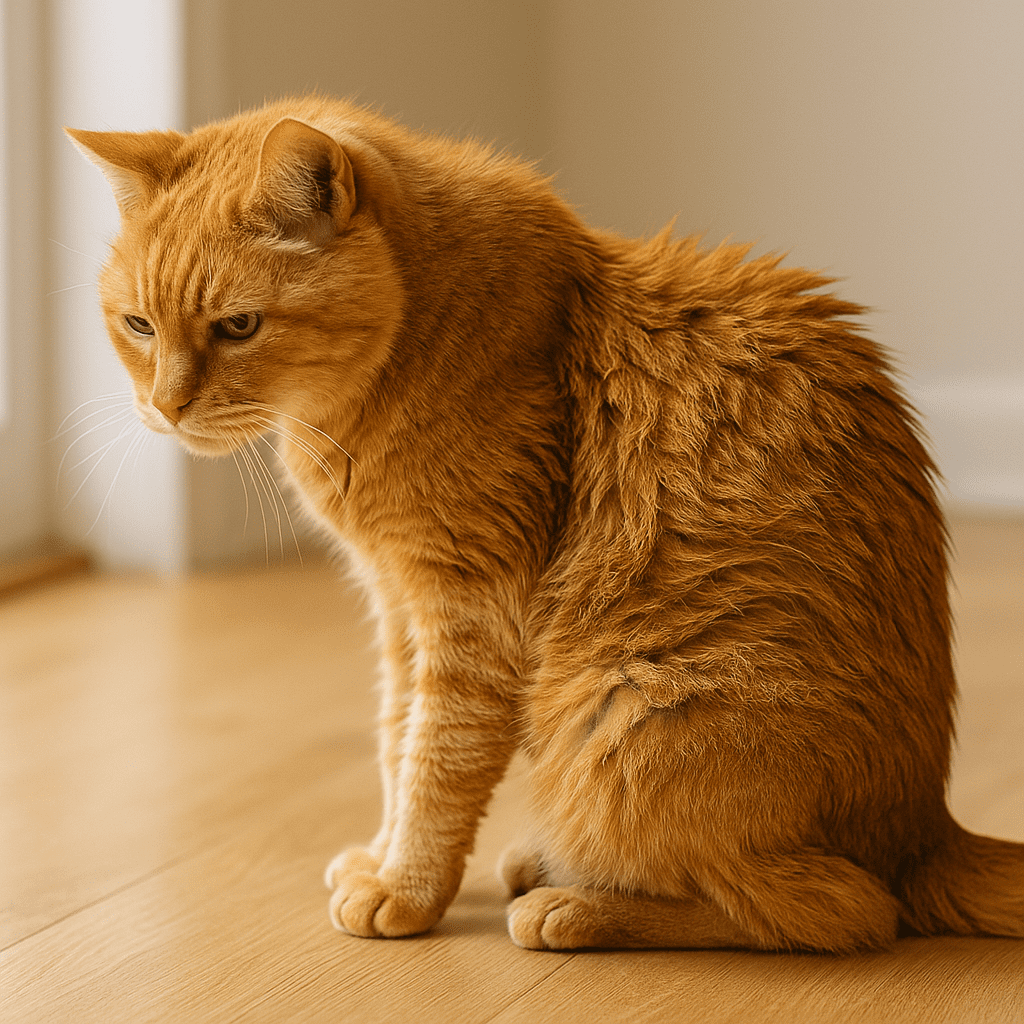
Arthritis makes it hard for cats to bend and twist. You may notice:
- Matted fur along the back or hips
- Overgrown claws (from less stretching/scratching)
- Poor hygiene in hard-to-reach areas
Need help here? Check out our guide on how to tell if your senior cat is in pain.
5. Irritability or Aggression
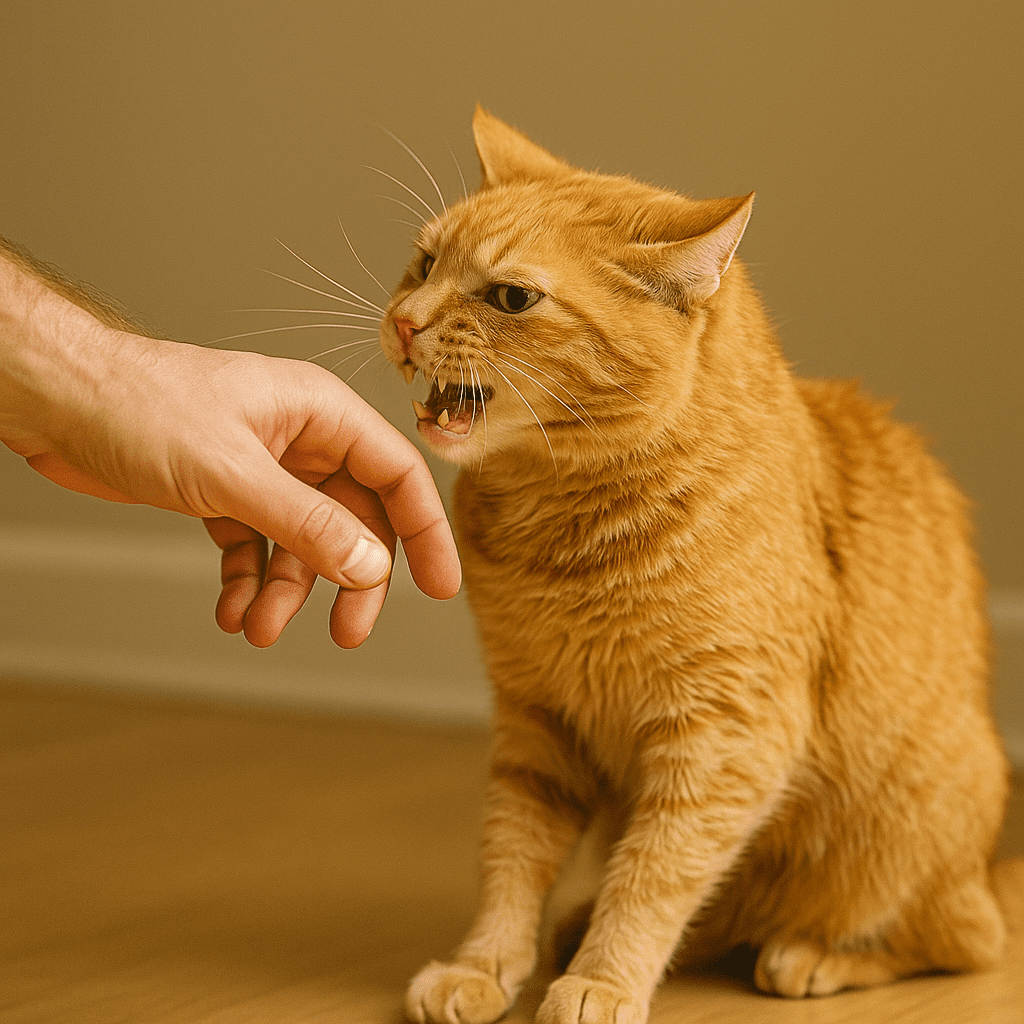
Pain can change your cat’s mood. A normally affectionate cat may hiss, growl, or swat when touched in painful areas like the hips or lower back.
6. Changes in Sleeping or Resting
Arthritic cats often:
- Sleep more to avoid pain
- Seek warmer spots (heat soothes joints)
- Avoid favorite perches if climbing is uncomfortable
7. Litter Box Problems
Cats with arthritis sometimes urinate or defecate outside the litter box because climbing in and out is too painful — especially with high-sided boxes.
8. Weight Gain or Loss of Muscle
- Some cats gain weight due to inactivity.
- Others lose muscle mass in the hind legs from lack of movement.
🐾 Why Cats Hide Arthritis Symptoms
Cats instinctively mask pain (a survival trait from their wild ancestors) (VCA – Pain in Cats). This means arthritis symptoms often progress quietly. By the time mobility loss is obvious, joint damage may already be advanced.
👉 That’s why regular senior cat vet care visits are so important. A vet can detect subtle arthritis signs before they become severe.
🐱 Risk Factors for Arthritis in Older Cats
- Age: Most common in cats over 10 years old.
- Breed: Larger breeds (like Maine Coons) are more prone.
- Previous Injuries: Trauma or fractures increase risk.
- Obesity: Extra weight puts strain on joints (AAHA – Obesity and Cats).
- Genetics: Some cats are predisposed to joint problems.
🐾 When to See the Vet
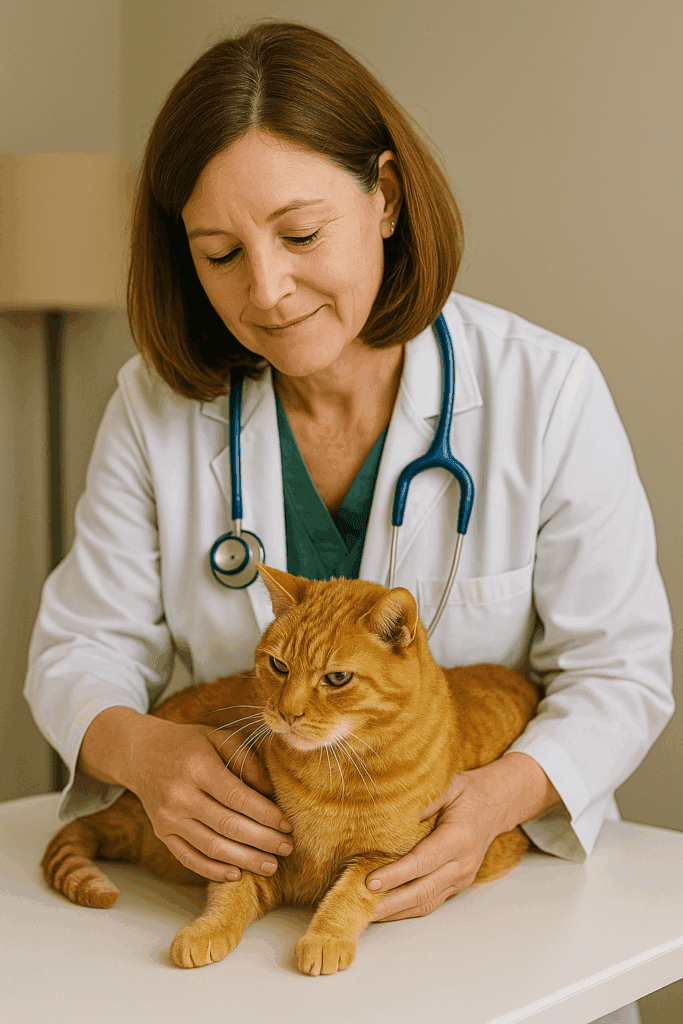
If you notice one or more of these senior cat arthritis symptoms, schedule a vet visit. Your vet may:
- Perform a physical exam (checking range of motion, stiffness).
- Order X-rays to confirm arthritis.
- Recommend bloodwork to rule out other conditions (like kidney disease, which can mimic lethargy).
🐱 How Arthritis in Senior Cats Is Treated
While arthritis can’t be cured, several strategies can reduce pain and improve mobility:
- Medications: Non-steroidal anti-inflammatory drugs (NSAIDs) or pain relievers (prescribed by your vet only) (ACVS – Osteoarthritis in Cats).
- Joint Supplements: Glucosamine, chondroitin, and omega-3 fatty acids support joint health (PetMD – Joint Supplements). We’ve also reviewed the best joint supplements for senior cats. See our article on Best Supplements for Senior Cats for detailed information on each supplement.
- Weight Management: Keeping your cat at a healthy weight reduces stress on joints.
- Environmental Modifications: Provide ramps, steps, and low-sided litter boxes.
- Heat Therapy: Heated beds soothe stiff joints.
- Gentle Play & Exercise: Keeps joints moving without overexertion.
🏡 Making Life Easier for an Arthritic Cat
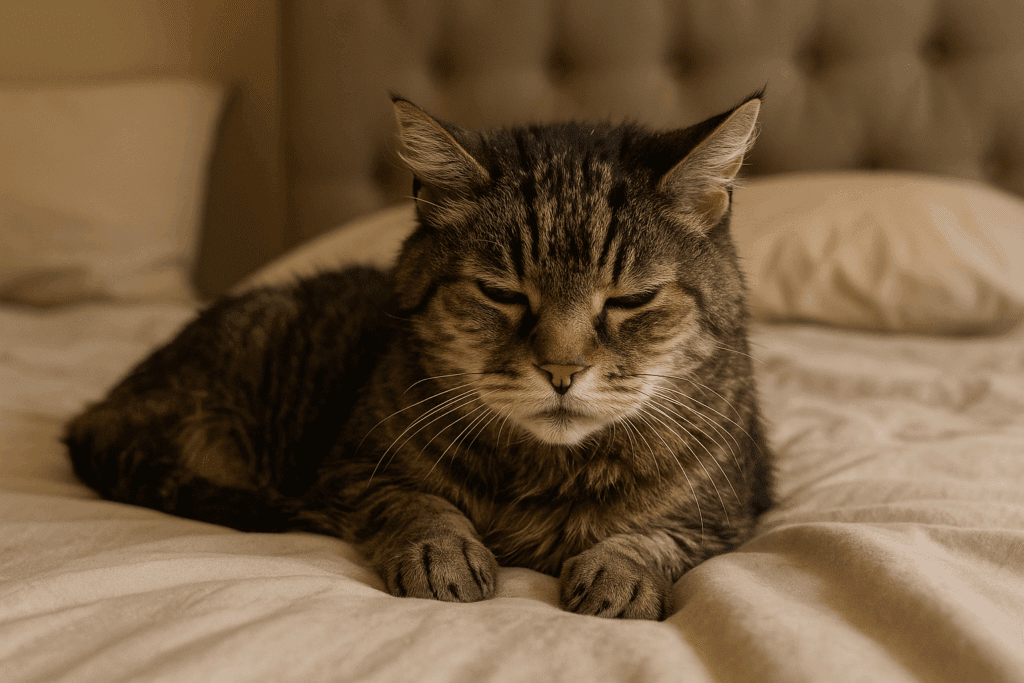
- Place food, water, and litter boxes on the same floor.
- Provide orthopedic and heated cat beds for comfort.
- Use non-slip rugs on hardwood or tile.
- Groom gently or help with brushing where your cat struggles.
Not sure whether these mobility changes point to discomfort? Use our senior cat pain level checker to score symptoms and track changes week to week.
❓ Frequently Asked Questions About Senior Cat Arthritis Symptoms
Can arthritis in senior cats be cured?
No, but it can be managed with medication, supplements, and environmental changes.
What is the most common senior cat arthritis symptoms?
Difficulty jumping and stiffness when rising are the most common early signs.
Should I exercise my arthritic cat?
Yes — short, gentle play sessions keep joints moving without strain. Avoid overexertion.
How do vets diagnose arthritis in cats?
Through physical exams, observing mobility, and X-rays to check joint damage.
Can overweight cats develop arthritis faster?
Yes — excess weight puts stress on joints, increasing risk and severity. (AAHA – Obesity in Cats)
Are joint supplements safe for cats?
Most supplements are safe when given at the correct dosage. Always consult your vet before starting new treatments.
Do heated beds really help?
Yes — warmth soothes sore joints, and many cats seek out warm spots for relief.
How can I make my litter box easier for an arthritic cat?
Choose a low-entry litter box and place it in an accessible location to reduce strain.
Should I change my cat’s diet if they have arthritis?
Yes, maintaining a healthy weight and considering senior-specific diets with joint support can help.
How long can cats live with arthritis?
With proper management, cats can live comfortably for many years after diagnosis.
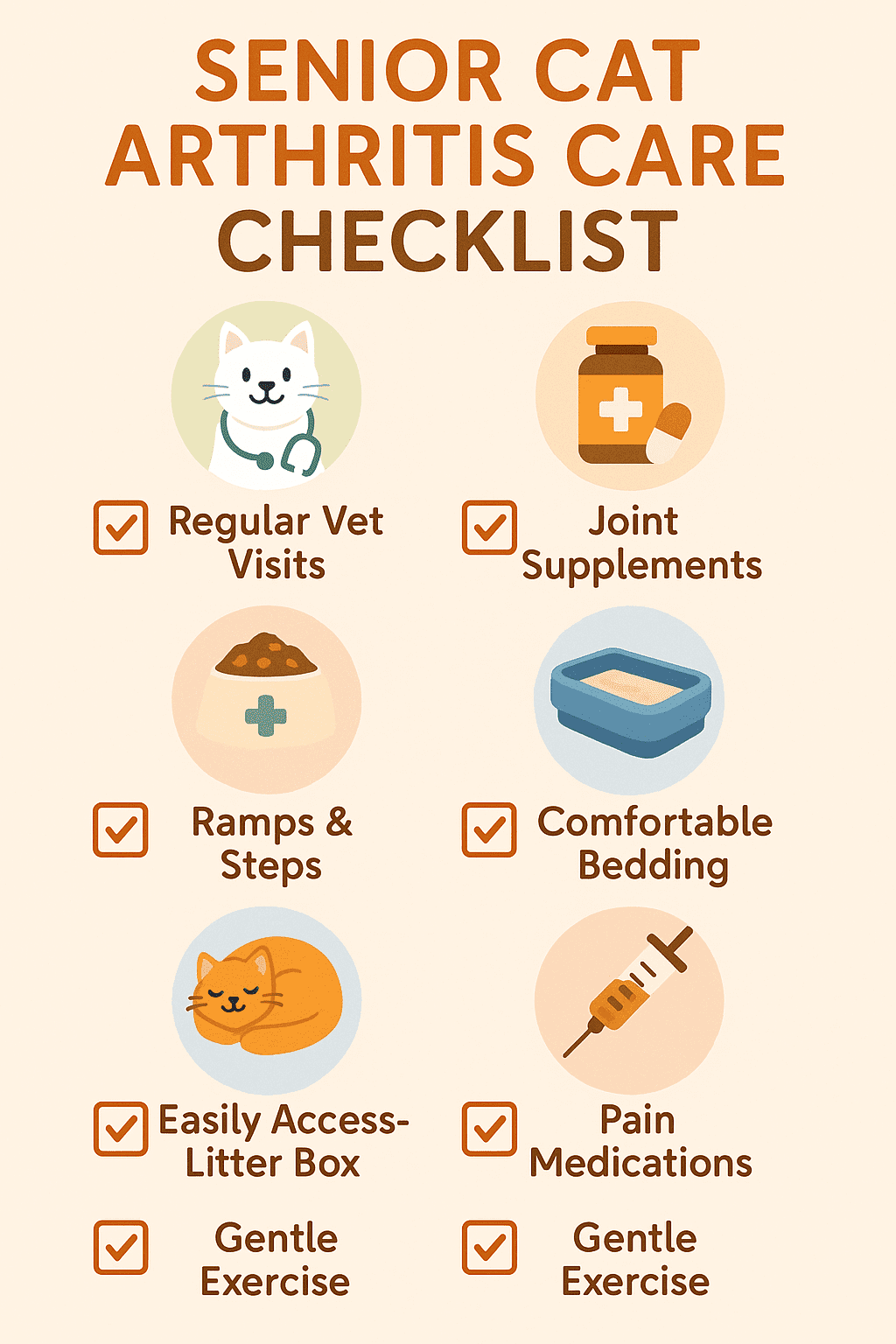
Spot the Signs Early
Arthritis in older cats is common, but it doesn’t have to mean a life of pain. By watching for senior cat arthritis symptoms — like stiffness, difficulty jumping, and grooming changes — you can get your feline friend the care they deserve. With the right combination of vet care, supplements, and home adjustments, your senior cat can continue to enjoy comfort and companionship well into their golden years. Use our healthcare checklist for early detection on all senior cat health issues.