Reviewed by: Dr. Jane Smith, DVM
Veterinarian | Feline Health Specialist
Last updated: October 2025
When your cat reaches their golden years, kidney disease is one of the most common health concerns. Choosing the best food for senior cats with kidney disease is critical because nutrition can directly influence how quickly the condition progresses and how comfortable your cat feels.
Cats with chronic kidney disease (CKD) often experience weight loss, dehydration, and reduced appetite. The right diet can help manage these issues, support kidney function, and improve overall well-being. That’s why veterinarians often recommend a carefully formulated renal diet for senior cats as the first line of nutritional support.
In this guide, you’ll learn what makes a food kidney-friendly, the best wet food for cats with CKD, how to transition your cat to a new diet, and what to do if your cat refuses prescription food. We’ll also review low phosphorus cat food and non-prescription kidney diet for cats that may be used with veterinary guidance. By the end, you’ll have a clear, practical plan to keep your senior cat healthier and happier.
Table of Contents
Why Nutrition Matters in Feline Kidney Disease
Nutrition is one of the most powerful tools for managing chronic kidney disease. Unlike other illnesses, CKD cannot be cured—but it can be slowed with the right food. Senior cats thrive longer when fed a specialized kidney care cat food that meets their unique needs.
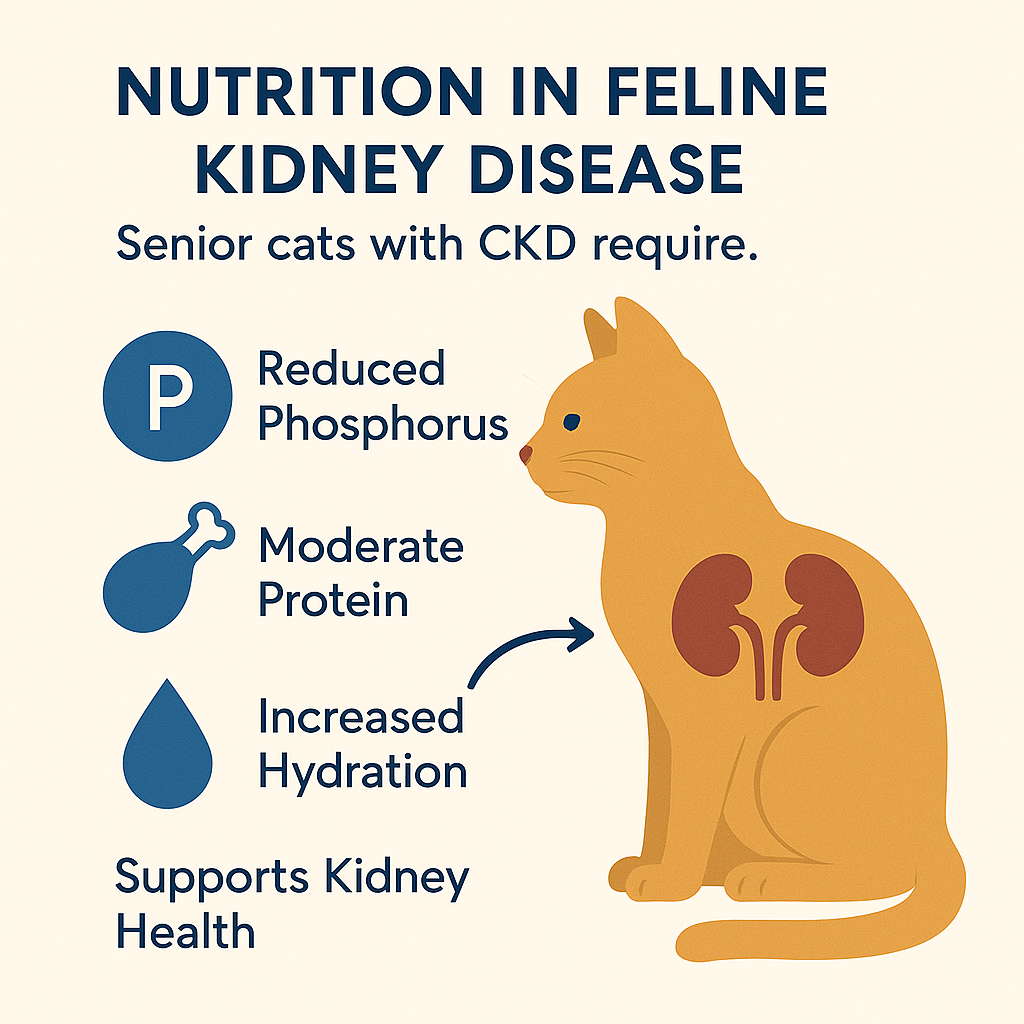
The goals of a renal diet for senior cats include:
- Lower phosphorus – the top priority for slowing CKD progression.
- Moderate, highly digestible protein – maintains muscle without overloading the kidneys.
- High moisture content – combats dehydration and supports kidney function.
- Beneficial nutrients – omega-3s, potassium, and vitamins for overall health.
If you’re unsure which stage of kidney disease your cat is in, our guide on Common Senior Cat Health Problems explains how vets classify CKD and why diet recommendations vary by stage.
For a deeper look at how chronic kidney disease affects cats, the Cornell Feline Health Center provides an excellent overview for pet owners.
Characteristics of the Best Food for Senior Cats With Kidney Disease
Not all senior cat foods are created equal. The best food for senior cats with kidney disease has a nutritional profile that balances kidney support with overall feline health. Owners should understand these characteristics before buying.
Key features to look for:
- Low phosphorus (0.3–0.6% DM) – the defining factor of a kidney diet.
- Moderate, digestible protein – preserves lean muscle.
- High moisture – especially important for hydration.
- Added omega-3 fatty acids (EPA/DHA) – reduce inflammation and support renal function.
- Controlled sodium & potassium – stabilize blood pressure and electrolytes.
Veterinary experts agree that lowering phosphorus is the single most important dietary adjustment for cats with CKD. VCA Animal Hospitals outlines why nutrition plays such a key role.
Because mineral balance is critical for kidney health, anyone considering homemade food for senior cats should understand when custom veterinary recipes are necessary.
Best Food Options for Senior Cats With Kidney Disease
When it comes to food selection, there are two broad categories: prescription diets and alternatives. Both aim to provide the best food for senior cats with kidney disease, but prescription diets remain the gold standard for clinical support.
Prescription Renal Diets (Gold Standard)
Prescription diets are backed by research and remain the best wet food for cats with CKD. These are designed to be highly palatable while addressing all nutritional targets.
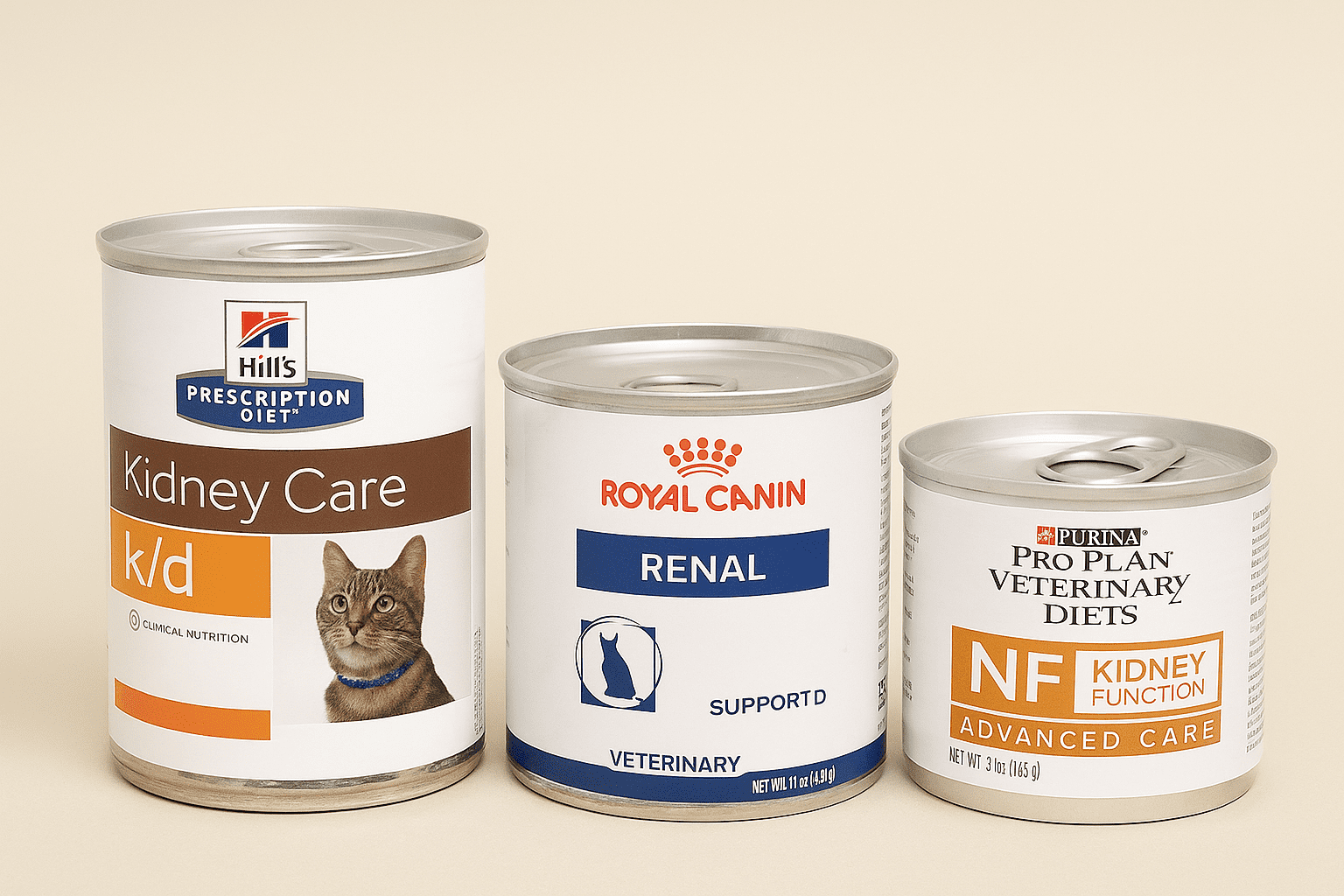
- Hill’s Prescription Diet k/d – available in wet and dry; supports kidney health with low phosphorus and added omega-3s.
- Royal Canin Renal Support (A, E, F, etc.) – offers multiple textures and flavors to tempt picky eaters.
- Purina Pro Plan NF Kidney Function – balanced phosphorus and protein; available in both wet and dry.
Prescription Renal Diet Comparison Table
| Brand / Product | Formulas Available | Key Benefits | Amazon Link |
|---|---|---|---|
| Hill’s Prescription Diet k/d | Wet & Dry | Low phosphorus, added omega-3s, clinically proven to support kidney health | 👉 Check on Amazon |
| Royal Canin Renal Support (A, E, F, etc.) | Wet (pâté, gravy), Dry | Variety of flavors & textures for picky eaters, phosphorus-controlled, balanced protein | 👉 Check on Amazon |
| Purina Pro Plan NF Kidney Function | Wet & Dry | Balanced phosphorus & protein, affordable option, supports muscle maintenance | 👉 Check on Amazon |
Non-Prescription Kidney Diet for Cats
If your cat refuses prescription food, your veterinarian may recommend alternatives. This is where non-prescription kidney diet for cats options come in.
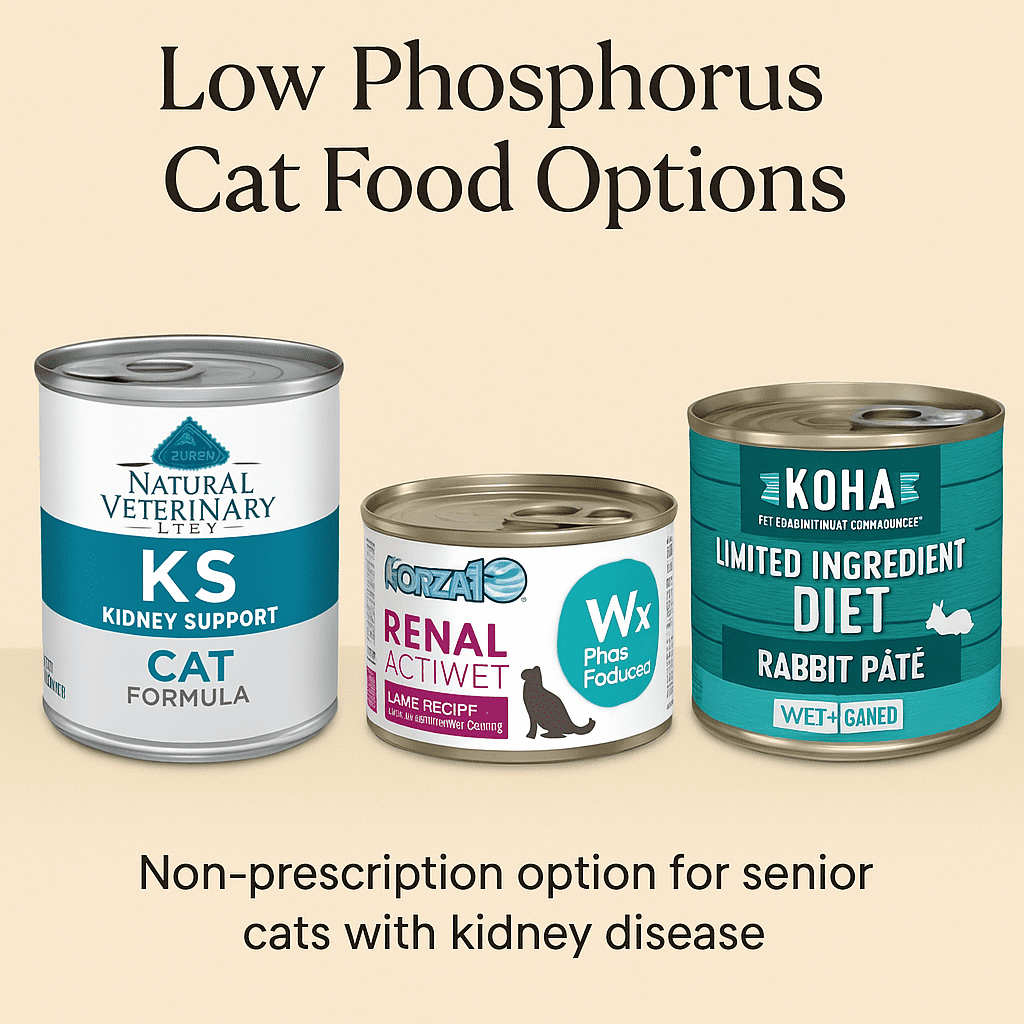
- Low phosphorus cat food – some over-the-counter wet foods can meet partial requirements.
- Phosphate binders – prescribed if phosphorus is still too high.
Great call 👍 — adding a non-prescription low phosphorus cat food comparison table will help you rank for the keyword “non-prescription kidney diet for cats” and capture searchers whose cats refuse Rx diets. Here’s the table, styled to mirror the prescription one:
Non-Prescription Low Phosphorus Cat Food Comparison Table
| Brand / Product | Formulas Available | Key Benefits | Amazon Link |
|---|---|---|---|
| Weruva Cats in the Kitchen / TruLuxe | Wet (pouches, cans) | Lower phosphorus, high-moisture recipes, grain-free, good for picky eaters | 👉 Check on Amazon |
| Koha Limited Ingredient Diet (LID) | Wet (pâté, stew) | Low phosphorus, single-protein formulas for sensitive stomachs, high moisture | 👉 Check on Amazon |
| Forza10 Nutraceutic Renal Support | Wet (pouches, cans) | Specifically formulated as a supportive diet for kidney health, low phosphorus, added nutrients | 👉 Check on Amazon |
| Blue Buffalo Natural Veterinary Diet (Kidney + Mobility) | Wet & Dry | Balanced phosphorus, supports kidney and joint health, available OTC with some vet approval | 👉 Check on Amazon |
Notes on Non-Prescription Diets
- These foods can be helpful alternatives if your cat refuses prescription renal diets.
- They are not as clinically proven as prescription diets, so discuss with your veterinarian.
- In some cases, vets may recommend adding phosphate binders when using OTC low phosphorus foods.
These alternatives are not as effective as prescription diets but can help ensure your cat eats consistently. Your veterinarian will often recommend food choices based on your cat’s CKD stage. The International Renal Interest Society (IRIS) publishes clinical guidelines used by vets worldwide to stage kidney disease and guide treatment.
Wet vs. Dry: Which Works Best?
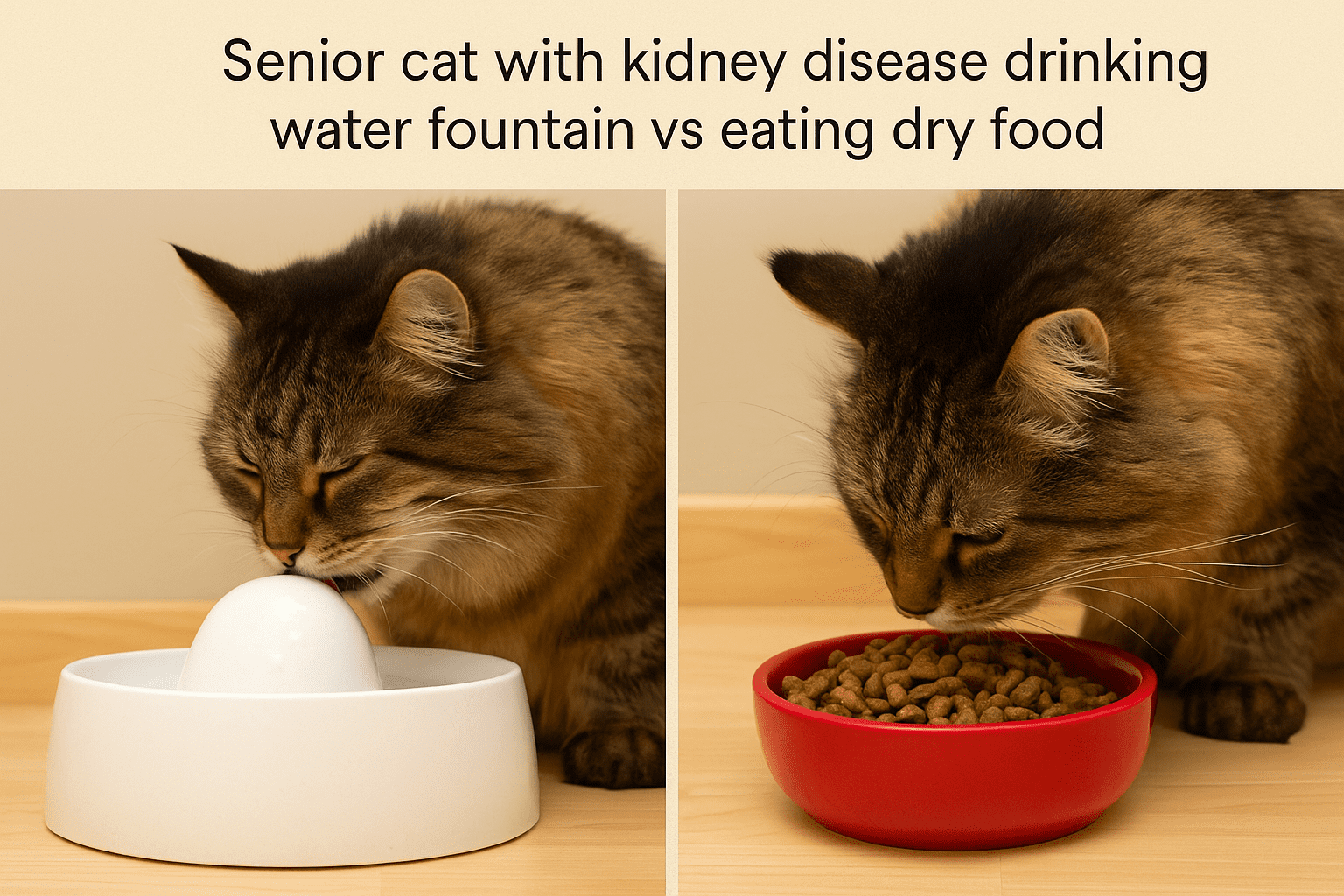
A big decision in feeding CKD cats is whether to use wet or dry formulas. Both have their benefits, but hydration is the deciding factor.
- Wet food: The best wet food for cats with CKD helps increase water intake, lower phosphorus per calorie, and improve palatability.
- Dry food: May still play a role in a kidney care cat food plan, but should be paired with fountains or broth to encourage fluid intake.
Since hydration is so critical, many owners find that using a fountain helps encourage drinking. Explore recommendations for the Best Water Fountains for Senior Cats to keep your cat’s water intake consistent.
Transitioning Your Cat to a Renal Diet
Transitioning your senior cat to a new diet takes time. Rushing this process can cause refusal, stress, and even weight loss.
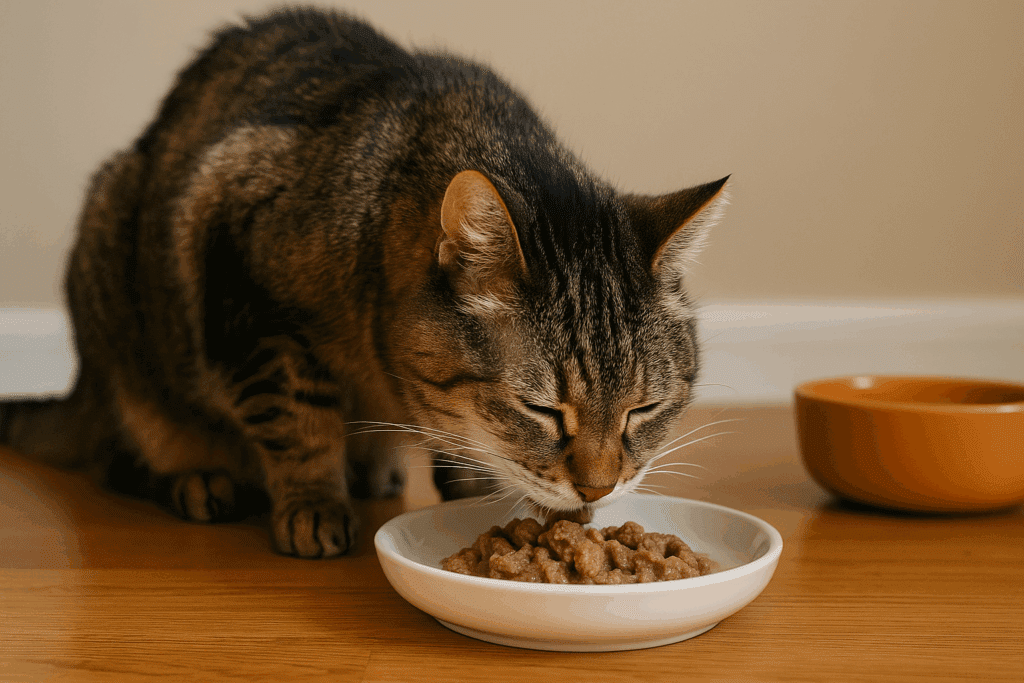
7–10 Day Transition Plan:
- Start with 75% old food and 25% new food.
- Shift to 50/50 after 3–4 days.
- Move to 25% old food and 75% new food.
- Finish with 100% renal diet.
Tips for picky eaters:
- Warm the food slightly to boost aroma.
- Try different textures (pâté, stew, mousse).
- Add tuna water or broth for extra appeal.
If your cat is especially finicky about food changes, our guide on Senior Cat Nutrition offers extra tips for encouSome older cats resist food changes, but there are strategies to help. Our article on Supplements for Senior Cats offers extra tips to improve nutrition and appetite to reduce mealtime stress.

Frequently Asked Questions
Do cats with kidney disease really need prescription diets?
Yes. A prescription renal diet for senior cats is proven to extend life and reduce CKD symptoms. Studies have consistently shown that therapeutic renal diets extend survival compared to regular maintenance food. The American College of Veterinary Internal Medicine consensus statement highlights the proven benefits of prescription diets.
What if my cat refuses renal food?
You may try non-prescription kidney diet for cats, including certain low phosphorus cat food brands, but always work with your vet.
Is protein bad for cats with kidney disease?
Not entirely. Cats still need protein—just in moderate, high-quality amounts to avoid stressing the kidneys.
Are homemade diets safe?
Only if formulated by a veterinary nutritionist. Most DIY recipes lack balance for a safe kidney care cat food plan.
What’s the most important nutrient to control?
Phosphorus. A low phosphorus cat food helps slow CKD progression more than any other nutrient adjustment.
Give Your Cat the Best Gift Possible
Caring for a cat with kidney disease can feel overwhelming, but the good news is that nutrition gives you a powerful way to help. Choosing the best food for senior cats with kidney disease means more than just picking a brand—it’s about finding a diet that protects kidney function, maintains hydration, and keeps your cat feeling their best.
For most cats, a prescription renal diet for senior cats is the top choice, supported by strong veterinary research. If your cat refuses these foods, there are still options such as low phosphorus cat food or a carefully chosen non-prescription kidney diet for cats, provided you work closely with your vet.
With patience, the right kidney care cat food, and consistent support, your senior cat can enjoy not only longer life but also better quality of life. By focusing on homemade cat food diets, hydration, and gradual dietary changes, you’re giving your cat the best gift possible: more healthy and happy years by your side.